LEADER 04120cam a2200613Ki 4500
001 795254
003 TR_AnAIT
005 20260123004721
006 m o d
007 cr cnu|||unuuu
008 211007s2022 xx o 000 0 eng d
020 |a9781003262657|q(electronic bk.)
020 |a1003262651|q(electronic bk.)
020 |a9781000539080|q(electronic bk. : PDF)
020 |a1000539083|q(electronic bk. : PDF)
020 |z9781032201931
020 |a9781000539103|q(electronic bk. : EPUB)
020 |a1000539105|q(electronic bk. : EPUB)
020 |z9781032201948
035 |a(OCoLC)1273727695
035 |a(OCoLC-P)1273727695
040 |aOCoLC-P|beng|erda|epn|cOCoLC-P
041 |aeng
049 |aTürk Tarih Kurumu Kütüphanesi
050 4|aJQ1681
072 7|aSOC|x008000|2bisacsh
072 7|aSOC|x024000|2bisacsh
072 7|aSOC|x053000|2bisacsh
072 7|a1F|2bicssc
082 04|a324.2452|223/eng/20211101
100 1 |aHattori, Ryūji,|d1968-|eauthor.
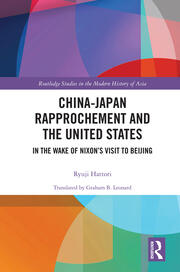
245 10|aChina-Japan rapprochement and the United States :|bin the wake of Nixon's visit to China /|cRyuji Hattori ; translated by Graham B. Leonard.
250 |aFirst edition.
264 1|a[Place of publication not identified] :|bRoutledge,|c2022.
300 |a1 online resource (184 pages).
336 |atext|btxt|2rdacontent
337 |acomputer|bc|2rdamedia
338 |aonline resource|bcr|2rdacarrier
490 0 |aRoutledge Studies in the Modern History of Asia
505 0 |aIntroduction: The Road to Beijing 1. Tanaka Kakuei and Ōhira Masayoshi: Two Types of Leadership 2. The Nixon Shock - Moving Beyond Satō 3. The Formation of the Tanaka Government and the Takeiri Memo - First Approaches to China 4. Under America's Shadow - The Tanaka-Nixon Summit in Hawaii 5. Taiwan - The Shiina-Chiang Talks as Kanjinchō 6. Tanaka's Visit to China and the "Meiwaku" Speech (September 25) 7. Zhou Enlai's "Bluff" and Ōhira Masayoshi's "Trump Card" (September 26) 8. The Senkaku Islands and Tanaka's Meeting with Mao (September 27) 9. The Sino-Japanese Joint Statement and Severing Relations with Taiwan (September 28-30) Conclusion: The Spirit of Sino-Japanese Peace
520 |aBased on extensive original research including interviews with key participants, this book examines how, following Richard Nixon's famous visit to China in 1972, Japan established formal diplomatic relations with China, doing so before the United States and other western countries. It considers the key personalities - prime minister Tanaka and foreign minister Ōhira on the Japanese side, and Zhou Enlai on the Chinese side, outlines how the discussions unfolded, and discusses the key issues which divided the two sides and how these issues were resolved: Japanese war reparations to China, how the two countries perceived their past, how Taiwan should be treated, and possession of the Senkaku Islands. The book also shows how Tanaka and Ōhira sought to reconcile China-Japanese relations with the US-Japan Security Treaty and to continue non-governmental exchanges with Taiwan following the severing of relations. Overall, the book emphasises that the nature of the relationship established in 1972 continues to be very important for understanding present day China-Japan relations.
588 |aOCLC-licensed vendor bibliographic record.
600 10|aTanaka, Kakuei,|d1918-1993.
600 10|aŌhira, Masayoshi,|d1910-1980.
610 10|aJapan.|bGaimushō.
650 7|aSOCIAL SCIENCE / Ethnic Studies / General|2bisacsh
650 7|aSOCIAL SCIENCE / Research|2bisacsh
650 0|aPolitical leadership|zJapan.
651 0|aJapan|xForeign relations|zChina.
651 0|aChina|xForeign relations|zJapan.
651 0|aJapan|xForeign relations|zUnited States.
651 0|aUnited States|xForeign relations|zJapan.
651 0|aJapan|xForeign relations|zTaiwan.
651 0|aChina|xForeign relations|zTaiwan.
856 40|3Taylor & Francis|uhttps://www.taylorfrancis.com/books/9781003262657
856 42|3OCLC metadata license agreement|uhttp://www.oclc.org/content/dam/oclc/forms/terms/vbrl-201703.pdf
901 |aTaylor & Francis