LEADER 03437cam a22004938i 4500
001 795300
003 TR_AnAIT
005 20260123004813
006 m o d
007 cr |||||||||||
008 220518s2023 enk ob 001 0 eng
020 |a9781003302971|q(ebook)
020 |a1003302971
020 |a9781000626049|q(electronic bk. : PDF)
020 |a1000626040|q(electronic bk. : PDF)
020 |a9781000626100|q(electronic bk. : EPUB)
020 |a1000626105|q(electronic bk. : EPUB)
020 |z9781032299952|q(hardback)
020 |z9781032299969|q(paperback)
024 7 |a10.4324/9781003302971|2doi
035 |a(OCoLC)1319083031
035 |a(OCoLC-P)1319083031
040 |aOCoLC-P|beng|erda|cOCoLC-P
041 |aeng
049 |aTürk Tarih Kurumu Kütüphanesi
050 00|aPN56.L33
072 7|aLAW|x025000|2bisacsh
072 7|aSOC|x022000|2bisacsh
072 7|aL|2bicssc
082 00|a809/.933554|223/eng/20220518
100 1 |aDees, Russell L.,|eauthor.
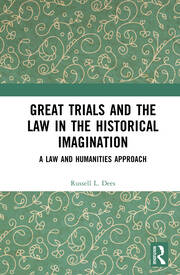
245 10|aGreat trials and the law in the historical imagination :|ba law and humanities approach /|cRussell L. Dees.
264 1|aAbingdon, Oxon ;|aNew York :|bRoutledge,|c2023.
300 |a1 online resource
336 |atext|btxt|2rdacontent
337 |acomputer|bc|2rdamedia
338 |aonline resource|bcr|2rdacarrier
520 |a"Great Trials and the Law in the Historical Imagination: A Law and Humanities Approach introduces readers to the history of law and issues in historical, legal, and artistic interpretation by examining six well-known historical trials through works of art that portray them. Great Trials provides readers with an accessible, non-dogmatic introduction to the interdisciplinary 'law and humanities' approach to law, legal history, and legal interpretation. By examining how six famous/notorious trials in Western history have been portrayed in six major works of art, the book shows how issues of legal, historical, and artistic interpretation can become intertwined: the different ways we embed law in narrative, how we bring conscious and subconscious conceptions of history to our interpretation of law, and how aesthetic predilections and moral commitments to the law may influence our views of history. The book studies well-known depictions of the trials of Socrates, Cicero, Jesus, Thomas More, the Salem 'witches', and John Scopes and provides innovative analyses of those works. The epilogue examines how historical methodology and historical imagination are crucial to both our understanding of the law and our aesthetic choices through various readings of Harper Lee's beloved character, Atticus Finch. The first book to employ a 'law and humanities' approach to delve into the institution of the trial, and what it means in different legal systems at different historical times, this book will appeal to academics, students and others with interests in legal history, law and popular culture and law and the humanities"--|cProvided by publisher.
588 |aOCLC-licensed vendor bibliographic record.
650 0|aLaw in literature.
650 0|aLaw and literature.
650 0|aLiterature|xHistory and criticism.
650 7|aLAW / Courts|2bisacsh
650 7|aSOCIAL SCIENCE / Popular Culture|2bisacsh
856 40|3Taylor & Francis|uhttps://www.taylorfrancis.com/books/9781003302971
856 42|3OCLC metadata license agreement|uhttp://www.oclc.org/content/dam/oclc/forms/terms/vbrl-201703.pdf
901 |aTaylor & Francis