

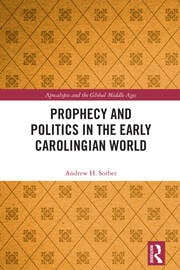
Prophecy and politics in the early Carolingian world / Andrew H. Sorber.
ISBN
9781003362739 (ebook)
1003362737
9781040020319 (electronic bk. : EPUB)
1040020313 (electronic bk. : EPUB)
9781040020296 (electronic bk. : PDF)
1040020291 (electronic bk. : PDF)
9781032422725 (hardback)
9781032424323 (paperback)
1003362737
9781040020319 (electronic bk. : EPUB)
1040020313 (electronic bk. : EPUB)
9781040020296 (electronic bk. : PDF)
1040020291 (electronic bk. : PDF)
9781032422725 (hardback)
9781032424323 (paperback)
Dil Kodu
İngilizce
Yazar
Tekbiçim Eser Adı
To avoid future peril
Yayın Bilgisi
Abingdon, Oxon : Routledge, 2024.
Fiziksel Niteleme
1 online resource.
Dizi
Apocalypse and the global Middle Ages
Genel Not
Revision of the author's thesis (doctoral)--University of Virginia, 2019, under the title: To avoid future peril : signs, portents, and prophecy in the Carolingian world (ca. 771-840).
Özet, vb.
"Prophetic and Apocalyptic rhetoric play critical roles in the development and articulation of political authority in the reigns of Charlemagne (d. 814) and Louis the Pious (d. 840). The rhetorical authority derived from claims of receiving revelation, interpreting divine communication, speaking for God, and foreseeing coming calamity became a competitive medium through which individuals legitimized political behaviour, debated their long- and short-term aspirations, and struggled for political supremacy. Ranging from claims of revelations, dreams, and visions, to the adoption of rhetorical voices based on biblical prophets, to the interpretation of signs and portents, prophetic rhetoric enjoyed extensive experimentation and varied application throughout early medieval political discourse. Prophecy and Politics in the Early Carolingian World argues that claims of divine revelation, resistant to any attempts to monopolize them, provided a powerful means of speaking with authority for all participants in Frankish political discourse. This authority proved instrumental in the articulation and dismantling of effective Carolingian royal authority from 768 to 840. It introduces and reinterprets early Carolingian political discourse and intellectual activity, as well the centrality of apocalypticism in the Carolingian period, by emphasizing prophecy, or revelation and authority, rather than prediction and calamity. Early Carolingian political discourse was a dialogue that took place across royal proclamations, legal statements, historical texts, visions, scriptural commentaries, and manifestations of the natural world, and in this dialogue, the ability to interpret God's will was as powerful as it was problematic"-- Provided by publisher.
Konu
Authority __ Religious aspects.
Carolingians.
Prophecy.
Revelation.
Power (Social sciences) __ Europe __ History __ To 1500.
Political culture __ Europe __ History __ To 1500.
HISTORY / Medieval __ bisacsh
RELIGION / Christianity / History __ bisacsh
RELIGION / Eschatology __ bisacsh
Carolingians.
Prophecy.
Revelation.
Power (Social sciences) __ Europe __ History __ To 1500.
Political culture __ Europe __ History __ To 1500.
HISTORY / Medieval __ bisacsh
RELIGION / Christianity / History __ bisacsh
RELIGION / Eschatology __ bisacsh
Veritabanı
Eseri Alıntıla
Referansları kullanmadan önce gözden geçirmeniz ve varsa gerekli düzeltmeleri yapmanız önerilir.
Dijital Kaynak
MARC Görünümü
LEADER 04024cam a22005898i 4500
001 795335
003 TR_AnAIT
005 20260123004849
006 m o d
007 cr |||||||||||
008 240104s2024 enk ob 001 0 eng
020 |a9781003362739|q(ebook)
020 |a1003362737
020 |a9781040020319|q(electronic bk. : EPUB)
020 |a1040020313|q(electronic bk. : EPUB)
020 |a9781040020296|q(electronic bk. : PDF)
020 |a1040020291|q(electronic bk. : PDF)
020 |z9781032422725|q(hardback)
020 |z9781032424323|q(paperback)
024 7 |a10.4324/9781003362739|2doi
035 |a(OCoLC)1422232512
035 |a(OCoLC-P)1422232512
040 |aOCoLC-P|beng|erda|cOCoLC-P
041 |aeng
049 |aTürk Tarih Kurumu Kütüphanesi
050 00|aDC70
072 7|aHIS|x037010|2bisacsh
072 7|aREL|x015000|2bisacsh
072 7|aREL|x085000|2bisacsh
072 7|aHBLC|2bicssc
082 00|a944/.014|223/eng/20240213
100 1 |aSorber, Andrew H.,|d1986-|eauthor.
240 10|aTo avoid future peril
245 10|aProphecy and politics in the early Carolingian world /|cAndrew H. Sorber.
264 1|aAbingdon, Oxon :|bRoutledge,|c2024.
300 |a1 online resource.
336 |atext|btxt|2rdacontent
337 |acomputer|bc|2rdamedia
338 |aonline resource|bcr|2rdacarrier
490 0 |aApocalypse and the global Middle Ages
500 |aRevision of the author's thesis (doctoral)--University of Virginia, 2019, under the title: To avoid future peril : signs, portents, and prophecy in the Carolingian world (ca. 771-840).
520 |a"Prophetic and Apocalyptic rhetoric play critical roles in the development and articulation of political authority in the reigns of Charlemagne (d. 814) and Louis the Pious (d. 840). The rhetorical authority derived from claims of receiving revelation, interpreting divine communication, speaking for God, and foreseeing coming calamity became a competitive medium through which individuals legitimized political behaviour, debated their long- and short-term aspirations, and struggled for political supremacy. Ranging from claims of revelations, dreams, and visions, to the adoption of rhetorical voices based on biblical prophets, to the interpretation of signs and portents, prophetic rhetoric enjoyed extensive experimentation and varied application throughout early medieval political discourse. Prophecy and Politics in the Early Carolingian World argues that claims of divine revelation, resistant to any attempts to monopolize them, provided a powerful means of speaking with authority for all participants in Frankish political discourse. This authority proved instrumental in the articulation and dismantling of effective Carolingian royal authority from 768 to 840. It introduces and reinterprets early Carolingian political discourse and intellectual activity, as well the centrality of apocalypticism in the Carolingian period, by emphasizing prophecy, or revelation and authority, rather than prediction and calamity. Early Carolingian political discourse was a dialogue that took place across royal proclamations, legal statements, historical texts, visions, scriptural commentaries, and manifestations of the natural world, and in this dialogue, the ability to interpret God's will was as powerful as it was problematic"--|cProvided by publisher.
588 |aOCLC-licensed vendor bibliographic record.
650 0|aAuthority|xReligious aspects.
650 0|aCarolingians.
650 0|aProphecy.
650 0|aRevelation.
650 0|aPower (Social sciences)|zEurope|xHistory|yTo 1500.
650 0|aPolitical culture|zEurope|xHistory|yTo 1500.
650 7|aHISTORY / Medieval|2bisacsh
650 7|aRELIGION / Christianity / History|2bisacsh
650 7|aRELIGION / Eschatology|2bisacsh
856 40|3Taylor & Francis|uhttps://www.taylorfrancis.com/books/9781003362739
856 42|3OCLC metadata license agreement|uhttp://www.oclc.org/content/dam/oclc/forms/terms/vbrl-201703.pdf
901 |aTaylor & Francis
001 795335
003 TR_AnAIT
005 20260123004849
006 m o d
007 cr |||||||||||
008 240104s2024 enk ob 001 0 eng
020 |a9781003362739|q(ebook)
020 |a1003362737
020 |a9781040020319|q(electronic bk. : EPUB)
020 |a1040020313|q(electronic bk. : EPUB)
020 |a9781040020296|q(electronic bk. : PDF)
020 |a1040020291|q(electronic bk. : PDF)
020 |z9781032422725|q(hardback)
020 |z9781032424323|q(paperback)
024 7 |a10.4324/9781003362739|2doi
035 |a(OCoLC)1422232512
035 |a(OCoLC-P)1422232512
040 |aOCoLC-P|beng|erda|cOCoLC-P
041 |aeng
049 |aTürk Tarih Kurumu Kütüphanesi
050 00|aDC70
072 7|aHIS|x037010|2bisacsh
072 7|aREL|x015000|2bisacsh
072 7|aREL|x085000|2bisacsh
072 7|aHBLC|2bicssc
082 00|a944/.014|223/eng/20240213
100 1 |aSorber, Andrew H.,|d1986-|eauthor.
240 10|aTo avoid future peril
245 10|aProphecy and politics in the early Carolingian world /|cAndrew H. Sorber.
264 1|aAbingdon, Oxon :|bRoutledge,|c2024.
300 |a1 online resource.
336 |atext|btxt|2rdacontent
337 |acomputer|bc|2rdamedia
338 |aonline resource|bcr|2rdacarrier
490 0 |aApocalypse and the global Middle Ages
500 |aRevision of the author's thesis (doctoral)--University of Virginia, 2019, under the title: To avoid future peril : signs, portents, and prophecy in the Carolingian world (ca. 771-840).
520 |a"Prophetic and Apocalyptic rhetoric play critical roles in the development and articulation of political authority in the reigns of Charlemagne (d. 814) and Louis the Pious (d. 840). The rhetorical authority derived from claims of receiving revelation, interpreting divine communication, speaking for God, and foreseeing coming calamity became a competitive medium through which individuals legitimized political behaviour, debated their long- and short-term aspirations, and struggled for political supremacy. Ranging from claims of revelations, dreams, and visions, to the adoption of rhetorical voices based on biblical prophets, to the interpretation of signs and portents, prophetic rhetoric enjoyed extensive experimentation and varied application throughout early medieval political discourse. Prophecy and Politics in the Early Carolingian World argues that claims of divine revelation, resistant to any attempts to monopolize them, provided a powerful means of speaking with authority for all participants in Frankish political discourse. This authority proved instrumental in the articulation and dismantling of effective Carolingian royal authority from 768 to 840. It introduces and reinterprets early Carolingian political discourse and intellectual activity, as well the centrality of apocalypticism in the Carolingian period, by emphasizing prophecy, or revelation and authority, rather than prediction and calamity. Early Carolingian political discourse was a dialogue that took place across royal proclamations, legal statements, historical texts, visions, scriptural commentaries, and manifestations of the natural world, and in this dialogue, the ability to interpret God's will was as powerful as it was problematic"--|cProvided by publisher.
588 |aOCLC-licensed vendor bibliographic record.
650 0|aAuthority|xReligious aspects.
650 0|aCarolingians.
650 0|aProphecy.
650 0|aRevelation.
650 0|aPower (Social sciences)|zEurope|xHistory|yTo 1500.
650 0|aPolitical culture|zEurope|xHistory|yTo 1500.
650 7|aHISTORY / Medieval|2bisacsh
650 7|aRELIGION / Christianity / History|2bisacsh
650 7|aRELIGION / Eschatology|2bisacsh
856 40|3Taylor & Francis|uhttps://www.taylorfrancis.com/books/9781003362739
856 42|3OCLC metadata license agreement|uhttp://www.oclc.org/content/dam/oclc/forms/terms/vbrl-201703.pdf
901 |aTaylor & Francis
Materyaller
Depodan talep edilen materyal sadece kütüphane içerisinde kullanılmaktadır.
Materyal dışarıya ödünç verilmemektedir.
Materyal dışarıya ödünç verilmemektedir.
