LEADER 03313cam a2200541M 4500
001 795340
003 TR_AnAIT
005 20260123004854
006 m d
007 cr |||||||||||
008 250227s2025 xx o ||| 0 eng d
020 |a1040342132|q(electronic bk.)
020 |a9781040342138|q(electronic bk.)
020 |a9781003363910|q(electronic bk.)
020 |a1003363911|q(electronic bk.)
020 |a9781040342190|q(electronic bk. : EPUB)
020 |a1040342191|q(electronic bk. : EPUB)
024 7 |a10.4324/9781003363910|2doi
035 |a(OCoLC)1501726303
035 |a(OCoLC-P)1501726303
040 |aOCoLC-P|beng|cOCoLC-P
041 |aeng
049 |aTürk Tarih Kurumu Kütüphanesi
050 4|aDT549.7
072 7|aHBG|2bicssc
072 7|aHIS001050|2bisacsh
072 7|aHBTQ|2bicssc
072 7|aHBJD|2bicssc
072 7|aHBJH|2bicssc
072 7|aKCZ|2bicssc
072 7|aHBTB|2bicssc
072 7|aHIS013000|2bisacsh
072 7|aHIS037030|2bisacsh
072 7|aHIS054000|2bisacsh
072 7|aHIS037000|2bisacsh
072 7|aHIS000000|2bisacsh
082 04|a966.3/01|223/eng/20250305
100 1 |aHardy, Robin A.
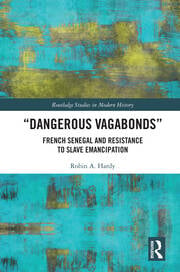
245 10|a"DANGEROUS VAGABONDS" :|bFRENCH SENEGAL AND RESISTANCE TO SLAVE EMANCIPATION|h[electronic resource].
260 |aABINGDON :|bROUTLEDGE,|c2025.
300 |a1 online resource
490 1 |aRoutledge Studies in Modern History
520 |a"Dangerous Vagabonds" examines the problem of illicit slavery in Senegal following the 1848 emancipation law. Where traditional scholarship relates its persistence to the economic and logistic pressures in the region, as well as a strong indigenous tradition of forced labor, this study goes further to show that inherent factors within the culture of French colonialism made abolishing the institution exceedingly difficult.In 1848, when slavery was abolished across greater France, the practice remained virtually intact in the French colony of Senegal on the west coast of Africa. Slavery would continue to be practiced in the colony and its expanding borderlands until at least 1905, when this study ends. This work takes a multi-faceted approach by examining three aspects of French imperial culture that mitigated slave freedom in Senegal: the views of race and slavery maintained by Senegal's influential mtis (mixed-race) population; French ethnological assessments of the aptitude and capabilities of black West Africans; and related, a trend within French political culture to deny metropolitan rights to the non-white colonized-a phenomenon that intensified in far-flung French territories that were not completely under French control, and where few whites resided.In complexifying post-colonial literature of West Africa, this study will be a useful resource to students and scholars of the history of slavery, colonial history, and West African studies.
588 |aOCLC-licensed vendor bibliographic record.
650 0|aEnslaved persons|xEmancipation|zSenegal.
651 0|aFrance|xColonies.
651 0|aSenegal|xHistory|yTo 1960.
830 0|aRoutledge studies in modern history.
856 40|3Taylor & Francis|uhttps://www.taylorfrancis.com/books/9781003363910
856 42|3OCLC metadata license agreement|uhttp://www.oclc.org/content/dam/oclc/forms/terms/vbrl-201703.pdf
901 |aTaylor & Francis