LEADER 03846cam a22005778i 4500
001 795373
003 TR_AnAIT
005 20260123004936
006 m o d
007 cr |||||||||||
008 241123s2025 enk ob 001 0 eng
020 |a9781003469391|q(ebk)
020 |a1003469396
020 |a9781040347553|q(electronic bk. : PDF)
020 |a104034755X|q(electronic bk. : PDF)
020 |a9781040347591|q(electronic bk. : EPUB)
020 |a1040347592|q(electronic bk. : EPUB)
020 |z9781032744780|q(hbk)
020 |z9781032744797|q(pbk)
024 7 |a10.4324/9781003469391|2doi
035 |a(OCoLC)1513265719
035 |a(OCoLC-P)1513265719
040 |aOCoLC-P|beng|erda|cOCoLC-P
041 |aeng
049 |aTürk Tarih Kurumu Kütüphanesi
050 00|aNA1375
072 7|aHBJD|2bicssc
072 7|aARC020000|2bisacsh
072 7|aHBLH|2bicssc
072 7|aHBTQ|2bicssc
072 7|aHBTK|2bicssc
072 7|aAMX|2bicssc
072 7|aGTB|2bicssc
072 7|aTN|2bicssc
072 7|aARC005000|2bisacsh
072 7|aHIS055000|2bisacsh
082 00|a720.956/09496|223/eng/20250402
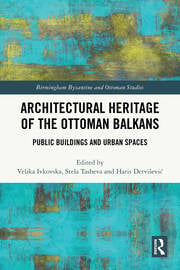
245 00|aArchitectural heritage of the Ottoman Balkans :|bpublic buildings and urban spaces /|cedited by Velika Ivkovska, Stela Tasheva and Haris Dervišević.
264 1|aAbingdon, Oxon ;|aNew York, NY :|bRoutledge,|c2025.
300 |a1 online resource.
336 |atext|btxt|2rdacontent
337 |acomputer|bc|2rdamedia
338 |aonline resource|bcr|2rdacarrier
490 1 |aBirmingham Byzantine and Ottoman studies
505 2 |aFountains in Ottoman period : case studies of Bulgaria and Istanbul, Turkey / Meltem Vatan and Desislava Hristova -- Muslim and non-Muslim educational institutional buildings in Mostar during the Ottoman period (1483-1878) and their current situation / Emel Topçu and Yunus Dilber -- Two monuments of Thrace connected to the name of the Ottoman general Gazi Evrenos Beg : an architectural and constructional comparative analysis / Damiani Karageorgiadou and Katerina Ritzouli.
520 |a"The Ottoman Empire's rule in the Balkans began in the late 14th century and continued until the late 19th century, and its impact on the region's history, culture, and society was significant. The systematic study of Ottoman influence in the Balkans, however, has only gained pace from the early 20th century. Architectural Heritage of the Ottoman Balkans: Public Buildings and Urban Spaces explores aspects and instances of Ottoman public architecture in the Balkans, a region that encompassed diverse populations, climates, and landscapes, all of which contributed to a wide array of architectural variations in both public and private structures. Throughout the book, a common thread emerges: the rich tapestry of Ottoman architecture in the Balkans reflects a synthesis of influences, both local and global. Ottoman, regional, and European architectural traditions intertwine to create a distinctive architectural identity that characterizes the region. This book also underscores the challenges of studying historical architecture, including language barriers and the scarcity of well-preserved records, while highlighting the importance of understanding these structures in their historical and cultural contexts"--|cProvided by publisher.
588 |aOCLC-licensed vendor bibliographic record.
650 0|aArchitecture, Ottoman|zBalkan Peninsula.
650 0|aPublic architecture|zBalkan Peninsula|xHistory.
700 1 |aIvkovska, Velika,|eeditor.|1https://id.oclc.org/worldcat/entity/E39PCjwYVqWfv8Rw4CBGqXC4YK
830 0|aBirmingham Byzantine and Ottoman studies.
856 40|3Taylor & Francis|uhttps://www.taylorfrancis.com/books/9781003469391
856 42|3OCLC metadata license agreement|uhttp://www.oclc.org/content/dam/oclc/forms/terms/vbrl-201703.pdf
901 |aTaylor & Francis