

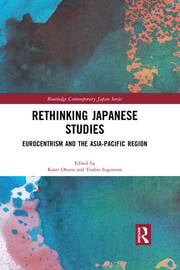
Rethinking Japanese studies : Eurocentrism and the Asia-Pacific region / edited by Kaori Okano and Yoshio Sugimoto.
Erişim Adresi
ISBN
9781315157894 (e-book : PDF)
9781351654944 (e-book: Mobi)
9781138068506 (hardback)
9781351654944 (e-book: Mobi)
9781138068506 (hardback)
Dil Kodu
İngilizce
Basım Bildirimi
First edition.
Yayın Bilgisi
Abingdon, Oxon ; New York, NY : Routledge, [2018]
Fiziksel Niteleme
1 online resource (xiii, 231 pages)
Dizi
Routledge contemporary Japan
Bibliyografi, vb. Notu
Includes bibliographical references.
İçindekiler Notu
chapter 1 Rethinking ‘Eurocentrism’ and area studies: Japanese Studies in the Asia-Pacifi c / KAORI OKANO -- chapter 2 Studying Japan as ‘the other’: a short history of Japanese Studies and its future / EIJI OGUMA -- chapter 3 Japanese language research: kokugo as an ideology, nihongo as an autonomous and global scholarship? / LIDIA TANAKA -- chapter 4 From ‘national’ literature to multicultural literature in ‘Japanese’ language? / TOMOKO AOYAMA -- chapter 5 Developing Japanese Studies with a Southeast Asian perspective / LENG LENG THANG -- chapter 6 Japanese Studies in South Korea / DUCK-YOUNG LEE -- chapter 7 Australia’s view of Japan, as seen from Japanese Studies / CAROLYN S. STEVENS -- chapter 8 Transnational dialogues in the making of modern East Asian history: collaborative project to write history textbooks / BU PING -- chapter 9 Whispering, writing and working across borders: practising transnational history in East Asia / VERA MACKIE -- chapter 10 Turning towards a cosmopolitan Japanese Studies / YOSHIO SUGIMOTO.
Özet, vb.
"Japanese Studies has provided a fertile space for non-Eurocentric analysis for a number of reasons. It has been embroiled in the long-running internal debate over the so-called Nihonjinron, revolving around the extent to which the effective interpretation of Japanese society and culture requires non-Western, Japan-specific emic concepts and theories. This book takes this question further and explores how we can understand Japanese society and culture by combining Euro-American concepts and theories with those that originate in Japan. Because Japan is the only liberal democracy to have achieved a high level of capitalism outside the Western cultural framework, Japanese Studies has long provided a forum for deliberations about the extent to which the Western conception of modernity is universally applicable. Furthermore, because of Japan's military, economic and cultural dominance in Asia at different points in the last century, Japanese Studies has had to deal with the issues of Japanocentrism as well as Eurocentrism, a duality requiring complex and nuanced analysis. This book identifies variations amongst Japanese Studies academic communities in the Asia-Pacific and examines the extent to which relatively autonomous scholarship, intellectual approach or theories exist in the region. It also evaluates how studies on Japan in the region contribute to global Japanese Studies and explores their potential for formulating concrete strategies to unsettle Eurocentric dominance of the discipline."--Provided by publisher.
Konu
Eurocentrism __ History.
Japan __ Civilization.
Japan __ Study and teaching (Higher education)
Japan __ Civilization.
Japan __ Study and teaching (Higher education)
Diğer Yazarlar
Veritabanı
Eseri Alıntıla
Referansları kullanmadan önce gözden geçirmeniz ve varsa gerekli düzeltmeleri yapmanız önerilir.
Dijital Kaynak
MARC Görünümü
LEADER 04035cam a2200385Ii 4500
001 795522
003 TR_AnAIT
005 20260123005219
008 180706s2018 enk ob 001 0 eng d
020 |a9781315157894|q(e-book : PDF)
020 |a9781351654944|q(e-book: Mobi)
020 |z9781138068506|q(hardback)
024 7 |a10.4324/9781315157894 |2doi
035 |a(OCoLC)993762733
040 |aFlBoTFG|cFlBoTFG|erda
041 |aeng
043 |aa-ja---
049 |aTürk Tarih Kurumu Kütüphanesi
050 4|aDS834.95|b.R47 2018
082 04|a952.0071|bR438
245 00|aRethinking Japanese studies :|bEurocentrism and the Asia-Pacific region /|cedited by Kaori Okano and Yoshio Sugimoto.
250 |aFirst edition.
264 1|aAbingdon, Oxon ;|aNew York, NY :|bRoutledge,|c[2018]
300 |a1 online resource (xiii, 231 pages)
336 |atext|2rdacontent
337 |acomputer|2rdamedia
338 |aonline resource|2rdacarrier
490 1 |aRoutledge contemporary Japan
504 |aIncludes bibliographical references.
505 00|tchapter 1 Rethinking ‘Eurocentrism’ and area studies: Japanese Studies in the Asia-Pacifi c /|rKAORI OKANO -- |tchapter 2 Studying Japan as ‘the other’: a short history of Japanese Studies and its future /|rEIJI OGUMA -- |tchapter 3 Japanese language research: kokugo as an ideology, nihongo as an autonomous and global scholarship? /|rLIDIA TANAKA -- |tchapter 4 From ‘national’ literature to multicultural literature in ‘Japanese’ language? /|rTOMOKO AOYAMA -- |tchapter 5 Developing Japanese Studies with a Southeast Asian perspective /|rLENG LENG THANG -- |tchapter 6 Japanese Studies in South Korea /|rDUCK-YOUNG LEE -- |tchapter 7 Australia’s view of Japan, as seen from Japanese Studies /|rCAROLYN S. STEVENS -- |tchapter 8 Transnational dialogues in the making of modern East Asian history: collaborative project to write history textbooks /|rBU PING -- |tchapter 9 Whispering, writing and working across borders: practising transnational history in East Asia /|rVERA MACKIE -- |tchapter 10 Turning towards a cosmopolitan Japanese Studies /|rYOSHIO SUGIMOTO.
520 |a"Japanese Studies has provided a fertile space for non-Eurocentric analysis for a number of reasons. It has been embroiled in the long-running internal debate over the so-called Nihonjinron, revolving around the extent to which the effective interpretation of Japanese society and culture requires non-Western, Japan-specific emic concepts and theories. This book takes this question further and explores how we can understand Japanese society and culture by combining Euro-American concepts and theories with those that originate in Japan. Because Japan is the only liberal democracy to have achieved a high level of capitalism outside the Western cultural framework, Japanese Studies has long provided a forum for deliberations about the extent to which the Western conception of modernity is universally applicable. Furthermore, because of Japan's military, economic and cultural dominance in Asia at different points in the last century, Japanese Studies has had to deal with the issues of Japanocentrism as well as Eurocentrism, a duality requiring complex and nuanced analysis. This book identifies variations amongst Japanese Studies academic communities in the Asia-Pacific and examines the extent to which relatively autonomous scholarship, intellectual approach or theories exist in the region. It also evaluates how studies on Japan in the region contribute to global Japanese Studies and explores their potential for formulating concrete strategies to unsettle Eurocentric dominance of the discipline."--Provided by publisher.
650 0|aEurocentrism|xHistory.
651 0|aJapan|xCivilization.
651 0|aJapan|xStudy and teaching (Higher education)
700 1 |aOkano, Kaori,|d1959-|eeditor.
700 1 |aSugimoto, Yoshio,|d1939-|eeditor.
776 08|iPrint version: |z9781138068506|w(DLC) 2017010102
830 0|aRoutledge contemporary Japan series.
856 40|uhttps://www.taylorfrancis.com/books/9781315157894|zClick here to view.
901 |aTaylor & Francis
001 795522
003 TR_AnAIT
005 20260123005219
008 180706s2018 enk ob 001 0 eng d
020 |a9781315157894|q(e-book : PDF)
020 |a9781351654944|q(e-book: Mobi)
020 |z9781138068506|q(hardback)
024 7 |a10.4324/9781315157894 |2doi
035 |a(OCoLC)993762733
040 |aFlBoTFG|cFlBoTFG|erda
041 |aeng
043 |aa-ja---
049 |aTürk Tarih Kurumu Kütüphanesi
050 4|aDS834.95|b.R47 2018
082 04|a952.0071|bR438
245 00|aRethinking Japanese studies :|bEurocentrism and the Asia-Pacific region /|cedited by Kaori Okano and Yoshio Sugimoto.
250 |aFirst edition.
264 1|aAbingdon, Oxon ;|aNew York, NY :|bRoutledge,|c[2018]
300 |a1 online resource (xiii, 231 pages)
336 |atext|2rdacontent
337 |acomputer|2rdamedia
338 |aonline resource|2rdacarrier
490 1 |aRoutledge contemporary Japan
504 |aIncludes bibliographical references.
505 00|tchapter 1 Rethinking ‘Eurocentrism’ and area studies: Japanese Studies in the Asia-Pacifi c /|rKAORI OKANO -- |tchapter 2 Studying Japan as ‘the other’: a short history of Japanese Studies and its future /|rEIJI OGUMA -- |tchapter 3 Japanese language research: kokugo as an ideology, nihongo as an autonomous and global scholarship? /|rLIDIA TANAKA -- |tchapter 4 From ‘national’ literature to multicultural literature in ‘Japanese’ language? /|rTOMOKO AOYAMA -- |tchapter 5 Developing Japanese Studies with a Southeast Asian perspective /|rLENG LENG THANG -- |tchapter 6 Japanese Studies in South Korea /|rDUCK-YOUNG LEE -- |tchapter 7 Australia’s view of Japan, as seen from Japanese Studies /|rCAROLYN S. STEVENS -- |tchapter 8 Transnational dialogues in the making of modern East Asian history: collaborative project to write history textbooks /|rBU PING -- |tchapter 9 Whispering, writing and working across borders: practising transnational history in East Asia /|rVERA MACKIE -- |tchapter 10 Turning towards a cosmopolitan Japanese Studies /|rYOSHIO SUGIMOTO.
520 |a"Japanese Studies has provided a fertile space for non-Eurocentric analysis for a number of reasons. It has been embroiled in the long-running internal debate over the so-called Nihonjinron, revolving around the extent to which the effective interpretation of Japanese society and culture requires non-Western, Japan-specific emic concepts and theories. This book takes this question further and explores how we can understand Japanese society and culture by combining Euro-American concepts and theories with those that originate in Japan. Because Japan is the only liberal democracy to have achieved a high level of capitalism outside the Western cultural framework, Japanese Studies has long provided a forum for deliberations about the extent to which the Western conception of modernity is universally applicable. Furthermore, because of Japan's military, economic and cultural dominance in Asia at different points in the last century, Japanese Studies has had to deal with the issues of Japanocentrism as well as Eurocentrism, a duality requiring complex and nuanced analysis. This book identifies variations amongst Japanese Studies academic communities in the Asia-Pacific and examines the extent to which relatively autonomous scholarship, intellectual approach or theories exist in the region. It also evaluates how studies on Japan in the region contribute to global Japanese Studies and explores their potential for formulating concrete strategies to unsettle Eurocentric dominance of the discipline."--Provided by publisher.
650 0|aEurocentrism|xHistory.
651 0|aJapan|xCivilization.
651 0|aJapan|xStudy and teaching (Higher education)
700 1 |aOkano, Kaori,|d1959-|eeditor.
700 1 |aSugimoto, Yoshio,|d1939-|eeditor.
776 08|iPrint version: |z9781138068506|w(DLC) 2017010102
830 0|aRoutledge contemporary Japan series.
856 40|uhttps://www.taylorfrancis.com/books/9781315157894|zClick here to view.
901 |aTaylor & Francis
Materyaller
Depodan talep edilen materyal sadece kütüphane içerisinde kullanılmaktadır.
Materyal dışarıya ödünç verilmemektedir.
Materyal dışarıya ödünç verilmemektedir.
