

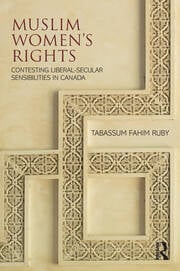
Muslim women's rights : contesting liberal-secular sensibilities in Canada / Tabassum Fahim Ruby.
ISBN
9781315182933 (electronic bk.)
1315182939 (electronic bk.)
9781351726665 (ePub ebook)
1351726668
9781351726672 (PDF ebook)
1351726676
9781351726658 (Mobipocket ebook)
135172665X
9781138741225
1315182939 (electronic bk.)
9781351726665 (ePub ebook)
1351726668
9781351726672 (PDF ebook)
1351726676
9781351726658 (Mobipocket ebook)
135172665X
9781138741225
Dil Kodu
İngilizce
Yazar
Yayın Bilgisi
London : Routledge, 2019.
Fiziksel Niteleme
1 online resource.
Dizi
Global gender
Genel Not
Includes index.
İçindekiler Notu
Cover; Half Title; Series Information; Title Page; Copyright Page; Dedication; Table of contents; Preface; Acknowledgments; Glossary of Arabic words; 1 Liberal-secular sensibilities and a genealogy of the Ontario Shari'ah tribunals; Introduction; Framing the debates; Sources and method; Theoretical frameworks; The Arbitration Act, S.O. 1991; Historicizing the proposed Ontario Shari'ah tribunals; Marion Boyd report; The Boyd Report and the Arbitration Act; The Boyd report and consultations; Arc of the book; Notes; Works cited
2 From Orientalism to neo-orientalism: Discourses of race and imperial hegemony in the name of gender equalityIntroduction; The liberal empire, the language of rights, and the category of gender; A feminist compulsion, or, sharing the white man's burden; Discourses of neo-orientalism and cultural authenticity; Hyperpatriarchal chronicles; Insider saviors; Conclusion; Notes; Works cited; 3 Liberalism, the court system, and multiculturalism: Examining epistemic claims; Introduction; The normalization of liberalism: Are Muslim women really equal?
The court system, the assertion of vulnerability, and protectionTensions of multicultural discourses; Taming multiculturalism or expressing bigotry; Conclusion; Notes; Works cited; 4 Secularism and its discontents: Social hierarchies that matter; Introduction; Secularism as a worldview; Secularism, religion, and social hierarchies; Civilized rational secularism/uncivilized irrational religion; Public secularism/private religion: The feminization of religion; Nonpatriarchal progressive secularism/patriarchal repressive religious; Secularism under the gaze of a religious mind; Conclusion; Notes
Works cited5 Aversion or conversion: A missed opportunity?; Introduction; Situating the term "Shari'ah"; Opponents and the proposed Ontario Shari'ah tribunals; Proponents and the proposed Ontario Shari'ah tribunals; Women, the law of inheritance, and the proposed Shari'ah tribunals; Women and divorce issues, and the proposed Shari'ah tribunals; Why insist on Shari'ah tribunals?; Conclusion; Notes; Works cited; 6 Ideology, ontology, and epistemology: Shari'ah debates and the Tawhidi (Unitary) weltanschauung; Introduction; Is the declaration of human rights universal?; Ideological differences
Ontological differencesEpistemological differences; Not a case of cultural relativism; The Tawhidi weltanschauung, Shari'ah law, and the Islam and gender discourse; Conclusion; Notes; Works cited; 7 Conclusions: Signs are enough for those who think; Introduction; Reading the signs; Notes; Works cited; Index
2 From Orientalism to neo-orientalism: Discourses of race and imperial hegemony in the name of gender equalityIntroduction; The liberal empire, the language of rights, and the category of gender; A feminist compulsion, or, sharing the white man's burden; Discourses of neo-orientalism and cultural authenticity; Hyperpatriarchal chronicles; Insider saviors; Conclusion; Notes; Works cited; 3 Liberalism, the court system, and multiculturalism: Examining epistemic claims; Introduction; The normalization of liberalism: Are Muslim women really equal?
The court system, the assertion of vulnerability, and protectionTensions of multicultural discourses; Taming multiculturalism or expressing bigotry; Conclusion; Notes; Works cited; 4 Secularism and its discontents: Social hierarchies that matter; Introduction; Secularism as a worldview; Secularism, religion, and social hierarchies; Civilized rational secularism/uncivilized irrational religion; Public secularism/private religion: The feminization of religion; Nonpatriarchal progressive secularism/patriarchal repressive religious; Secularism under the gaze of a religious mind; Conclusion; Notes
Works cited5 Aversion or conversion: A missed opportunity?; Introduction; Situating the term "Shari'ah"; Opponents and the proposed Ontario Shari'ah tribunals; Proponents and the proposed Ontario Shari'ah tribunals; Women, the law of inheritance, and the proposed Shari'ah tribunals; Women and divorce issues, and the proposed Shari'ah tribunals; Why insist on Shari'ah tribunals?; Conclusion; Notes; Works cited; 6 Ideology, ontology, and epistemology: Shari'ah debates and the Tawhidi (Unitary) weltanschauung; Introduction; Is the declaration of human rights universal?; Ideological differences
Ontological differencesEpistemological differences; Not a case of cultural relativism; The Tawhidi weltanschauung, Shari'ah law, and the Islam and gender discourse; Conclusion; Notes; Works cited; 7 Conclusions: Signs are enough for those who think; Introduction; Reading the signs; Notes; Works cited; Index
Özet, vb.
In the post-9/11 environment, the figure of the Muslim woman is at the forefront of global politics. Her representation is often articulated within a rights discourse owing much to liberal-secular sensibilities--notions of freedom, equality, rational thinking, individualism, and modernization. Muslim Women's Rights explores how these liberal-secular sensibilities inform, shape, and foreclose public discussion on questions of Islam and gender. The book draws on postcolonial, antiracist, and transnational feminist studies in order to analyze public and legal debates surrounding proposed shari'ah tribunals in Canada. It examines the cultural and epistemological suppositions underlying common assumptions about Islamic laws; explores how these assumptions are informed by the Western progress narrative and women's rights debates; and asks what forms of politics these enable and foreclose. The book assesses the influence of secularism on the ontology, epistemology, and ethics afforded to Islam in the West, and begins to trace possibilities by which Islamic family law might be productively addressed on its own terms. Muslim Women's Rights is a significant contribution to the fields of both Islam and gender and the critical study of secularism.
Konu
Muslim women __ Canada.
Women's rights __ Canada.
Women (Islamic law) __ Canada.
SOCIAL SCIENCE / Discrimination & Race Relations. __ bisacsh
SOCIAL SCIENCE / Minority Studies. __ bisacsh
SOCIAL SCIENCE / Gender Studies __ bisacsh
Women's rights __ Canada.
Women (Islamic law) __ Canada.
SOCIAL SCIENCE / Discrimination & Race Relations. __ bisacsh
SOCIAL SCIENCE / Minority Studies. __ bisacsh
SOCIAL SCIENCE / Gender Studies __ bisacsh
Veritabanı
Eseri Alıntıla
Referansları kullanmadan önce gözden geçirmeniz ve varsa gerekli düzeltmeleri yapmanız önerilir.
Dijital Kaynak
MARC Görünümü
LEADER 05861cam a2200613Ii 4500
001 795535
003 TR_AnAIT
005 20260123005233
006 m o d
007 cr cnu---unuuu
008 190315s2019 enk o 001 0 eng d
020 |a9781315182933|q(electronic bk.)
020 |a1315182939|q(electronic bk.)
020 |a9781351726665|q(ePub ebook)
020 |a1351726668
020 |a9781351726672|q(PDF ebook)
020 |a1351726676
020 |a9781351726658|q(Mobipocket ebook)
020 |a135172665X
020 |z9781138741225
024 7 |a10.4324/9781315182933|2doi
035 |a(OCoLC)1089930760
035 |a(OCoLC-P)1089930760
040 |aOCoLC-P|beng|erda|epn|cOCoLC-P
041 |aeng
049 |aTürk Tarih Kurumu Kütüphanesi
050 4|aHQ1170|b.R83 2019
072 7|aSOC|x031000|2bisacsh
072 7|aSOC|x020000|2bisacsh
072 7|aSOC|x032000|2bisacsh
072 7|aLAFS|2bicssc
082 04|a305.48/697071|223
100 1 |aRuby, Tabassum Fahim,|eauthor.
245 10|aMuslim women's rights :|bcontesting liberal-secular sensibilities in Canada /|cTabassum Fahim Ruby.
264 1|aLondon :|bRoutledge,|c2019.
300 |a1 online resource.
336 |atext|btxt|2rdacontent
337 |acomputer|bc|2rdamedia
338 |aonline resource|bcr|2rdacarrier
490 1 |aGlobal gender
500 |aIncludes index.
505 0 |aCover; Half Title; Series Information; Title Page; Copyright Page; Dedication; Table of contents; Preface; Acknowledgments; Glossary of Arabic words; 1 Liberal-secular sensibilities and a genealogy of the Ontario Shari'ah tribunals; Introduction; Framing the debates; Sources and method; Theoretical frameworks; The Arbitration Act, S.O. 1991; Historicizing the proposed Ontario Shari'ah tribunals; Marion Boyd report; The Boyd Report and the Arbitration Act; The Boyd report and consultations; Arc of the book; Notes; Works cited
505 8 |a2 From Orientalism to neo-orientalism: Discourses of race and imperial hegemony in the name of gender equalityIntroduction; The liberal empire, the language of rights, and the category of gender; A feminist compulsion, or, sharing the white man's burden; Discourses of neo-orientalism and cultural authenticity; Hyperpatriarchal chronicles; Insider saviors; Conclusion; Notes; Works cited; 3 Liberalism, the court system, and multiculturalism: Examining epistemic claims; Introduction; The normalization of liberalism: Are Muslim women really equal?
505 8 |aThe court system, the assertion of vulnerability, and protectionTensions of multicultural discourses; Taming multiculturalism or expressing bigotry; Conclusion; Notes; Works cited; 4 Secularism and its discontents: Social hierarchies that matter; Introduction; Secularism as a worldview; Secularism, religion, and social hierarchies; Civilized rational secularism/uncivilized irrational religion; Public secularism/private religion: The feminization of religion; Nonpatriarchal progressive secularism/patriarchal repressive religious; Secularism under the gaze of a religious mind; Conclusion; Notes
505 8 |aWorks cited5 Aversion or conversion: A missed opportunity?; Introduction; Situating the term "Shari'ah"; Opponents and the proposed Ontario Shari'ah tribunals; Proponents and the proposed Ontario Shari'ah tribunals; Women, the law of inheritance, and the proposed Shari'ah tribunals; Women and divorce issues, and the proposed Shari'ah tribunals; Why insist on Shari'ah tribunals?; Conclusion; Notes; Works cited; 6 Ideology, ontology, and epistemology: Shari'ah debates and the Tawhidi (Unitary) weltanschauung; Introduction; Is the declaration of human rights universal?; Ideological differences
505 8 |aOntological differencesEpistemological differences; Not a case of cultural relativism; The Tawhidi weltanschauung, Shari'ah law, and the Islam and gender discourse; Conclusion; Notes; Works cited; 7 Conclusions: Signs are enough for those who think; Introduction; Reading the signs; Notes; Works cited; Index
520 |aIn the post-9/11 environment, the figure of the Muslim woman is at the forefront of global politics. Her representation is often articulated within a rights discourse owing much to liberal-secular sensibilities--notions of freedom, equality, rational thinking, individualism, and modernization. Muslim Women's Rights explores how these liberal-secular sensibilities inform, shape, and foreclose public discussion on questions of Islam and gender. The book draws on postcolonial, antiracist, and transnational feminist studies in order to analyze public and legal debates surrounding proposed shari'ah tribunals in Canada. It examines the cultural and epistemological suppositions underlying common assumptions about Islamic laws; explores how these assumptions are informed by the Western progress narrative and women's rights debates; and asks what forms of politics these enable and foreclose. The book assesses the influence of secularism on the ontology, epistemology, and ethics afforded to Islam in the West, and begins to trace possibilities by which Islamic family law might be productively addressed on its own terms. Muslim Women's Rights is a significant contribution to the fields of both Islam and gender and the critical study of secularism.
588 |aOCLC-licensed vendor bibliographic record.
650 0|aMuslim women|zCanada.
650 0|aWomen's rights|zCanada.
650 0|aWomen (Islamic law)|zCanada.
650 7|aSOCIAL SCIENCE / Discrimination & Race Relations.|2bisacsh
650 7|aSOCIAL SCIENCE / Minority Studies.|2bisacsh
650 7|aSOCIAL SCIENCE / Gender Studies|2bisacsh
856 40|3Taylor & Francis|uhttps://www.taylorfrancis.com/books/9781315182933
856 42|3OCLC metadata license agreement|uhttp://www.oclc.org/content/dam/oclc/forms/terms/vbrl-201703.pdf
901 |aTaylor & Francis
001 795535
003 TR_AnAIT
005 20260123005233
006 m o d
007 cr cnu---unuuu
008 190315s2019 enk o 001 0 eng d
020 |a9781315182933|q(electronic bk.)
020 |a1315182939|q(electronic bk.)
020 |a9781351726665|q(ePub ebook)
020 |a1351726668
020 |a9781351726672|q(PDF ebook)
020 |a1351726676
020 |a9781351726658|q(Mobipocket ebook)
020 |a135172665X
020 |z9781138741225
024 7 |a10.4324/9781315182933|2doi
035 |a(OCoLC)1089930760
035 |a(OCoLC-P)1089930760
040 |aOCoLC-P|beng|erda|epn|cOCoLC-P
041 |aeng
049 |aTürk Tarih Kurumu Kütüphanesi
050 4|aHQ1170|b.R83 2019
072 7|aSOC|x031000|2bisacsh
072 7|aSOC|x020000|2bisacsh
072 7|aSOC|x032000|2bisacsh
072 7|aLAFS|2bicssc
082 04|a305.48/697071|223
100 1 |aRuby, Tabassum Fahim,|eauthor.
245 10|aMuslim women's rights :|bcontesting liberal-secular sensibilities in Canada /|cTabassum Fahim Ruby.
264 1|aLondon :|bRoutledge,|c2019.
300 |a1 online resource.
336 |atext|btxt|2rdacontent
337 |acomputer|bc|2rdamedia
338 |aonline resource|bcr|2rdacarrier
490 1 |aGlobal gender
500 |aIncludes index.
505 0 |aCover; Half Title; Series Information; Title Page; Copyright Page; Dedication; Table of contents; Preface; Acknowledgments; Glossary of Arabic words; 1 Liberal-secular sensibilities and a genealogy of the Ontario Shari'ah tribunals; Introduction; Framing the debates; Sources and method; Theoretical frameworks; The Arbitration Act, S.O. 1991; Historicizing the proposed Ontario Shari'ah tribunals; Marion Boyd report; The Boyd Report and the Arbitration Act; The Boyd report and consultations; Arc of the book; Notes; Works cited
505 8 |a2 From Orientalism to neo-orientalism: Discourses of race and imperial hegemony in the name of gender equalityIntroduction; The liberal empire, the language of rights, and the category of gender; A feminist compulsion, or, sharing the white man's burden; Discourses of neo-orientalism and cultural authenticity; Hyperpatriarchal chronicles; Insider saviors; Conclusion; Notes; Works cited; 3 Liberalism, the court system, and multiculturalism: Examining epistemic claims; Introduction; The normalization of liberalism: Are Muslim women really equal?
505 8 |aThe court system, the assertion of vulnerability, and protectionTensions of multicultural discourses; Taming multiculturalism or expressing bigotry; Conclusion; Notes; Works cited; 4 Secularism and its discontents: Social hierarchies that matter; Introduction; Secularism as a worldview; Secularism, religion, and social hierarchies; Civilized rational secularism/uncivilized irrational religion; Public secularism/private religion: The feminization of religion; Nonpatriarchal progressive secularism/patriarchal repressive religious; Secularism under the gaze of a religious mind; Conclusion; Notes
505 8 |aWorks cited5 Aversion or conversion: A missed opportunity?; Introduction; Situating the term "Shari'ah"; Opponents and the proposed Ontario Shari'ah tribunals; Proponents and the proposed Ontario Shari'ah tribunals; Women, the law of inheritance, and the proposed Shari'ah tribunals; Women and divorce issues, and the proposed Shari'ah tribunals; Why insist on Shari'ah tribunals?; Conclusion; Notes; Works cited; 6 Ideology, ontology, and epistemology: Shari'ah debates and the Tawhidi (Unitary) weltanschauung; Introduction; Is the declaration of human rights universal?; Ideological differences
505 8 |aOntological differencesEpistemological differences; Not a case of cultural relativism; The Tawhidi weltanschauung, Shari'ah law, and the Islam and gender discourse; Conclusion; Notes; Works cited; 7 Conclusions: Signs are enough for those who think; Introduction; Reading the signs; Notes; Works cited; Index
520 |aIn the post-9/11 environment, the figure of the Muslim woman is at the forefront of global politics. Her representation is often articulated within a rights discourse owing much to liberal-secular sensibilities--notions of freedom, equality, rational thinking, individualism, and modernization. Muslim Women's Rights explores how these liberal-secular sensibilities inform, shape, and foreclose public discussion on questions of Islam and gender. The book draws on postcolonial, antiracist, and transnational feminist studies in order to analyze public and legal debates surrounding proposed shari'ah tribunals in Canada. It examines the cultural and epistemological suppositions underlying common assumptions about Islamic laws; explores how these assumptions are informed by the Western progress narrative and women's rights debates; and asks what forms of politics these enable and foreclose. The book assesses the influence of secularism on the ontology, epistemology, and ethics afforded to Islam in the West, and begins to trace possibilities by which Islamic family law might be productively addressed on its own terms. Muslim Women's Rights is a significant contribution to the fields of both Islam and gender and the critical study of secularism.
588 |aOCLC-licensed vendor bibliographic record.
650 0|aMuslim women|zCanada.
650 0|aWomen's rights|zCanada.
650 0|aWomen (Islamic law)|zCanada.
650 7|aSOCIAL SCIENCE / Discrimination & Race Relations.|2bisacsh
650 7|aSOCIAL SCIENCE / Minority Studies.|2bisacsh
650 7|aSOCIAL SCIENCE / Gender Studies|2bisacsh
856 40|3Taylor & Francis|uhttps://www.taylorfrancis.com/books/9781315182933
856 42|3OCLC metadata license agreement|uhttp://www.oclc.org/content/dam/oclc/forms/terms/vbrl-201703.pdf
901 |aTaylor & Francis
Materyaller
Depodan talep edilen materyal sadece kütüphane içerisinde kullanılmaktadır.
Materyal dışarıya ödünç verilmemektedir.
Materyal dışarıya ödünç verilmemektedir.
