LEADER 03498cam a2200373Ii 4500
001 795565
003 TR_AnAIT
005 20260123005259
008 180706s2018 nyu ob 001 0 eng d
020 |a9781315265834|q(e-book : PDF)
020 |a9781351968348|q(e-book: Mobi)
020 |z9781138290907|q(hardback)
020 |z9781138290914|q(paperback)
024 7 |a10.4324/9781315265834 |2doi
035 |a(OCoLC)993988758
040 |aFlBoTFG|cFlBoTFG|erda
041 |aeng
043 |ae------
049 |aTürk Tarih Kurumu Kütüphanesi
050 4|aU162|b.H483 2018
082 04|a355.40903|bH595
100 1 |aHeuser, Beatrice,|d1961-,|eauthor.
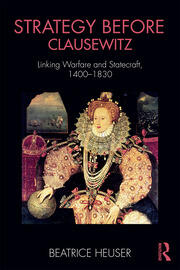
245 10|aStrategy before Clausewitz :|blinking warfare and statecraft, 1400-1830 /|cBeatrice Heuser.
246 30|aLinking warfare and statecraft, 1400-1830
264 1|aAbingdon, Oxon ;|aNew York, NY :|bRoutledge,|c[2018]
300 |a1 online resource
336 |atext|2rdacontent
337 |acomputer|2rdamedia
338 |aonline resource|2rdacarrier
490 0 |aCass military studies
505 0 |achapter 1 Was strategy practised before the word was used? -- chapter 2 Christine de Pizan, the ? rst modern strategist: good governance and con? ict mediation -- chapter 3 Denial of change: the military revolution as seen by contemporaries -- chapter 4 The invention of modern maritime strategies: the Anglo-Spanish War of 1585–1604 -- chapter 5 A national security strategy for England: Matthew Sutcliffe, the Earl of Essex and the Cádiz Expedition of 1596 -- chapter 6 Command of the sea: the origins of a strategic concept -- chapter 7 Lazarus Schwendi, Raimondo Montecuccoli and the Turkish wars: peaceful coexistence or rollback? -- chapter 8 Guibert: prophet of total war? -- chapter 9 What Clausewitz read: on the origins of some of his key ideas.
520 |a"This collection of essays combines historical research with cutting-edge analysis and makes a significant contribution to the study of the history of strategic thinking. Among leading writers of strategy, there is a debate as to whether strategy in its modern definition existed before Clausewitz or even the early 20th century. The case studies featured in this book show that strategic thinking did indeed exist before the last century, even if there was no commonly agreed word for it. The volume uses a variety of approaches. Firstly, it explores case studies which assess the strategic thinking of three monarchs whose biographers have claimed to have identified strategic thinking in their warfare: Edward III of England, Philip II of Spain, and Louis XIV of France. The book then analyses a number of famous strategic thinkers and practitioners, including Christine de Pizan, Lazarus Schwendi, Matthew Sutcliffe, Raimondo Montecuccoli, and Count Guibert. This work combines in-depth historical documentary research with strategic studies analysis. The chapters illustrate that it is language and at times conceptualisation, more than social, economic and political (let alone mental or educational), limitations that differentiate us from our forbearers. This book will be of great interest to students of strategic history and theory, military history and IR in general."--Providee by publisher.
650 0|aStrategy|xHistory.
650 0|aMilitary history, Modern|zEurope|vCase studies.
650 0|aMilitary art and science|zEurope|xHistory.
651 0|aEurope|xRelations.
776 08|iPrint version: |z9781138290907|w(DLC) 2017011137
856 40|uhttps://www.taylorfrancis.com/books/9781315265834|zClick here to view.
901 |aTaylor & Francis