LEADER 01811cam a2200349Ii 4500
001 795615
003 TR_AnAIT
005 20260123005344
008 180706s2017 nyu o 001 0 eng d
020 |a9781315513058|q(e-book : PDF)
020 |a9781315513027|q(e-book: Mobi)
020 |z9781138201163|q(hardback)
024 7 |a10.4324/9781315513058 |2doi
035 |a(OCoLC)993101924
040 |aFlBoTFG|cFlBoTFG|erda
041 |aeng
049 |aTürk Tarih Kurumu Kütüphanesi
050 4|aHT913|b.D42 2017
082 04|a241.67509015|bD515
100 1 |aDe Wet, Chris L.,|d1982-,|eauthor.
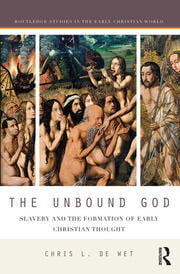
245 14|aThe unbound God :|bslavery and the formation of early Christian thought /|cChris L. de Wet.
250 |aFirst edition.
264 1|aNew York :|bRoutledge,|c2017.
300 |a1 online resource
336 |atext|2rdacontent
337 |acomputer|2rdamedia
338 |aonline resource|2rdacarrier
490 0 |aRoutledge studies in the early Christian world
505 0 |achapter 1 Introducing early Christian doulology: slavery to God, doulological classifications, and early Christian identity -- chapter 2 Savior or slave?: Philippians 2:6–11 and the problem of slavery in Origen’s Christology -- chapter 3 Emancipating the Spirit: slavery and early Christian pneumatology in Eunomius and Basil of Caesarea -- chapter 4 The curse of Ham (Gen. 9:18–27): slavery, sin, and punishment in John Chrysostom, Augustine, and the Cave of Treasures -- chapter 5 Conclusion: the unbound God.
650 0|aSlavery|xReligious aspects.
650 0|aSlavery and the church|xHistory|yTo 1500.
650 0|aSlavery in literature.
650 0|aChristian literature, Early.
650 0|aChurch history|yPrimitive and early church, ca. 30-600.
776 08|iPrint version: |z9781138201163|w(DLC) 2016046644
856 40|uhttps://www.taylorfrancis.com/books/9781315513058|zClick here to view.
901 |aTaylor & Francis