LEADER 03431nam a2200445Ii 4500
001 795708
003 TR_AnAIT
005 20260123005507
006 m o d
007 cr
008 181112s2018 fluab ob 001 0 eng d
020 |a9781315670010|q(e-book : PDF)
035 |a(OCoLC)1065289524
040 |aFlBoTFG|cFlBoTFG|erda
041 1 |aeng
041 |aeng
049 |aTürk Tarih Kurumu Kütüphanesi
072 7|aSCI|x030000 |2bisacsh
072 7|aSOC|x015000 |2bisacsh
072 7|aRGC |2bicscc
100 1 |aTaylor, Affrica,|eauthor.
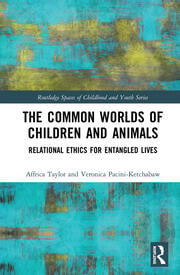
245 14|aThe Common Worlds of Children and Animals :|bRelational Ethics for Entangled Lives /|cby Affrica Taylor and Veronica Pacini-Ketchabaw.
250 |aFirst edition.
264 1|aBoca Raton, FL :|bRoutledge,|c2018.
300 |a1 online resource (146 pages) :|b12 illustrations, text file, PDF.
336 |atext|2rdacontent
337 |acomputer|2rdamedia
338 |aonline resource|2rdacarrier
490 1 |aRoutledge Spaces of Childhood and Youth Series
504 |aIncludes bibliographical references and index.
505 00|tIntroduction 1. The Common Worlds of Children and Animals 2. Children, Kangaroos, and Deer: An Ethics ofMultispecies Conviviality 3. Children, Ants, and Worms: An Environmental Ethics of Mutual Vulnerability 4. Children, Bilbies, and Spirit Bears: A Decolonising Ethics of Ecological Reconciliation 5. Children, Raccoons, and Possums: An Ethics of Staying with the Trouble 6. Indigenous ChildDogs: A Recuperative Ethics of Kinship Obligation Conclusion: Relational Ethics for Entangled Lives
520 3 |aThe lives and futures of children and animals are linked to environmental challenges associated with the Anthropocene and the acceleration of human-caused extinctions. This book sparks a fascinating interdisciplinary conversation about child–animal relations, calling for a radical shift in how we understand our relationship with other animals and our place in the world. It addresses issues of interspecies and intergenerational environmental justice through examining the entanglement of children’s and animal’s lives and common worlds. It explores everyday encounters and unfolding relations between children and urban wildlife. Inspired by feminist environmental philosophies and indigenous cosmologies, the book poses a new relational ethics based upon the small achievements of child–animal interactions. It also provides an analysis of animal narratives in children’s popular culture. It traces the geo-historical trajectories and convergences of these narratives and of the lives of children and animals in settler-colonised lands. This innovative book brings together the fields of more-than-human geography, childhood studies, multispecies studies, and the environmental humanities. It will be of interest to students and scholars who are reconsidering the ethics of child–animal relations from a fresh perspective.
530 |aAlso available in print format.
650 7|aSOCIAL SCIENCE / Human Geography.|2bisacsh
650 0|aSocial sciences and ethics.
650 0|aHuman-animal relationships.
655 0|aElectronic books.
700 1 |aPacini-Ketchabaw, Veronica,|eauthor.
710 2 |aTaylor and Francis.
776 08|iPrint version: |z9781138947597
830 0|aRoutledge Spaces of Childhood and Youth Series.
856 40|uhttps://www.taylorfrancis.com/books/9781315670010|zClick here to view.
901 |aTaylor & Francis