

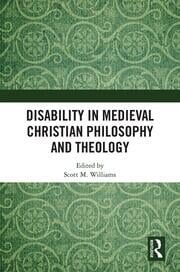
Disability in medieval Christian philosophy and theology / edited by Scott M. Williams.
ISBN
9780429202919 (ebk)
0429202911
9780429511509 (electronic bk. : PDF)
0429511507 (electronic bk. : PDF)
9780429518362 (electronic bk. : Mobipocket)
0429518366 (electronic bk. : Mobipocket)
9780429514937 (electronic bk. : EPUB)
042951493X (electronic bk. : EPUB)
9780367195229 (hbk)
0429202911
9780429511509 (electronic bk. : PDF)
0429511507 (electronic bk. : PDF)
9780429518362 (electronic bk. : Mobipocket)
0429518366 (electronic bk. : Mobipocket)
9780429514937 (electronic bk. : EPUB)
042951493X (electronic bk. : EPUB)
9780367195229 (hbk)
Dil Kodu
İngilizce
Yayın Bilgisi
New York : Routledge, 2020.
Fiziksel Niteleme
1 online resource
İçindekiler Notu
Cover -- Half Title -- Title Page -- Copyright Page -- Dedication -- Table of Contents -- Acknowledgments -- Introduction -- Part I: Theoretical Frameworks -- 1 Plurality in Medieval Concepts of Disability -- Part II: Disability in This Life -- 2 Medieval Aristotelians on Congenital Disabilities and Their Early Modern Critics -- 3 Personhood, Ethics, and Disability: A Comparison of Byzantine, Boethian, and Modern Concepts of Personhood -- 4 The Imago Dei/Trinitatis and Disabled Persons: The Limitations of Intellectualism in Late Medieval Theology
5 Remembering "Mindless" Persons: Intellectual Disability, Spanish Colonialism, and the Disappearance of a Medieval Account of Persons Who Lack the Use of Reason -- 6 Deafness and Pastoral Care in the Middle Ages -- 7 Taking the "Dis" Out of Disability: Martyrs, Mothers, and Mystics in the Middle Ages -- Part III: Disability in the Afterlife -- 8 Separated Souls: Disability in the Intermediate State -- 9 Disability and Resurrection -- 10 Relative Disability and Transhuman Happiness: St. Thomas Aquinas on the Beatific Vision -- List of Contributors -- Index
5 Remembering "Mindless" Persons: Intellectual Disability, Spanish Colonialism, and the Disappearance of a Medieval Account of Persons Who Lack the Use of Reason -- 6 Deafness and Pastoral Care in the Middle Ages -- 7 Taking the "Dis" Out of Disability: Martyrs, Mothers, and Mystics in the Middle Ages -- Part III: Disability in the Afterlife -- 8 Separated Souls: Disability in the Intermediate State -- 9 Disability and Resurrection -- 10 Relative Disability and Transhuman Happiness: St. Thomas Aquinas on the Beatific Vision -- List of Contributors -- Index
Özet, vb.
"This book uses the tools of analytic philosophy and close readings of medieval Christian philosophical and theological texts in order to survey what these thinkers said about what today we call 'disability.' The chapters also compare what these medieval authors say with modern and contemporary philosophers and theologians of disability. This dual approach enriches our understanding of the history of disability in medieval Christian philosophy and theology and opens up new avenues of research for contemporary scholars working on disability. The volume is divided into three parts. Part One addresses theoretical frameworks regarding disability, particularly on questions about the definition(s) of 'disability' and how disability relates to well-being. The chapters are then divided into two further parts in order to reflect ways that medieval philosophers and theologians theorized about disability. Part Two is on disability in this life, and Part Three is on disability in the afterlife. Taken as a whole, these chapters support two general observations. First, these philosophical theologians sometimes resist Greco-Roman ableist views by means of theological and philosophical anti-ableist arguments and counterexamples. Here we find some surprising disability-positive perspectives that are built into different accounts of a happy human life. We also find equal dignity of all human beings no matter ability or disability. Second, some of the seeds for modern and contemporary ableist views were developed in medieval Christian philosophy and theology, especially with regard to personhood and rationality, an intellectualist interpretation of the imago Dei, and the identification of human dignity with the use of reason. This volume surveys disability across a wide range of medieval Christian writers from the time of Augustine up to Francisco Suarez. It will be of interest to scholars and graduate students working in medieval philosophy and theology, or disability studies"-- Provided by publisher.
Konu
Disabilities __ Religious aspects __ Christianity __ History __ To 1500.
Disabilities.
Philosophy, Medieval.
PHILOSOPHY / General __ bisacsh
PHILOSOPHY / History & Surveys / Medieval __ bisacsh
Disabilities.
Philosophy, Medieval.
PHILOSOPHY / General __ bisacsh
PHILOSOPHY / History & Surveys / Medieval __ bisacsh
Diğer Yazarlar
Veritabanı
Eseri Alıntıla
Referansları kullanmadan önce gözden geçirmeniz ve varsa gerekli düzeltmeleri yapmanız önerilir.
Dijital Kaynak
MARC Görünümü
LEADER 04997cam a22005178i 4500
001 795969
003 TR_AnAIT
005 20260123005906
006 m d | |
007 cr |||||||||||
008 191108s2020 nyu ob 001 0 eng
020 |a9780429202919|q(ebk)
020 |a0429202911
020 |a9780429511509|q(electronic bk. : PDF)
020 |a0429511507|q(electronic bk. : PDF)
020 |a9780429518362|q(electronic bk. : Mobipocket)
020 |a0429518366|q(electronic bk. : Mobipocket)
020 |a9780429514937|q(electronic bk. : EPUB)
020 |a042951493X|q(electronic bk. : EPUB)
020 |z9780367195229|q(hbk)
035 |a(OCoLC)1140351867
035 |a(OCoLC-P)1140351867
040 |aOCoLC-P|beng|erda|cOCoLC-P
041 |aeng
049 |aTürk Tarih Kurumu Kütüphanesi
050 00|aBT732
072 7|aPHI|x000000|2bisacsh
072 7|aPHI|x012000|2bisacsh
072 7|aHPCB|2bicssc
082 00|a261.8/3240902|223
245 00|aDisability in medieval Christian philosophy and theology /|cedited by Scott M. Williams.
264 1|aNew York :|bRoutledge,|c2020.
300 |a1 online resource
336 |atext|btxt|2rdacontent
337 |acomputer|bn|2rdamedia
338 |aonline resource|bnc|2rdacarrier
505 0 |aCover -- Half Title -- Title Page -- Copyright Page -- Dedication -- Table of Contents -- Acknowledgments -- Introduction -- Part I: Theoretical Frameworks -- 1 Plurality in Medieval Concepts of Disability -- Part II: Disability in This Life -- 2 Medieval Aristotelians on Congenital Disabilities and Their Early Modern Critics -- 3 Personhood, Ethics, and Disability: A Comparison of Byzantine, Boethian, and Modern Concepts of Personhood -- 4 The Imago Dei/Trinitatis and Disabled Persons: The Limitations of Intellectualism in Late Medieval Theology
505 8 |a5 Remembering "Mindless" Persons: Intellectual Disability, Spanish Colonialism, and the Disappearance of a Medieval Account of Persons Who Lack the Use of Reason -- 6 Deafness and Pastoral Care in the Middle Ages -- 7 Taking the "Dis" Out of Disability: Martyrs, Mothers, and Mystics in the Middle Ages -- Part III: Disability in the Afterlife -- 8 Separated Souls: Disability in the Intermediate State -- 9 Disability and Resurrection -- 10 Relative Disability and Transhuman Happiness: St. Thomas Aquinas on the Beatific Vision -- List of Contributors -- Index
520 |a"This book uses the tools of analytic philosophy and close readings of medieval Christian philosophical and theological texts in order to survey what these thinkers said about what today we call 'disability.' The chapters also compare what these medieval authors say with modern and contemporary philosophers and theologians of disability. This dual approach enriches our understanding of the history of disability in medieval Christian philosophy and theology and opens up new avenues of research for contemporary scholars working on disability. The volume is divided into three parts. Part One addresses theoretical frameworks regarding disability, particularly on questions about the definition(s) of 'disability' and how disability relates to well-being. The chapters are then divided into two further parts in order to reflect ways that medieval philosophers and theologians theorized about disability. Part Two is on disability in this life, and Part Three is on disability in the afterlife. Taken as a whole, these chapters support two general observations. First, these philosophical theologians sometimes resist Greco-Roman ableist views by means of theological and philosophical anti-ableist arguments and counterexamples. Here we find some surprising disability-positive perspectives that are built into different accounts of a happy human life. We also find equal dignity of all human beings no matter ability or disability. Second, some of the seeds for modern and contemporary ableist views were developed in medieval Christian philosophy and theology, especially with regard to personhood and rationality, an intellectualist interpretation of the imago Dei, and the identification of human dignity with the use of reason. This volume surveys disability across a wide range of medieval Christian writers from the time of Augustine up to Francisco Suarez. It will be of interest to scholars and graduate students working in medieval philosophy and theology, or disability studies"--|cProvided by publisher.
588 |aOCLC-licensed vendor bibliographic record.
650 0|aDisabilities|xReligious aspects|xChristianity|xHistory|yTo 1500.
650 0|aDisabilities.
650 0|aPhilosophy, Medieval.
650 7|aPHILOSOPHY / General|2bisacsh
650 7|aPHILOSOPHY / History & Surveys / Medieval|2bisacsh
700 1 |aWilliams, Scott M.|q(Scott Matthew),|d1977-|eeditor.
856 40|3Taylor & Francis|uhttps://www.taylorfrancis.com/books/9780429202919
856 42|3OCLC metadata license agreement|uhttp://www.oclc.org/content/dam/oclc/forms/terms/vbrl-201703.pdf
901 |aTaylor & Francis
001 795969
003 TR_AnAIT
005 20260123005906
006 m d | |
007 cr |||||||||||
008 191108s2020 nyu ob 001 0 eng
020 |a9780429202919|q(ebk)
020 |a0429202911
020 |a9780429511509|q(electronic bk. : PDF)
020 |a0429511507|q(electronic bk. : PDF)
020 |a9780429518362|q(electronic bk. : Mobipocket)
020 |a0429518366|q(electronic bk. : Mobipocket)
020 |a9780429514937|q(electronic bk. : EPUB)
020 |a042951493X|q(electronic bk. : EPUB)
020 |z9780367195229|q(hbk)
035 |a(OCoLC)1140351867
035 |a(OCoLC-P)1140351867
040 |aOCoLC-P|beng|erda|cOCoLC-P
041 |aeng
049 |aTürk Tarih Kurumu Kütüphanesi
050 00|aBT732
072 7|aPHI|x000000|2bisacsh
072 7|aPHI|x012000|2bisacsh
072 7|aHPCB|2bicssc
082 00|a261.8/3240902|223
245 00|aDisability in medieval Christian philosophy and theology /|cedited by Scott M. Williams.
264 1|aNew York :|bRoutledge,|c2020.
300 |a1 online resource
336 |atext|btxt|2rdacontent
337 |acomputer|bn|2rdamedia
338 |aonline resource|bnc|2rdacarrier
505 0 |aCover -- Half Title -- Title Page -- Copyright Page -- Dedication -- Table of Contents -- Acknowledgments -- Introduction -- Part I: Theoretical Frameworks -- 1 Plurality in Medieval Concepts of Disability -- Part II: Disability in This Life -- 2 Medieval Aristotelians on Congenital Disabilities and Their Early Modern Critics -- 3 Personhood, Ethics, and Disability: A Comparison of Byzantine, Boethian, and Modern Concepts of Personhood -- 4 The Imago Dei/Trinitatis and Disabled Persons: The Limitations of Intellectualism in Late Medieval Theology
505 8 |a5 Remembering "Mindless" Persons: Intellectual Disability, Spanish Colonialism, and the Disappearance of a Medieval Account of Persons Who Lack the Use of Reason -- 6 Deafness and Pastoral Care in the Middle Ages -- 7 Taking the "Dis" Out of Disability: Martyrs, Mothers, and Mystics in the Middle Ages -- Part III: Disability in the Afterlife -- 8 Separated Souls: Disability in the Intermediate State -- 9 Disability and Resurrection -- 10 Relative Disability and Transhuman Happiness: St. Thomas Aquinas on the Beatific Vision -- List of Contributors -- Index
520 |a"This book uses the tools of analytic philosophy and close readings of medieval Christian philosophical and theological texts in order to survey what these thinkers said about what today we call 'disability.' The chapters also compare what these medieval authors say with modern and contemporary philosophers and theologians of disability. This dual approach enriches our understanding of the history of disability in medieval Christian philosophy and theology and opens up new avenues of research for contemporary scholars working on disability. The volume is divided into three parts. Part One addresses theoretical frameworks regarding disability, particularly on questions about the definition(s) of 'disability' and how disability relates to well-being. The chapters are then divided into two further parts in order to reflect ways that medieval philosophers and theologians theorized about disability. Part Two is on disability in this life, and Part Three is on disability in the afterlife. Taken as a whole, these chapters support two general observations. First, these philosophical theologians sometimes resist Greco-Roman ableist views by means of theological and philosophical anti-ableist arguments and counterexamples. Here we find some surprising disability-positive perspectives that are built into different accounts of a happy human life. We also find equal dignity of all human beings no matter ability or disability. Second, some of the seeds for modern and contemporary ableist views were developed in medieval Christian philosophy and theology, especially with regard to personhood and rationality, an intellectualist interpretation of the imago Dei, and the identification of human dignity with the use of reason. This volume surveys disability across a wide range of medieval Christian writers from the time of Augustine up to Francisco Suarez. It will be of interest to scholars and graduate students working in medieval philosophy and theology, or disability studies"--|cProvided by publisher.
588 |aOCLC-licensed vendor bibliographic record.
650 0|aDisabilities|xReligious aspects|xChristianity|xHistory|yTo 1500.
650 0|aDisabilities.
650 0|aPhilosophy, Medieval.
650 7|aPHILOSOPHY / General|2bisacsh
650 7|aPHILOSOPHY / History & Surveys / Medieval|2bisacsh
700 1 |aWilliams, Scott M.|q(Scott Matthew),|d1977-|eeditor.
856 40|3Taylor & Francis|uhttps://www.taylorfrancis.com/books/9780429202919
856 42|3OCLC metadata license agreement|uhttp://www.oclc.org/content/dam/oclc/forms/terms/vbrl-201703.pdf
901 |aTaylor & Francis
Materyaller
Depodan talep edilen materyal sadece kütüphane içerisinde kullanılmaktadır.
Materyal dışarıya ödünç verilmemektedir.
Materyal dışarıya ödünç verilmemektedir.
