

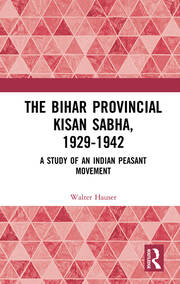
The Bihar Provincial Kisan Sabha, 1929-1942 : a study of an Indian peasant movement / Walter Hauser ; foreword by William R. Finch ; curated with an afterword by Kailash Chandra Jha.
ISBN
9780429275937 (electronic bk.)
0429275935 (electronic bk.)
9781000000399 (electronic bk.)
1000000397 (electronic bk.)
9781000007220 (electronic bk. : EPUB)
1000007227 (electronic bk. : EPUB)
9781000013757 (electronic bk. : Mobipocket)
1000013758 (electronic bk. : Mobipocket)
9780367225971
0367225972
0429275935 (electronic bk.)
9781000000399 (electronic bk.)
1000000397 (electronic bk.)
9781000007220 (electronic bk. : EPUB)
1000007227 (electronic bk. : EPUB)
9781000013757 (electronic bk. : Mobipocket)
1000013758 (electronic bk. : Mobipocket)
9780367225971
0367225972
Dil Kodu
İngilizce
Yazar
Yayın Bilgisi
Abingdon, Oxon : Routledge, 2019.
Fiziksel Niteleme
1 online resource.
İçindekiler Notu
Cover; Half Title; Title Page; Copyright Page; Table of Contents; Foreword; Acknowledgements; Introduction; 1. The Agrarian Condition of Society; The Province and its Population; The Land System; Zamindars and Peasants; Tenancy and Rent; 2. Formation of the Bihar Provincial Kisan Sabha; Preliminary Developments; The Effects of Civil Disobedience; Agrarian Policy of the Bihar Congress; Emergence of the Kisan Sabha; Socialism and the Kisan Sabha; 3. Character of the Movement; Leadership; Organization and Method; Ideology and Program; 4. The Bihar Provincial Kisan Sabha and the Congress
The Left-Right Controversy and the 1937 ElectionsThe Ministry and the Kisan Sabha: Compromise and Conflict; 5. National Politics and the Decline of the Bihar Kisan Sabha; Conclusions; Appendices; Appendix I; Appendix II; Appendix III; Appendix IV; Appendix V; Appendix VI; Appendix VII; Appendix VIII; Appendix IX; Appendix X; Appendix XI; Bibliography; Afterword; Index
The Left-Right Controversy and the 1937 ElectionsThe Ministry and the Kisan Sabha: Compromise and Conflict; 5. National Politics and the Decline of the Bihar Kisan Sabha; Conclusions; Appendices; Appendix I; Appendix II; Appendix III; Appendix IV; Appendix V; Appendix VI; Appendix VII; Appendix VIII; Appendix IX; Appendix X; Appendix XI; Bibliography; Afterword; Index
Özet, vb.
On December 5th, 1920, in Patna, the Dasnami sannyasi Sahajanand Saraswati encountered Mahatma Gandhi for the first time. Sahajanand was already known in social-reform circles in Bihar as an energetic activist and educator working to promote Bhumihar Brahman identity. Inspired by the Mahatma's radical reformulation of Indian nationalism, 'the Swami' (as Sahajanand would soon come to be known) threw himself into nationalist politics and the Indian National Congress. Within a decade, moved by the plight of tenant-farmers struggling against excessive rent demands and abusive landlord 'exactions', the Swami had spearheaded the formation of the Bihar Provincial Kisan Sabha. This organization quickly became the largest organization of its kind in India, catapulting the Swami onto the national stage. By the early mid-1930s the Swami had publicly broken with both the Mahatma and the 'Gandhians' and had made common cause with the left wing of the Congress. Later, as the storm clouds of World War II gathered on the horizon, he joined forces with the Forward Bloc and the Communist Party of India. By the time of his death in 1950, the Swami, disillusioned with politics, had dissociated himself from all parties. This pioneering 1961 study by Walter Hauser, tracks the history of the Bihar peasant movement as it both influenced and was buffeted by national and international politics. Hauser offers here a penetrating analysis of the character of the movement and the mind of its leader as he grappled with and gravitated toward Marxism-Leninism in the 1930s and 1940s. Initially written as a Ph.D. dissertation at the University of Chicago, Hauser's path-breaking Bihar Provincial Kisan Sabha, 1929-1942 is now being published in its entirety for the first time. The volume includes a 'Foreword' by one of Hauser's many students, William R. Pinch. Please note: Taylor & Francis does not sell or distribute the Hardback in India, Pakistan, Nepal, Bhutan, Bangladesh and Sri Lanka
Konu
Peasant uprisings __ India __ Bihar.
HISTORY / Asia / India & South Asia. __ bisacsh
SOCIAL SCIENCE / Social Classes __ bisacsh
HISTORY / Asia / India & South Asia. __ bisacsh
SOCIAL SCIENCE / Social Classes __ bisacsh
Veritabanı
Eseri Alıntıla
Referansları kullanmadan önce gözden geçirmeniz ve varsa gerekli düzeltmeleri yapmanız önerilir.
Dijital Kaynak
MARC Görünümü
LEADER 04847cam a2200505Ii 4500
001 795989
003 TR_AnAIT
005 20260123005928
006 m o d
007 cr cnu|||unuuu
008 190225s2019 enk ob 001 0 eng d
020 |a9780429275937|q(electronic bk.)
020 |a0429275935|q(electronic bk.)
020 |a9781000000399|q(electronic bk.)
020 |a1000000397|q(electronic bk.)
020 |a9781000007220|q(electronic bk. : EPUB)
020 |a1000007227|q(electronic bk. : EPUB)
020 |a9781000013757|q(electronic bk. : Mobipocket)
020 |a1000013758|q(electronic bk. : Mobipocket)
020 |z9780367225971
020 |z0367225972
035 |a(OCoLC)1088407343|z(OCoLC)1088529258
035 |a(OCoLC-P)1088407343
040 |aOCoLC-P|beng|erda|epn|cOCoLC-P
041 |aeng
049 |aTürk Tarih Kurumu Kütüphanesi
050 4|aDS485.B51
072 7|aHIS|x017000|2bisacsh
072 7|aSOC|x050000|2bisacsh
072 7|aRGL|2bicssc
082 04|a954.12|223
100 1 |aHauser, Walter,|eauthor.
245 14|aThe Bihar Provincial Kisan Sabha, 1929-1942 :|ba study of an Indian peasant movement /|cWalter Hauser ; foreword by William R. Finch ; curated with an afterword by Kailash Chandra Jha.
264 1|aAbingdon, Oxon :|bRoutledge,|c2019.
300 |a1 online resource.
336 |atext|btxt|2rdacontent
337 |acomputer|bc|2rdamedia
338 |aonline resource|bcr|2rdacarrier
505 0 |aCover; Half Title; Title Page; Copyright Page; Table of Contents; Foreword; Acknowledgements; Introduction; 1. The Agrarian Condition of Society; The Province and its Population; The Land System; Zamindars and Peasants; Tenancy and Rent; 2. Formation of the Bihar Provincial Kisan Sabha; Preliminary Developments; The Effects of Civil Disobedience; Agrarian Policy of the Bihar Congress; Emergence of the Kisan Sabha; Socialism and the Kisan Sabha; 3. Character of the Movement; Leadership; Organization and Method; Ideology and Program; 4. The Bihar Provincial Kisan Sabha and the Congress
505 8 |aThe Left-Right Controversy and the 1937 ElectionsThe Ministry and the Kisan Sabha: Compromise and Conflict; 5. National Politics and the Decline of the Bihar Kisan Sabha; Conclusions; Appendices; Appendix I; Appendix II; Appendix III; Appendix IV; Appendix V; Appendix VI; Appendix VII; Appendix VIII; Appendix IX; Appendix X; Appendix XI; Bibliography; Afterword; Index
520 |aOn December 5th, 1920, in Patna, the Dasnami sannyasi Sahajanand Saraswati encountered Mahatma Gandhi for the first time. Sahajanand was already known in social-reform circles in Bihar as an energetic activist and educator working to promote Bhumihar Brahman identity. Inspired by the Mahatma's radical reformulation of Indian nationalism, 'the Swami' (as Sahajanand would soon come to be known) threw himself into nationalist politics and the Indian National Congress. Within a decade, moved by the plight of tenant-farmers struggling against excessive rent demands and abusive landlord 'exactions', the Swami had spearheaded the formation of the Bihar Provincial Kisan Sabha. This organization quickly became the largest organization of its kind in India, catapulting the Swami onto the national stage. By the early mid-1930s the Swami had publicly broken with both the Mahatma and the 'Gandhians' and had made common cause with the left wing of the Congress. Later, as the storm clouds of World War II gathered on the horizon, he joined forces with the Forward Bloc and the Communist Party of India. By the time of his death in 1950, the Swami, disillusioned with politics, had dissociated himself from all parties. This pioneering 1961 study by Walter Hauser, tracks the history of the Bihar peasant movement as it both influenced and was buffeted by national and international politics. Hauser offers here a penetrating analysis of the character of the movement and the mind of its leader as he grappled with and gravitated toward Marxism-Leninism in the 1930s and 1940s. Initially written as a Ph.D. dissertation at the University of Chicago, Hauser's path-breaking Bihar Provincial Kisan Sabha, 1929-1942 is now being published in its entirety for the first time. The volume includes a 'Foreword' by one of Hauser's many students, William R. Pinch. Please note: Taylor & Francis does not sell or distribute the Hardback in India, Pakistan, Nepal, Bhutan, Bangladesh and Sri Lanka
588 |aOCLC-licensed vendor bibliographic record.
650 0|aPeasant uprisings|zIndia|zBihar.
650 7|aHISTORY / Asia / India & South Asia.|2bisacsh
650 7|aSOCIAL SCIENCE / Social Classes|2bisacsh
856 40|3Taylor & Francis|uhttps://www.taylorfrancis.com/books/9780429275937
856 42|3OCLC metadata license agreement|uhttp://www.oclc.org/content/dam/oclc/forms/terms/vbrl-201703.pdf
901 |aTaylor & Francis
001 795989
003 TR_AnAIT
005 20260123005928
006 m o d
007 cr cnu|||unuuu
008 190225s2019 enk ob 001 0 eng d
020 |a9780429275937|q(electronic bk.)
020 |a0429275935|q(electronic bk.)
020 |a9781000000399|q(electronic bk.)
020 |a1000000397|q(electronic bk.)
020 |a9781000007220|q(electronic bk. : EPUB)
020 |a1000007227|q(electronic bk. : EPUB)
020 |a9781000013757|q(electronic bk. : Mobipocket)
020 |a1000013758|q(electronic bk. : Mobipocket)
020 |z9780367225971
020 |z0367225972
035 |a(OCoLC)1088407343|z(OCoLC)1088529258
035 |a(OCoLC-P)1088407343
040 |aOCoLC-P|beng|erda|epn|cOCoLC-P
041 |aeng
049 |aTürk Tarih Kurumu Kütüphanesi
050 4|aDS485.B51
072 7|aHIS|x017000|2bisacsh
072 7|aSOC|x050000|2bisacsh
072 7|aRGL|2bicssc
082 04|a954.12|223
100 1 |aHauser, Walter,|eauthor.
245 14|aThe Bihar Provincial Kisan Sabha, 1929-1942 :|ba study of an Indian peasant movement /|cWalter Hauser ; foreword by William R. Finch ; curated with an afterword by Kailash Chandra Jha.
264 1|aAbingdon, Oxon :|bRoutledge,|c2019.
300 |a1 online resource.
336 |atext|btxt|2rdacontent
337 |acomputer|bc|2rdamedia
338 |aonline resource|bcr|2rdacarrier
505 0 |aCover; Half Title; Title Page; Copyright Page; Table of Contents; Foreword; Acknowledgements; Introduction; 1. The Agrarian Condition of Society; The Province and its Population; The Land System; Zamindars and Peasants; Tenancy and Rent; 2. Formation of the Bihar Provincial Kisan Sabha; Preliminary Developments; The Effects of Civil Disobedience; Agrarian Policy of the Bihar Congress; Emergence of the Kisan Sabha; Socialism and the Kisan Sabha; 3. Character of the Movement; Leadership; Organization and Method; Ideology and Program; 4. The Bihar Provincial Kisan Sabha and the Congress
505 8 |aThe Left-Right Controversy and the 1937 ElectionsThe Ministry and the Kisan Sabha: Compromise and Conflict; 5. National Politics and the Decline of the Bihar Kisan Sabha; Conclusions; Appendices; Appendix I; Appendix II; Appendix III; Appendix IV; Appendix V; Appendix VI; Appendix VII; Appendix VIII; Appendix IX; Appendix X; Appendix XI; Bibliography; Afterword; Index
520 |aOn December 5th, 1920, in Patna, the Dasnami sannyasi Sahajanand Saraswati encountered Mahatma Gandhi for the first time. Sahajanand was already known in social-reform circles in Bihar as an energetic activist and educator working to promote Bhumihar Brahman identity. Inspired by the Mahatma's radical reformulation of Indian nationalism, 'the Swami' (as Sahajanand would soon come to be known) threw himself into nationalist politics and the Indian National Congress. Within a decade, moved by the plight of tenant-farmers struggling against excessive rent demands and abusive landlord 'exactions', the Swami had spearheaded the formation of the Bihar Provincial Kisan Sabha. This organization quickly became the largest organization of its kind in India, catapulting the Swami onto the national stage. By the early mid-1930s the Swami had publicly broken with both the Mahatma and the 'Gandhians' and had made common cause with the left wing of the Congress. Later, as the storm clouds of World War II gathered on the horizon, he joined forces with the Forward Bloc and the Communist Party of India. By the time of his death in 1950, the Swami, disillusioned with politics, had dissociated himself from all parties. This pioneering 1961 study by Walter Hauser, tracks the history of the Bihar peasant movement as it both influenced and was buffeted by national and international politics. Hauser offers here a penetrating analysis of the character of the movement and the mind of its leader as he grappled with and gravitated toward Marxism-Leninism in the 1930s and 1940s. Initially written as a Ph.D. dissertation at the University of Chicago, Hauser's path-breaking Bihar Provincial Kisan Sabha, 1929-1942 is now being published in its entirety for the first time. The volume includes a 'Foreword' by one of Hauser's many students, William R. Pinch. Please note: Taylor & Francis does not sell or distribute the Hardback in India, Pakistan, Nepal, Bhutan, Bangladesh and Sri Lanka
588 |aOCLC-licensed vendor bibliographic record.
650 0|aPeasant uprisings|zIndia|zBihar.
650 7|aHISTORY / Asia / India & South Asia.|2bisacsh
650 7|aSOCIAL SCIENCE / Social Classes|2bisacsh
856 40|3Taylor & Francis|uhttps://www.taylorfrancis.com/books/9780429275937
856 42|3OCLC metadata license agreement|uhttp://www.oclc.org/content/dam/oclc/forms/terms/vbrl-201703.pdf
901 |aTaylor & Francis
Materyaller
Depodan talep edilen materyal sadece kütüphane içerisinde kullanılmaktadır.
Materyal dışarıya ödünç verilmemektedir.
Materyal dışarıya ödünç verilmemektedir.
