

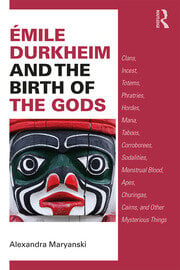
Émile Durkheim and the birth of the Gods : clans, incest, totems, phratries, hordes, mana, taboos, corroborees, sodalities, menstrual blood, apes, churingas, cairns, and other mysterious things / by Alexandra Maryanski.
Erişim Adresi
ISBN
9780429995576 (e-book: PDF) (e-book : PDF)
Dil Kodu
İngilizce
Yazar
Basım Bildirimi
First edition.
Yayın Bilgisi
Boca Raton, FL : Routledge, an imprint of Taylor and Francis, 2018.
Fiziksel Niteleme
1 online resource (362 pages) : 8 illustrations
İçindekiler Notu
chapter 1 A Matter of Time -- chapter 2 Points of Departure -- chapter 3 Networks -- chapter 4 The Young Sociology Professor -- chapter 5 The Révélation -- chapter 6 W. Robertson Smith and the Scottish School of Totemism -- chapter 7 A Turn to Religion -- chapter 8 A Blueprint for Religion -- chapter 9 Smashing Totemic Blows -- chapter 10 The Great Totemic March -- chapter 11 Totemism: The Elementary Religion -- chapter 12 Under the Microscope -- chapter 13 The Hominoid Social Legacy -- chapter 14 A Sense of Community -- chapter 15 The Hominoid Mind and the Self -- chapter 16 The Community Complex -- chapter 17 Secrets of the Totem.
Özet, vb.
The Birth of the Gods is dedicated to Durkheim's effort to understand the basis of social integration. Unlike most social scientists, then and now, Durkheim concluded that humans are naturally more individualistic than collectivistic, that the primal social unit for humans is the macro-level unit ('the horde'), rather than the family, and that social cohesion is easily disrupted by human self-interest. Hence, for Durkheim, one of the "gravest" problems facing sociology is how to mold these human proclivities to serve the collective good. The analysis of elementary religions, Durkheim believed, would allow social scientists to see the fundamental basis of solidarity in human societies, built around collective representations, totems marking sacred forces, and emotion-arousing rituals directed at these totems. The first half of the book traces the key influences and events that led Durkheim to embrace such novel generalizations. The second part makes a significant contribution to sociological theory with an analysis that essentially "tests" Durkheim's core assumptions using cladistic analysis, social network tools and theory, and data on humans closest living relatives—the great apes. Maryanski marshals hard data from primatology, paleontology, archaeology, genetics, and neuroscience that enlightens and, surprisingly, confirms many of Durkheim’s speculations. These data show that integration among both humans and great apes is not so much group or kin oriented, per se, but orientation to a community standing outside each individual that includes a sense of self, but also encompassing a cognitive awareness of a "sense of community" or a connectedness that transcends sensory reality and concrete social relations. This "community complex," as Maryanski terms it, is what Durkheim was beginning to see, although he did not have the data to buttress his arguments as Maryanski is able to do.
Konu
Durkheim, Émile, __ 1858-1917.
Durkheim, Émile, __ 1858-1917. __ Formes élémentaires de la vie religieuse.
SOCIAL SCIENCE / Anthropology / General. __ bisacsh
SOCIAL SCIENCE / Regional Studies. __ bisacsh
SOCIAL SCIENCE / Sociology / General. __ bisacsh
SOCIAL SCIENCE / Sociology / General. __ bisacsh
Archaeology.
Classical Theory.
Community.
Culture.
Elementary Religion.
Emblems.
Evolution.
Evolutionary Methods.
Genetics.
Human Development.
Individualism.
Kinship.
Neuroscience.
Origin Of Religions.
Primatology.
Psychology.
Religion.
Ritual.
Sacred Objects.
Socialization.
Social Behavior.
Social Integration.
Social Theory.
Sociobiology.
Sociology Of Religion.
Spirituality.
Symbolism.
Religion.
Sociology.
Totemism.
Durkheim, Émile, __ 1858-1917. __ Formes élémentaires de la vie religieuse.
SOCIAL SCIENCE / Anthropology / General. __ bisacsh
SOCIAL SCIENCE / Regional Studies. __ bisacsh
SOCIAL SCIENCE / Sociology / General. __ bisacsh
SOCIAL SCIENCE / Sociology / General. __ bisacsh
Archaeology.
Classical Theory.
Community.
Culture.
Elementary Religion.
Emblems.
Evolution.
Evolutionary Methods.
Genetics.
Human Development.
Individualism.
Kinship.
Neuroscience.
Origin Of Religions.
Primatology.
Psychology.
Religion.
Ritual.
Sacred Objects.
Socialization.
Social Behavior.
Social Integration.
Social Theory.
Sociobiology.
Sociology Of Religion.
Spirituality.
Symbolism.
Religion.
Sociology.
Totemism.
Kurum Adı
Veritabanı
Eseri Alıntıla
Referansları kullanmadan önce gözden geçirmeniz ve varsa gerekli düzeltmeleri yapmanız önerilir.
Dijital Kaynak
MARC Görünümü
LEADER 05066cam a2200733Ii 4500
001 796059
003 TR_AnAIT
005 20260123010047
008 180727s2018 fluab ob 001 0 eng d
020 |a9780429995576 (e-book: PDF)|q(e-book : PDF)
035 |a(OCoLC)1041707267
040 |aFlBoTFG|cFlBoTFG|erda
041 |aeng
049 |aTürk Tarih Kurumu Kütüphanesi
050 4|aHM479.D87|bM37 2018
072 7|aSOC|x039000 |2bisacsh
072 7|aSOC|x026000 |2bisacsh
072 7|aJHB |2bicscc
082 04|a301.092|223
100 1 |aMaryanski, Alexandra,|eauthor.
245 10|aÉmile Durkheim and the birth of the Gods :|bclans, incest, totems, phratries, hordes, mana, taboos, corroborees, sodalities, menstrual blood, apes, churingas, cairns, and other mysterious things /|cby Alexandra Maryanski.
250 |aFirst edition.
264 1|aBoca Raton, FL :|bRoutledge, an imprint of Taylor and Francis,|c2018.
300 |a1 online resource (362 pages) :|b8 illustrations
336 |atext|2rdacontent
337 |acomputer|2rdamedia
338 |aonline resource|2rdacarrier
505 0 |achapter 1 A Matter of Time -- chapter 2 Points of Departure -- chapter 3 Networks -- chapter 4 The Young Sociology Professor -- chapter 5 The Révélation -- chapter 6 W. Robertson Smith and the Scottish School of Totemism -- chapter 7 A Turn to Religion -- chapter 8 A Blueprint for Religion -- chapter 9 Smashing Totemic Blows -- chapter 10 The Great Totemic March -- chapter 11 Totemism: The Elementary Religion -- chapter 12 Under the Microscope -- chapter 13 The Hominoid Social Legacy -- chapter 14 A Sense of Community -- chapter 15 The Hominoid Mind and the Self -- chapter 16 The Community Complex -- chapter 17 Secrets of the Totem.
520 3 |aThe Birth of the Gods is dedicated to Durkheim's effort to understand the basis of social integration. Unlike most social scientists, then and now, Durkheim concluded that humans are naturally more individualistic than collectivistic, that the primal social unit for humans is the macro-level unit ('the horde'), rather than the family, and that social cohesion is easily disrupted by human self-interest. Hence, for Durkheim, one of the "gravest" problems facing sociology is how to mold these human proclivities to serve the collective good. The analysis of elementary religions, Durkheim believed, would allow social scientists to see the fundamental basis of solidarity in human societies, built around collective representations, totems marking sacred forces, and emotion-arousing rituals directed at these totems. The first half of the book traces the key influences and events that led Durkheim to embrace such novel generalizations. The second part makes a significant contribution to sociological theory with an analysis that essentially "tests" Durkheim's core assumptions using cladistic analysis, social network tools and theory, and data on humans closest living relatives—the great apes. Maryanski marshals hard data from primatology, paleontology, archaeology, genetics, and neuroscience that enlightens and, surprisingly, confirms many of Durkheim’s speculations. These data show that integration among both humans and great apes is not so much group or kin oriented, per se, but orientation to a community standing outside each individual that includes a sense of self, but also encompassing a cognitive awareness of a "sense of community" or a connectedness that transcends sensory reality and concrete social relations. This "community complex," as Maryanski terms it, is what Durkheim was beginning to see, although he did not have the data to buttress his arguments as Maryanski is able to do.
600 10|aDurkheim, Émile,|d1858-1917.
600 10|aDurkheim, Émile,|d1858-1917.|tFormes élémentaires de la vie religieuse.
650 7|aSOCIAL SCIENCE / Anthropology / General.|2bisacsh
650 7|aSOCIAL SCIENCE / Regional Studies.|2bisacsh
650 7|aSOCIAL SCIENCE / Sociology / General.|2bisacsh
650 7|aSOCIAL SCIENCE / Sociology / General.|2bisacsh
650 0|aArchaeology.
650 0|aClassical Theory.
650 0|aCommunity.
650 0|aCulture.
650 0|aElementary Religion.
650 0|aEmblems.
650 0|aEvolution.
650 0|aEvolutionary Methods.
650 0|aGenetics.
650 0|aHuman Development.
650 0|aIndividualism.
650 0|aKinship.
650 0|aNeuroscience.
650 0|aOrigin Of Religions.
650 0|aPrimatology.
650 0|aPsychology.
650 0|aReligion.
650 0|aRitual.
650 0|aSacred Objects.
650 0|aSocialization.
650 0|aSocial Behavior.
650 0|aSocial Integration.
650 0|aSocial Theory.
650 0|aSociobiology.
650 0|aSociology Of Religion.
650 0|aSpirituality.
650 0|aSymbolism.
650 0|aReligion.
650 0|aSociology.
650 0|aTotemism.
710 2 |aTaylor and Francis.
776 08|iPrint version: |z9781138580930|w(DLC) 2018001271
856 40|uhttps://www.taylorfrancis.com/books/9780429995576|zClick here to view.
901 |aTaylor & Francis
001 796059
003 TR_AnAIT
005 20260123010047
008 180727s2018 fluab ob 001 0 eng d
020 |a9780429995576 (e-book: PDF)|q(e-book : PDF)
035 |a(OCoLC)1041707267
040 |aFlBoTFG|cFlBoTFG|erda
041 |aeng
049 |aTürk Tarih Kurumu Kütüphanesi
050 4|aHM479.D87|bM37 2018
072 7|aSOC|x039000 |2bisacsh
072 7|aSOC|x026000 |2bisacsh
072 7|aJHB |2bicscc
082 04|a301.092|223
100 1 |aMaryanski, Alexandra,|eauthor.
245 10|aÉmile Durkheim and the birth of the Gods :|bclans, incest, totems, phratries, hordes, mana, taboos, corroborees, sodalities, menstrual blood, apes, churingas, cairns, and other mysterious things /|cby Alexandra Maryanski.
250 |aFirst edition.
264 1|aBoca Raton, FL :|bRoutledge, an imprint of Taylor and Francis,|c2018.
300 |a1 online resource (362 pages) :|b8 illustrations
336 |atext|2rdacontent
337 |acomputer|2rdamedia
338 |aonline resource|2rdacarrier
505 0 |achapter 1 A Matter of Time -- chapter 2 Points of Departure -- chapter 3 Networks -- chapter 4 The Young Sociology Professor -- chapter 5 The Révélation -- chapter 6 W. Robertson Smith and the Scottish School of Totemism -- chapter 7 A Turn to Religion -- chapter 8 A Blueprint for Religion -- chapter 9 Smashing Totemic Blows -- chapter 10 The Great Totemic March -- chapter 11 Totemism: The Elementary Religion -- chapter 12 Under the Microscope -- chapter 13 The Hominoid Social Legacy -- chapter 14 A Sense of Community -- chapter 15 The Hominoid Mind and the Self -- chapter 16 The Community Complex -- chapter 17 Secrets of the Totem.
520 3 |aThe Birth of the Gods is dedicated to Durkheim's effort to understand the basis of social integration. Unlike most social scientists, then and now, Durkheim concluded that humans are naturally more individualistic than collectivistic, that the primal social unit for humans is the macro-level unit ('the horde'), rather than the family, and that social cohesion is easily disrupted by human self-interest. Hence, for Durkheim, one of the "gravest" problems facing sociology is how to mold these human proclivities to serve the collective good. The analysis of elementary religions, Durkheim believed, would allow social scientists to see the fundamental basis of solidarity in human societies, built around collective representations, totems marking sacred forces, and emotion-arousing rituals directed at these totems. The first half of the book traces the key influences and events that led Durkheim to embrace such novel generalizations. The second part makes a significant contribution to sociological theory with an analysis that essentially "tests" Durkheim's core assumptions using cladistic analysis, social network tools and theory, and data on humans closest living relatives—the great apes. Maryanski marshals hard data from primatology, paleontology, archaeology, genetics, and neuroscience that enlightens and, surprisingly, confirms many of Durkheim’s speculations. These data show that integration among both humans and great apes is not so much group or kin oriented, per se, but orientation to a community standing outside each individual that includes a sense of self, but also encompassing a cognitive awareness of a "sense of community" or a connectedness that transcends sensory reality and concrete social relations. This "community complex," as Maryanski terms it, is what Durkheim was beginning to see, although he did not have the data to buttress his arguments as Maryanski is able to do.
600 10|aDurkheim, Émile,|d1858-1917.
600 10|aDurkheim, Émile,|d1858-1917.|tFormes élémentaires de la vie religieuse.
650 7|aSOCIAL SCIENCE / Anthropology / General.|2bisacsh
650 7|aSOCIAL SCIENCE / Regional Studies.|2bisacsh
650 7|aSOCIAL SCIENCE / Sociology / General.|2bisacsh
650 7|aSOCIAL SCIENCE / Sociology / General.|2bisacsh
650 0|aArchaeology.
650 0|aClassical Theory.
650 0|aCommunity.
650 0|aCulture.
650 0|aElementary Religion.
650 0|aEmblems.
650 0|aEvolution.
650 0|aEvolutionary Methods.
650 0|aGenetics.
650 0|aHuman Development.
650 0|aIndividualism.
650 0|aKinship.
650 0|aNeuroscience.
650 0|aOrigin Of Religions.
650 0|aPrimatology.
650 0|aPsychology.
650 0|aReligion.
650 0|aRitual.
650 0|aSacred Objects.
650 0|aSocialization.
650 0|aSocial Behavior.
650 0|aSocial Integration.
650 0|aSocial Theory.
650 0|aSociobiology.
650 0|aSociology Of Religion.
650 0|aSpirituality.
650 0|aSymbolism.
650 0|aReligion.
650 0|aSociology.
650 0|aTotemism.
710 2 |aTaylor and Francis.
776 08|iPrint version: |z9781138580930|w(DLC) 2018001271
856 40|uhttps://www.taylorfrancis.com/books/9780429995576|zClick here to view.
901 |aTaylor & Francis
Materyaller
Depodan talep edilen materyal sadece kütüphane içerisinde kullanılmaktadır.
Materyal dışarıya ödünç verilmemektedir.
Materyal dışarıya ödünç verilmemektedir.
