

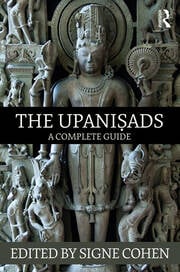
The Upaniṣads : A Complete Guide / edited by Signe Cohen.
Erişim Adresi
ISBN
9781315758701 (e-book : PDF)
9781317636953 (e-book: Mobi)
9781138795051 (hardback)
9781317636953 (e-book: Mobi)
9781138795051 (hardback)
Dil Kodu
İngilizce
Yayın Bilgisi
London : Routledge, [2018]
©2018
©2018
Fiziksel Niteleme
1 online resource (xii, 439 pages)
Bibliyografi, vb. Notu
Includes bibliographical references and indexes.
İçindekiler Notu
part, I Composition, authorship, and transmission of the Upaniṣads -- chapter 1 Introduction -- What is an Upaniṣad? / \n Signe\n Cohen\n -- chapter 2 The date of the Upaniṣads / \n Signe\n Cohen\n -- chapter 3 The authorship of the Upaniṣads / \n Signe\n Cohen\n -- chapter 4 The redaction and transmission of the Upaniṣads / \n Signe\n Cohen\n -- part, II The historical, cultural, and religious background of the Upaniṣads -- chapter 5 Ancient India -- Geographical, historical, and cultural background / \n Signe\n Cohen\n -- chapter 6 The older Vedas and the Upaniṣads / \n Dermot\n Killingley\n -- chapter 7 The religious and ritual background / \n Dermot\n Killingley\n -- chapter 8 The Upaniṣads and early Buddhism / \n Signe\n Cohen\n -- chapter 9 The social background -- Caste and gender in the Upaniṣads / \n Steven E.\n Lindquist\n -- part, III Religion and philosophy in the Upaniṣads -- chapter 10 Prominent characters in the Upaniṣads / \n Steven E.\n Lindquist\n -- chapter 11 Ātman and brahman in the principal Upaniṣads / \n Jacqueline Suthren\n Hirst\n -- chapter 12 Karma and rebirth in the Upaniṣads / \n Dermot\n Killingley\n -- chapter 13 Knowledge and liberation in the Upaniṣads / \n Dermot\n Killingley\n -- chapter 14 The Upaniṣadic episteme / \n Jonardon\n Ganeri\n -- chapter 15 Mantras and sacred language / \n Signe\n Cohen\n -- chapter 16 The Upaniṣads and the emergence of Theism / \n Dermot\n Killingley\n -- chapter 17 The Upaniṣads and Yoga / \n Dermot\n Killingley\n -- chapter 18 The Upaniṣads and the Mahābhārata / \n Brian\n Black\n -- chapter 19 The Upaniṣads and the Bhagavadgītā / \n Simon\n Brodbeck\n -- chapter 20 The Upaniṣads and later Hinduism / \n Dermot\n Killingley\n -- chapter 21 Dara Shikoh and the first translation of the Upaniṣads / \n Signe\n Cohen\n -- chapter 22 Schopenhauer and the Upaniṣads / \n Signe\n Cohen\n -- part, IV The classical Upaniṣads -- chapter 23 The Bṛhadāraṇyaka Upaniṣad / \n Dermot\n Killingley\n -- chapter 24 The Chāndogya Upaniṣad / \n Dermot\n Killingley\n -- chapter 25 The Aitareya Upaniṣad / \n Signe\n Cohen\n -- chapter 26 The Kauṣītaki Upaniṣad / \n Signe\n Cohen\n -- chapter 27 The Taittirīya Upaniṣad / \n Signe\n Cohen\n -- chapter 28 The Īśā Upaniṣad / \n Signe\n Cohen\n -- chapter 29 The Praśna Upaniṣad / \n Signe\n Cohen\n -- chapter 30 The Muṇḍaka Upaniṣad / \n Signe\n Cohen\n -- chapter 31 The Kaṭha Upaniṣad / \n Elizabeth\n Schiltz\n -- chapter 32 The Śvetāśvatara Upaniṣad / \n Signe\n Cohen\n -- chapter 33 The Kena Upaniṣad / \n Signe\n Cohen\n -- chapter 34 The Maitrī Upaniṣad / \n Signe\n Cohen\n -- chapter 35 The Māṇḍūkya Upaniṣad / \n Signe\n Cohen\n -- chapter 36 The Mahānārāyaṇa Upaniṣad / \n Signe\n Cohen\n -- part, V The later Upaniṣads -- chapter 37 The Vaiṣṇava Upaniṣads / \n Signe\n Cohen\n -- chapter 38 The Śaiva Upaniṣads / \n Signe\n Cohen\n -- chapter 39 The Devī Upaniṣads / \n Signe\n Cohen\n -- chapter 40 The Saṃnyāsa Upaniṣads / \n Signe\n Cohen\n -- chapter 41 The Yoga Upaniṣads / \n Signe\n Cohen\n -- chapter 42 Conclusion / \n Signe\n Cohen\n .
Özet, vb.
The Upaniṣads are among the most sacred foundational scriptures in the Hindu religion. Composed from 800 BCE onwards and making up part of the larger Vedic corpus, they offer the reader "knowledge lessons" on life, death, and immortality. While they are essential to understanding Hinduism and Asian religions more generally, their complexities make them almost impenetrable to anyone but serious scholars of Sanskrit and ancient Indian culture. This book is divided into five parts: Composition, authorship, and transmission of the Upaniṣads; The historical, cultural, and religious background of the Upaniṣads; Religion and philosophy in the Upaniṣads; The classical Upaniṣads; The later Upaniṣads. The chapters cover critical issues such as the origins of the Upaniṣads, authorship, and redaction, as well as exploring the broad religious and philosophical themes within the texts. The guide analyzes each of the Upaniṣads separately, unpacking their contextual relevance and explaining difficult terms and concepts. The Upaniṣads: A Complete Guide is a unique and valuable reference source for undergraduate religious studies, history, and philosophy students and researchers who want to learn more about these foundational sacred texts and the religious lessons in the Hindu tradition.
Konu
Upanishads.
Hinduism.
Hinduism.
Diğer Yazarlar
Veritabanı
Eseri Alıntıla
Referansları kullanmadan önce gözden geçirmeniz ve varsa gerekli düzeltmeleri yapmanız önerilir.
Dijital Kaynak
MARC Görünümü
LEADER 05828cam a2200325Ii 4500
001 796604
003 TR_AnAIT
005 20260123010947
008 180706t20182018enka ob 001 0 eng d
020 |a9781315758701|q(e-book : PDF)
020 |a9781317636953|q(e-book: Mobi)
020 |z9781138795051|q(hardback)
024 7 |a10.4324/9781315758701 |2doi
035 |a(OCoLC)1004349998
040 |aFlBoTFG|cFlBoTFG|erda
041 |aeng
049 |aTürk Tarih Kurumu Kütüphanesi
050 4|aBL1124.56|b.U63 2018
082 04|a294.59218|bU65
245 04|aThe Upaniṣads :|bA Complete Guide /|cedited by Signe Cohen.
264 1|aLondon :|bRoutledge,|c[2018]
264 4|c©2018
300 |a1 online resource (xii, 439 pages)
336 |atext|2rdacontent
337 |acomputer|2rdamedia
338 |aonline resource|2rdacarrier
504 |aIncludes bibliographical references and indexes.
505 00|tpart, I Composition, authorship, and transmission of the Upaniṣads -- |tchapter 1 Introduction -- |tWhat is an Upaniṣad? /|r \n Signe\n Cohen\n -- |tchapter 2 The date of the Upaniṣads /|r \n Signe\n Cohen\n -- |tchapter 3 The authorship of the Upaniṣads /|r \n Signe\n Cohen\n -- |tchapter 4 The redaction and transmission of the Upaniṣads /|r \n Signe\n Cohen\n -- |tpart, II The historical, cultural, and religious background of the Upaniṣads -- |tchapter 5 Ancient India -- |tGeographical, historical, and cultural background /|r \n Signe\n Cohen\n -- |tchapter 6 The older Vedas and the Upaniṣads /|r \n Dermot\n Killingley\n -- |tchapter 7 The religious and ritual background /|r \n Dermot\n Killingley\n -- |tchapter 8 The Upaniṣads and early Buddhism /|r \n Signe\n Cohen\n -- |tchapter 9 The social background -- |tCaste and gender in the Upaniṣads /|r \n Steven E.\n Lindquist\n -- |tpart, III Religion and philosophy in the Upaniṣads -- |tchapter 10 Prominent characters in the Upaniṣads /|r \n Steven E.\n Lindquist\n -- |tchapter 11 Ātman and brahman in the principal Upaniṣads /|r \n Jacqueline Suthren\n Hirst\n -- |tchapter 12 Karma and rebirth in the Upaniṣads /|r \n Dermot\n Killingley\n -- |tchapter 13 Knowledge and liberation in the Upaniṣads /|r \n Dermot\n Killingley\n -- |tchapter 14 The Upaniṣadic episteme /|r \n Jonardon\n Ganeri\n -- |tchapter 15 Mantras and sacred language /|r \n Signe\n Cohen\n -- |tchapter 16 The Upaniṣads and the emergence of Theism /|r \n Dermot\n Killingley\n -- |tchapter 17 The Upaniṣads and Yoga /|r \n Dermot\n Killingley\n -- |tchapter 18 The Upaniṣads and the Mahābhārata /|r \n Brian\n Black\n -- |tchapter 19 The Upaniṣads and the Bhagavadgītā /|r \n Simon\n Brodbeck\n -- |tchapter 20 The Upaniṣads and later Hinduism /|r \n Dermot\n Killingley\n -- |tchapter 21 Dara Shikoh and the first translation of the Upaniṣads /|r \n Signe\n Cohen\n -- |tchapter 22 Schopenhauer and the Upaniṣads /|r \n Signe\n Cohen\n -- |tpart, IV The classical Upaniṣads -- |tchapter 23 The Bṛhadāraṇyaka Upaniṣad /|r \n Dermot\n Killingley\n -- |tchapter 24 The Chāndogya Upaniṣad /|r \n Dermot\n Killingley\n -- |tchapter 25 The Aitareya Upaniṣad /|r \n Signe\n Cohen\n -- |tchapter 26 The Kauṣītaki Upaniṣad /|r \n Signe\n Cohen\n -- |tchapter 27 The Taittirīya Upaniṣad /|r \n Signe\n Cohen\n -- |tchapter 28 The Īśā Upaniṣad /|r \n Signe\n Cohen\n -- |tchapter 29 The Praśna Upaniṣad /|r \n Signe\n Cohen\n -- |tchapter 30 The Muṇḍaka Upaniṣad /|r \n Signe\n Cohen\n -- |tchapter 31 The Kaṭha Upaniṣad /|r \n Elizabeth\n Schiltz\n -- |tchapter 32 The Śvetāśvatara Upaniṣad /|r \n Signe\n Cohen\n -- |tchapter 33 The Kena Upaniṣad /|r \n Signe\n Cohen\n -- |tchapter 34 The Maitrī Upaniṣad /|r \n Signe\n Cohen\n -- |tchapter 35 The Māṇḍūkya Upaniṣad /|r \n Signe\n Cohen\n -- |tchapter 36 The Mahānārāyaṇa Upaniṣad /|r \n Signe\n Cohen\n -- |tpart, V The later Upaniṣads -- |tchapter 37 The Vaiṣṇava Upaniṣads /|r \n Signe\n Cohen\n -- |tchapter 38 The Śaiva Upaniṣads /|r \n Signe\n Cohen\n -- |tchapter 39 The Devī Upaniṣads /|r \n Signe\n Cohen\n -- |tchapter 40 The Saṃnyāsa Upaniṣads /|r \n Signe\n Cohen\n -- |tchapter 41 The Yoga Upaniṣads /|r \n Signe\n Cohen\n -- |tchapter 42 Conclusion /|r \n Signe\n Cohen\n .
520 |aThe Upaniṣads are among the most sacred foundational scriptures in the Hindu religion. Composed from 800 BCE onwards and making up part of the larger Vedic corpus, they offer the reader "knowledge lessons" on life, death, and immortality. While they are essential to understanding Hinduism and Asian religions more generally, their complexities make them almost impenetrable to anyone but serious scholars of Sanskrit and ancient Indian culture. This book is divided into five parts: Composition, authorship, and transmission of the Upaniṣads; The historical, cultural, and religious background of the Upaniṣads; Religion and philosophy in the Upaniṣads; The classical Upaniṣads; The later Upaniṣads. The chapters cover critical issues such as the origins of the Upaniṣads, authorship, and redaction, as well as exploring the broad religious and philosophical themes within the texts. The guide analyzes each of the Upaniṣads separately, unpacking their contextual relevance and explaining difficult terms and concepts. The Upaniṣads: A Complete Guide is a unique and valuable reference source for undergraduate religious studies, history, and philosophy students and researchers who want to learn more about these foundational sacred texts and the religious lessons in the Hindu tradition.
630 00|aUpanishads.
650 0|aHinduism.
700 1 |aCohen, Signe,|eeditor.
776 08|iPrint version: |z9781138795051|w(DLC) 2017012354
856 40|uhttps://www.taylorfrancis.com/books/9781315758701|zClick here to view.
901 |aTaylor & Francis
001 796604
003 TR_AnAIT
005 20260123010947
008 180706t20182018enka ob 001 0 eng d
020 |a9781315758701|q(e-book : PDF)
020 |a9781317636953|q(e-book: Mobi)
020 |z9781138795051|q(hardback)
024 7 |a10.4324/9781315758701 |2doi
035 |a(OCoLC)1004349998
040 |aFlBoTFG|cFlBoTFG|erda
041 |aeng
049 |aTürk Tarih Kurumu Kütüphanesi
050 4|aBL1124.56|b.U63 2018
082 04|a294.59218|bU65
245 04|aThe Upaniṣads :|bA Complete Guide /|cedited by Signe Cohen.
264 1|aLondon :|bRoutledge,|c[2018]
264 4|c©2018
300 |a1 online resource (xii, 439 pages)
336 |atext|2rdacontent
337 |acomputer|2rdamedia
338 |aonline resource|2rdacarrier
504 |aIncludes bibliographical references and indexes.
505 00|tpart, I Composition, authorship, and transmission of the Upaniṣads -- |tchapter 1 Introduction -- |tWhat is an Upaniṣad? /|r \n Signe\n Cohen\n -- |tchapter 2 The date of the Upaniṣads /|r \n Signe\n Cohen\n -- |tchapter 3 The authorship of the Upaniṣads /|r \n Signe\n Cohen\n -- |tchapter 4 The redaction and transmission of the Upaniṣads /|r \n Signe\n Cohen\n -- |tpart, II The historical, cultural, and religious background of the Upaniṣads -- |tchapter 5 Ancient India -- |tGeographical, historical, and cultural background /|r \n Signe\n Cohen\n -- |tchapter 6 The older Vedas and the Upaniṣads /|r \n Dermot\n Killingley\n -- |tchapter 7 The religious and ritual background /|r \n Dermot\n Killingley\n -- |tchapter 8 The Upaniṣads and early Buddhism /|r \n Signe\n Cohen\n -- |tchapter 9 The social background -- |tCaste and gender in the Upaniṣads /|r \n Steven E.\n Lindquist\n -- |tpart, III Religion and philosophy in the Upaniṣads -- |tchapter 10 Prominent characters in the Upaniṣads /|r \n Steven E.\n Lindquist\n -- |tchapter 11 Ātman and brahman in the principal Upaniṣads /|r \n Jacqueline Suthren\n Hirst\n -- |tchapter 12 Karma and rebirth in the Upaniṣads /|r \n Dermot\n Killingley\n -- |tchapter 13 Knowledge and liberation in the Upaniṣads /|r \n Dermot\n Killingley\n -- |tchapter 14 The Upaniṣadic episteme /|r \n Jonardon\n Ganeri\n -- |tchapter 15 Mantras and sacred language /|r \n Signe\n Cohen\n -- |tchapter 16 The Upaniṣads and the emergence of Theism /|r \n Dermot\n Killingley\n -- |tchapter 17 The Upaniṣads and Yoga /|r \n Dermot\n Killingley\n -- |tchapter 18 The Upaniṣads and the Mahābhārata /|r \n Brian\n Black\n -- |tchapter 19 The Upaniṣads and the Bhagavadgītā /|r \n Simon\n Brodbeck\n -- |tchapter 20 The Upaniṣads and later Hinduism /|r \n Dermot\n Killingley\n -- |tchapter 21 Dara Shikoh and the first translation of the Upaniṣads /|r \n Signe\n Cohen\n -- |tchapter 22 Schopenhauer and the Upaniṣads /|r \n Signe\n Cohen\n -- |tpart, IV The classical Upaniṣads -- |tchapter 23 The Bṛhadāraṇyaka Upaniṣad /|r \n Dermot\n Killingley\n -- |tchapter 24 The Chāndogya Upaniṣad /|r \n Dermot\n Killingley\n -- |tchapter 25 The Aitareya Upaniṣad /|r \n Signe\n Cohen\n -- |tchapter 26 The Kauṣītaki Upaniṣad /|r \n Signe\n Cohen\n -- |tchapter 27 The Taittirīya Upaniṣad /|r \n Signe\n Cohen\n -- |tchapter 28 The Īśā Upaniṣad /|r \n Signe\n Cohen\n -- |tchapter 29 The Praśna Upaniṣad /|r \n Signe\n Cohen\n -- |tchapter 30 The Muṇḍaka Upaniṣad /|r \n Signe\n Cohen\n -- |tchapter 31 The Kaṭha Upaniṣad /|r \n Elizabeth\n Schiltz\n -- |tchapter 32 The Śvetāśvatara Upaniṣad /|r \n Signe\n Cohen\n -- |tchapter 33 The Kena Upaniṣad /|r \n Signe\n Cohen\n -- |tchapter 34 The Maitrī Upaniṣad /|r \n Signe\n Cohen\n -- |tchapter 35 The Māṇḍūkya Upaniṣad /|r \n Signe\n Cohen\n -- |tchapter 36 The Mahānārāyaṇa Upaniṣad /|r \n Signe\n Cohen\n -- |tpart, V The later Upaniṣads -- |tchapter 37 The Vaiṣṇava Upaniṣads /|r \n Signe\n Cohen\n -- |tchapter 38 The Śaiva Upaniṣads /|r \n Signe\n Cohen\n -- |tchapter 39 The Devī Upaniṣads /|r \n Signe\n Cohen\n -- |tchapter 40 The Saṃnyāsa Upaniṣads /|r \n Signe\n Cohen\n -- |tchapter 41 The Yoga Upaniṣads /|r \n Signe\n Cohen\n -- |tchapter 42 Conclusion /|r \n Signe\n Cohen\n .
520 |aThe Upaniṣads are among the most sacred foundational scriptures in the Hindu religion. Composed from 800 BCE onwards and making up part of the larger Vedic corpus, they offer the reader "knowledge lessons" on life, death, and immortality. While they are essential to understanding Hinduism and Asian religions more generally, their complexities make them almost impenetrable to anyone but serious scholars of Sanskrit and ancient Indian culture. This book is divided into five parts: Composition, authorship, and transmission of the Upaniṣads; The historical, cultural, and religious background of the Upaniṣads; Religion and philosophy in the Upaniṣads; The classical Upaniṣads; The later Upaniṣads. The chapters cover critical issues such as the origins of the Upaniṣads, authorship, and redaction, as well as exploring the broad religious and philosophical themes within the texts. The guide analyzes each of the Upaniṣads separately, unpacking their contextual relevance and explaining difficult terms and concepts. The Upaniṣads: A Complete Guide is a unique and valuable reference source for undergraduate religious studies, history, and philosophy students and researchers who want to learn more about these foundational sacred texts and the religious lessons in the Hindu tradition.
630 00|aUpanishads.
650 0|aHinduism.
700 1 |aCohen, Signe,|eeditor.
776 08|iPrint version: |z9781138795051|w(DLC) 2017012354
856 40|uhttps://www.taylorfrancis.com/books/9781315758701|zClick here to view.
901 |aTaylor & Francis
Materyaller
Depodan talep edilen materyal sadece kütüphane içerisinde kullanılmaktadır.
Materyal dışarıya ödünç verilmemektedir.
Materyal dışarıya ödünç verilmemektedir.
