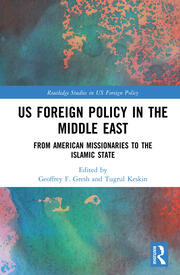
U.S. Foreign Policy in the Middle East : From American Missionaries to the Islamic State / editors, Geoffrey F. Gresh, Tugrul Keskin.
Erişim Adresi
ISBN
9781351169615 (e-book: Mobi)
9781351169646 (e-book : PDF)
9780815347149 (hardback)
9781351169646 (e-book : PDF)
9780815347149 (hardback)
Dil Kodu
İngilizce
Basım Bildirimi
First edition.
Yayın Bilgisi
London : Taylor and Francis, 2018.
Fiziksel Niteleme
1 online resource
Dizi
Routledge Studies in US Foreign Policy
İçindekiler Notu
part, I Historical Cultural and Economic Interests -- chapter Introduction -- US foreign policy in the Middle East / Geoffrey F. Gresh -- chapter 1 From “heathen Turks” to “cruel Turks” -- Religious and political roots of the changing American perception towards the Middle East / Ozlem Madi-Sisman Cengiz Sisman -- chapter 2 How big tobacco used Islam and modernity to conquer Saudi Arabia / Sean Foley -- part, II Cold War Challenges -- chapter 3 How geography and ideology shaped US foreign policy during the Cold War and beyond / Nickolas A. Spencer -- chapter 4 The ties that bind -- Postwar US foreign policy toward Turkey / Gökser Gökçay -- chapter 5 American atomic policy and Hashemite Iraq, 1954–1958 / Elizabeth Bishop -- part, III Balancing Regional Alliances -- chapter 6 Understanding the US-Israeli alliance / Jeremy Pressman -- chapter 7 The United States’ strategic relationship with Iran and Turkey -- Implications for Cold War and post-Cold War order / Suleyman Elik -- chapter 8 American-Qatari partnership in the post-Gulf War era -- A mutually beneficial relationship / Fatma Aslı Kelkitli -- chapter 9 US-Gulf Cooperation Council Relations in the age of the Obama Doctrine / Michael McCall -- part, IV Rapid Political Change and the Spread of Regional Instability -- chapter 10 When partisanship displaced strategy -- American foreign policy and war in Iraq / Russell A. Burgos -- chapter 11 The United States and Political Islam -- Dealing with the Egyptian Muslim Brothers in the Arab revolutions / Mohamed-Ali Adraoui -- chapter 12 Promoting or resisting change? -- The United States and the Egyptian uprising, 2011–2012 / Ahmed Ali Salem -- chapter 13 Set-up for failure -- The Syria-United States relationship / Ethan Corbin -- chapter 14 The United States and Iran -- The view of the hard-line conservatives in the Islamic Republic / Hamad H. Albloshi -- chapter 15 Losing hearts and minds -- The United States, ideocide, and the propaganda war against ISIS / Kelly Gleason -- chapter 16 An imperial design or necessity of political economy? -- Understanding the underpinnings of a Trump administration / Tugrul Keskin.
Özet, vb.
"The dawn of the Cold War marked a new stage of complex U.S. foreign policy involvement in the Middle East. More recently, globalization and the regions ongoing conflicts and political violence have led to the U.S. being more politically, economically, and militarily enmeshed for better or worsethroughout the region.This book examines the emergence and development of U.S. foreign policy toward the Middle East from the early 1900s to the present. With contributions from some of the worlds leading scholars, it takes a fresh, interdisciplinary, and insightful look into the many antecedents that led to current U.S. foreign policy. Exploring the historical challenges, regional alliances, rapid political change, economic interests, domestic politics, and other sources of regional instability, this volume comprises critical analysis from Iranian, Turkish, Israeli, American, and Arab perspectives to provide a comprehensive examination of the evolution and transformation of U.S. foreign policy toward the Middle East. This volume is an important resource for scholars and students working in the fields of Political Science, Sociology, International Relations, Islamic, Turkish, Iranian, Arab, and Israeli Studies."--Provided by publisher.
Konu
Cold War.
International relations.
Foreign Policy
Middle East Politics
Middle East Studies
The Cold War
U.S. Politics
Middle East __ Politics and government.
Middle East __ Study and teaching.
United States __ Politics and government.
International relations.
Foreign Policy
Middle East Politics
Middle East Studies
The Cold War
U.S. Politics
Middle East __ Politics and government.
Middle East __ Study and teaching.
United States __ Politics and government.
Diğer Yazarlar
Veritabanı

Eseri Alıntıla
Referansları kullanmadan önce gözden geçirmeniz ve varsa gerekli düzeltmeleri yapmanız önerilir.
Dijital Kaynak
MARC Görünümü
LEADER 05052cam a2200445Ii 4500
001 796672
003 TR_AnAIT
005 20260123011043
008 180706s2018 xx a o 000 0 eng d
020 |a9781351169615|q(e-book: Mobi)
020 |a9781351169646|q(e-book : PDF)
020 |z9780815347149|q(hardback)
024 7 |a10.4324/9781351169646 |2doi
035 |a(OCoLC)1027776715
040 |aFlBoTFG|cFlBoTFG|erda
041 |aeng
049 |aTürk Tarih Kurumu Kütüphanesi
050 4|aDS63.2.U5|bU846 2018
072 7|aPOL000000|2bisacsh
072 7|aPOL059000|2bisacsh
245 00|aU.S. Foreign Policy in the Middle East :|bFrom American Missionaries to the Islamic State /|ceditors, Geoffrey F. Gresh, Tugrul Keskin.
250 |aFirst edition.
264 1|aLondon :|bTaylor and Francis,|c2018.
300 |a1 online resource
336 |atext|2rdacontent
337 |acomputer|2rdamedia
338 |aonline resource|2rdacarrier
490 0 |aRoutledge Studies in US Foreign Policy
505 00|tpart, I Historical Cultural and Economic Interests -- |tchapter Introduction -- |tUS foreign policy in the Middle East /|r Geoffrey F. Gresh -- |tchapter 1 From “heathen Turks” to “cruel Turks” -- |tReligious and political roots of the changing American perception towards the Middle East /|r Ozlem Madi-Sisman Cengiz Sisman -- |tchapter 2 How big tobacco used Islam and modernity to conquer Saudi Arabia /|r Sean Foley -- |tpart, II Cold War Challenges -- |tchapter 3 How geography and ideology shaped US foreign policy during the Cold War and beyond /|r Nickolas A. Spencer -- |tchapter 4 The ties that bind -- |tPostwar US foreign policy toward Turkey /|r Gökser Gökçay -- |tchapter 5 American atomic policy and Hashemite Iraq, 1954–1958 /|r Elizabeth Bishop -- |tpart, III Balancing Regional Alliances -- |tchapter 6 Understanding the US-Israeli alliance /|r Jeremy Pressman -- |tchapter 7 The United States’ strategic relationship with Iran and Turkey -- |tImplications for Cold War and post-Cold War order /|r Suleyman Elik -- |tchapter 8 American-Qatari partnership in the post-Gulf War era -- |tA mutually beneficial relationship /|r Fatma Aslı Kelkitli -- |tchapter 9 US-Gulf Cooperation Council Relations in the age of the Obama Doctrine /|r Michael McCall -- |tpart, IV Rapid Political Change and the Spread of Regional Instability -- |tchapter 10 When partisanship displaced strategy -- |tAmerican foreign policy and war in Iraq /|r Russell A. Burgos -- |tchapter 11 The United States and Political Islam -- |tDealing with the Egyptian Muslim Brothers in the Arab revolutions /|r Mohamed-Ali Adraoui -- |tchapter 12 Promoting or resisting change? -- |tThe United States and the Egyptian uprising, 2011–2012 /|r Ahmed Ali Salem -- |tchapter 13 Set-up for failure -- |tThe Syria-United States relationship /|r Ethan Corbin -- |tchapter 14 The United States and Iran -- |tThe view of the hard-line conservatives in the Islamic Republic /|r Hamad H. Albloshi -- |tchapter 15 Losing hearts and minds -- |tThe United States, ideocide, and the propaganda war against ISIS /|r Kelly Gleason -- |tchapter 16 An imperial design or necessity of political economy? -- |tUnderstanding the underpinnings of a Trump administration /|r Tugrul Keskin.
520 2 |a"The dawn of the Cold War marked a new stage of complex U.S. foreign policy involvement in the Middle East. More recently, globalization and the regions ongoing conflicts and political violence have led to the U.S. being more politically, economically, and militarily enmeshed for better or worsethroughout the region.This book examines the emergence and development of U.S. foreign policy toward the Middle East from the early 1900s to the present. With contributions from some of the worlds leading scholars, it takes a fresh, interdisciplinary, and insightful look into the many antecedents that led to current U.S. foreign policy. Exploring the historical challenges, regional alliances, rapid political change, economic interests, domestic politics, and other sources of regional instability, this volume comprises critical analysis from Iranian, Turkish, Israeli, American, and Arab perspectives to provide a comprehensive examination of the evolution and transformation of U.S. foreign policy toward the Middle East. This volume is an important resource for scholars and students working in the fields of Political Science, Sociology, International Relations, Islamic, Turkish, Iranian, Arab, and Israeli Studies."--Provided by publisher.
650 0|aCold War.
650 0|aInternational relations.
650 04|aForeign Policy
650 04|aMiddle East Politics
650 04|aMiddle East Studies
650 04|aThe Cold War
650 04|aU.S. Politics
651 0|aMiddle East|xPolitics and government.
651 0|aMiddle East|xStudy and teaching.
651 0|aUnited States|xPolitics and government.
700 1 |aGresh, Geoffrey F.,|eeditor.
700 1 |aKeskin, Tugrul,|eeditor.
776 08|iPrint version: |z9780815347149
856 40|uhttps://www.taylorfrancis.com/books/9781351169646|zClick here to view.
901 |aTaylor & Francis
001 796672
003 TR_AnAIT
005 20260123011043
008 180706s2018 xx a o 000 0 eng d
020 |a9781351169615|q(e-book: Mobi)
020 |a9781351169646|q(e-book : PDF)
020 |z9780815347149|q(hardback)
024 7 |a10.4324/9781351169646 |2doi
035 |a(OCoLC)1027776715
040 |aFlBoTFG|cFlBoTFG|erda
041 |aeng
049 |aTürk Tarih Kurumu Kütüphanesi
050 4|aDS63.2.U5|bU846 2018
072 7|aPOL000000|2bisacsh
072 7|aPOL059000|2bisacsh
245 00|aU.S. Foreign Policy in the Middle East :|bFrom American Missionaries to the Islamic State /|ceditors, Geoffrey F. Gresh, Tugrul Keskin.
250 |aFirst edition.
264 1|aLondon :|bTaylor and Francis,|c2018.
300 |a1 online resource
336 |atext|2rdacontent
337 |acomputer|2rdamedia
338 |aonline resource|2rdacarrier
490 0 |aRoutledge Studies in US Foreign Policy
505 00|tpart, I Historical Cultural and Economic Interests -- |tchapter Introduction -- |tUS foreign policy in the Middle East /|r Geoffrey F. Gresh -- |tchapter 1 From “heathen Turks” to “cruel Turks” -- |tReligious and political roots of the changing American perception towards the Middle East /|r Ozlem Madi-Sisman Cengiz Sisman -- |tchapter 2 How big tobacco used Islam and modernity to conquer Saudi Arabia /|r Sean Foley -- |tpart, II Cold War Challenges -- |tchapter 3 How geography and ideology shaped US foreign policy during the Cold War and beyond /|r Nickolas A. Spencer -- |tchapter 4 The ties that bind -- |tPostwar US foreign policy toward Turkey /|r Gökser Gökçay -- |tchapter 5 American atomic policy and Hashemite Iraq, 1954–1958 /|r Elizabeth Bishop -- |tpart, III Balancing Regional Alliances -- |tchapter 6 Understanding the US-Israeli alliance /|r Jeremy Pressman -- |tchapter 7 The United States’ strategic relationship with Iran and Turkey -- |tImplications for Cold War and post-Cold War order /|r Suleyman Elik -- |tchapter 8 American-Qatari partnership in the post-Gulf War era -- |tA mutually beneficial relationship /|r Fatma Aslı Kelkitli -- |tchapter 9 US-Gulf Cooperation Council Relations in the age of the Obama Doctrine /|r Michael McCall -- |tpart, IV Rapid Political Change and the Spread of Regional Instability -- |tchapter 10 When partisanship displaced strategy -- |tAmerican foreign policy and war in Iraq /|r Russell A. Burgos -- |tchapter 11 The United States and Political Islam -- |tDealing with the Egyptian Muslim Brothers in the Arab revolutions /|r Mohamed-Ali Adraoui -- |tchapter 12 Promoting or resisting change? -- |tThe United States and the Egyptian uprising, 2011–2012 /|r Ahmed Ali Salem -- |tchapter 13 Set-up for failure -- |tThe Syria-United States relationship /|r Ethan Corbin -- |tchapter 14 The United States and Iran -- |tThe view of the hard-line conservatives in the Islamic Republic /|r Hamad H. Albloshi -- |tchapter 15 Losing hearts and minds -- |tThe United States, ideocide, and the propaganda war against ISIS /|r Kelly Gleason -- |tchapter 16 An imperial design or necessity of political economy? -- |tUnderstanding the underpinnings of a Trump administration /|r Tugrul Keskin.
520 2 |a"The dawn of the Cold War marked a new stage of complex U.S. foreign policy involvement in the Middle East. More recently, globalization and the regions ongoing conflicts and political violence have led to the U.S. being more politically, economically, and militarily enmeshed for better or worsethroughout the region.This book examines the emergence and development of U.S. foreign policy toward the Middle East from the early 1900s to the present. With contributions from some of the worlds leading scholars, it takes a fresh, interdisciplinary, and insightful look into the many antecedents that led to current U.S. foreign policy. Exploring the historical challenges, regional alliances, rapid political change, economic interests, domestic politics, and other sources of regional instability, this volume comprises critical analysis from Iranian, Turkish, Israeli, American, and Arab perspectives to provide a comprehensive examination of the evolution and transformation of U.S. foreign policy toward the Middle East. This volume is an important resource for scholars and students working in the fields of Political Science, Sociology, International Relations, Islamic, Turkish, Iranian, Arab, and Israeli Studies."--Provided by publisher.
650 0|aCold War.
650 0|aInternational relations.
650 04|aForeign Policy
650 04|aMiddle East Politics
650 04|aMiddle East Studies
650 04|aThe Cold War
650 04|aU.S. Politics
651 0|aMiddle East|xPolitics and government.
651 0|aMiddle East|xStudy and teaching.
651 0|aUnited States|xPolitics and government.
700 1 |aGresh, Geoffrey F.,|eeditor.
700 1 |aKeskin, Tugrul,|eeditor.
776 08|iPrint version: |z9780815347149
856 40|uhttps://www.taylorfrancis.com/books/9781351169646|zClick here to view.
901 |aTaylor & Francis
Materyaller
Depodan talep edilen materyal sadece kütüphane içerisinde kullanılmaktadır.
Materyal dışarıya ödünç verilmemektedir.
