

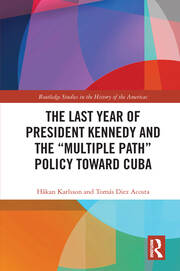
The last year of President Kennedy and the "multiple path" policy toward Cuba / Håkan Karlsson and Tomás Diez Acosta.
ISBN
9781000768527 (epub)
100076852X
9780429351709 (ebook)
0429351704
9781000768503 (adobe pdf)
1000768503
9781000768510 (mobi)
1000768511
9780367368425 (hardback)
100076852X
9780429351709 (ebook)
0429351704
9781000768503 (adobe pdf)
1000768503
9781000768510 (mobi)
1000768511
9780367368425 (hardback)
Dil Kodu
İngilizce
Yazar
Yayın Bilgisi
New York, NY : Routledge Taylor & Francis, 2020.
Fiziksel Niteleme
1 online resource.
Dizi
Routledge studies in the history of the Americas; vol. 11
İçindekiler Notu
Part I: Kennedy and the Anti-Cuban Policy After the October Crisis -- Introduction to Part I -- Influential Factors of the U.S. Policy Towards Cuba in 1963 -- The New Governing Body for Anti-Cuban Subversion -- Proposals from the Coordinator of Cuban Affairs -- Soviet Troops in Cuba and the Political Debate in the U.S. -- "Uncontrolled" Terrorist Acts of the Counterrevolution -- Part II: The "Multiple Path" Policy -- Introduction to Part II -- The Internal Counterrevolutionary "Offensive" in the Beginning of 1963 -- The Standing Group and the Political Alternatives -- The Integrated Covert Action Program -- Operations and "Autonomous" Groups -- Part III: The Cuban-Soviet Dispute and the Reinforcement of the Cuban Defense -- Introduction to Part III -- The Cuban-Soviet Dispute and the First Visit of Fidel Castro to the Soviet Union -- Military Reinforcement of the FAR Between 1963 and 1964 -- The Confrontation with the Internal Counterrevolution -- The Action Against the Internal Counterrevolution and Its Groups -- Part IV: The Ambivalence of the "Multiple Path" Policy -- Introduction to Part IV -- The Negotiations of Lawyer James B. Donovan and the Ambivalent Policy Towards Cuba -- Information Classification: General -- Attempts to Approach the Cuban Government -- Appendix: Chronology of U.S.-Cuba Relations, 1963.
Özet, vb.
"This book presents new aspects of the U.S. "multiple path" policy towards Cuba that was designed and adopted after the Missile Crisis (October 1962) until the assassination of President Kennedy on November 22, 1963, from a Cuban perspective. The policy was characterized by its contradictory profile, since simultaneously as aggressions were directed at Cuba, it also included the establishment of channels of communication with the Cuban government. The book also analyzes the Cuban-Soviet dispute during the same period. The Cuban experiences have still not been sufficiently discussed, and the aspects offered will enrich the knowledge of the U.S.-Cuban relationship during the mentioned period."-- Provided by publisher.
Konu
Kennedy, John F. __ (John Fitzgerald), __ 1917-1963.
Castro, Fidel, __ 1926-2016.
Cuban Missile Crisis, 1962.
HISTORY / General __ bisacsh
United States __ Foreign relations __ Cuba.
Cuba __ Foreign relations __ United States.
Cuba __ Foreign relations __ Soviet Union.
Soviet Union __ Foreign relations __ Cuba.
Cuba __ Foreign relations __ 1959-1990.
United States __ Foreign relations __ 1945-1989.
Castro, Fidel, __ 1926-2016.
Cuban Missile Crisis, 1962.
HISTORY / General __ bisacsh
United States __ Foreign relations __ Cuba.
Cuba __ Foreign relations __ United States.
Cuba __ Foreign relations __ Soviet Union.
Soviet Union __ Foreign relations __ Cuba.
Cuba __ Foreign relations __ 1959-1990.
United States __ Foreign relations __ 1945-1989.
Diğer Yazarlar
Veritabanı
Eseri Alıntıla
Referansları kullanmadan önce gözden geçirmeniz ve varsa gerekli düzeltmeleri yapmanız önerilir.
Dijital Kaynak
MARC Görünümü
LEADER 04175cam a22005778i 4500
001 796809
003 TR_AnAIT
005 20260123011246
006 m d | |
007 cr |||||||||||
008 191104s2020 nyu ob 001 0 eng
020 |a9781000768527|q(epub)
020 |a100076852X
020 |a9780429351709|q(ebook)
020 |a0429351704
020 |a9781000768503|q(adobe pdf)
020 |a1000768503
020 |a9781000768510|q(mobi)
020 |a1000768511
020 |z9780367368425|q(hardback)
035 |a(OCoLC)1127073350
035 |a(OCoLC-P)1127073350
040 |aOCoLC-P|beng|erda|cOCoLC-P
041 |aeng
049 |aTürk Tarih Kurumu Kütüphanesi
050 00|aE183.8.C9
072 7|aHIS|x000000|2bisacsh
072 7|aHB|2bicssc
082 00|a327.7307291|223
100 1 |aKarlsson, Håkan,|d1962-|eauthor.
245 14|aThe last year of President Kennedy and the "multiple path" policy toward Cuba /|cHåkan Karlsson and Tomás Diez Acosta.
264 1|aNew York, NY :|bRoutledge Taylor & Francis,|c2020.
300 |a1 online resource.
336 |atext|btxt|2rdacontent
337 |acomputer|bn|2rdamedia
338 |aonline resource|bnc|2rdacarrier
490 0 |aRoutledge studies in the history of the Americas;|vvol. 11
505 0 |aPart I: Kennedy and the Anti-Cuban Policy After the October Crisis -- Introduction to Part I -- Influential Factors of the U.S. Policy Towards Cuba in 1963 -- The New Governing Body for Anti-Cuban Subversion -- Proposals from the Coordinator of Cuban Affairs -- Soviet Troops in Cuba and the Political Debate in the U.S. -- "Uncontrolled" Terrorist Acts of the Counterrevolution -- Part II: The "Multiple Path" Policy -- Introduction to Part II -- The Internal Counterrevolutionary "Offensive" in the Beginning of 1963 -- The Standing Group and the Political Alternatives -- The Integrated Covert Action Program -- Operations and "Autonomous" Groups -- Part III: The Cuban-Soviet Dispute and the Reinforcement of the Cuban Defense -- Introduction to Part III -- The Cuban-Soviet Dispute and the First Visit of Fidel Castro to the Soviet Union -- Military Reinforcement of the FAR Between 1963 and 1964 -- The Confrontation with the Internal Counterrevolution -- The Action Against the Internal Counterrevolution and Its Groups -- Part IV: The Ambivalence of the "Multiple Path" Policy -- Introduction to Part IV -- The Negotiations of Lawyer James B. Donovan and the Ambivalent Policy Towards Cuba -- Information Classification: General -- Attempts to Approach the Cuban Government -- Appendix: Chronology of U.S.-Cuba Relations, 1963.
520 |a"This book presents new aspects of the U.S. "multiple path" policy towards Cuba that was designed and adopted after the Missile Crisis (October 1962) until the assassination of President Kennedy on November 22, 1963, from a Cuban perspective. The policy was characterized by its contradictory profile, since simultaneously as aggressions were directed at Cuba, it also included the establishment of channels of communication with the Cuban government. The book also analyzes the Cuban-Soviet dispute during the same period. The Cuban experiences have still not been sufficiently discussed, and the aspects offered will enrich the knowledge of the U.S.-Cuban relationship during the mentioned period."--|cProvided by publisher.
588 |aOCLC-licensed vendor bibliographic record.
600 10|aKennedy, John F.|q(John Fitzgerald),|d1917-1963.
600 10|aCastro, Fidel,|d1926-2016.
650 0|aCuban Missile Crisis, 1962.
650 7|aHISTORY / General|2bisacsh
651 0|aUnited States|xForeign relations|zCuba.
651 0|aCuba|xForeign relations|zUnited States.
651 0|aCuba|xForeign relations|zSoviet Union.
651 0|aSoviet Union|xForeign relations|zCuba.
651 0|aCuba|xForeign relations|y1959-1990.
651 0|aUnited States|xForeign relations|y1945-1989.
700 1 |aDiez Acosta, Tomás,|eauthor.
856 40|3Taylor & Francis|uhttps://www.taylorfrancis.com/books/9780429351709
856 42|3OCLC metadata license agreement|uhttp://www.oclc.org/content/dam/oclc/forms/terms/vbrl-201703.pdf
901 |aTaylor & Francis
001 796809
003 TR_AnAIT
005 20260123011246
006 m d | |
007 cr |||||||||||
008 191104s2020 nyu ob 001 0 eng
020 |a9781000768527|q(epub)
020 |a100076852X
020 |a9780429351709|q(ebook)
020 |a0429351704
020 |a9781000768503|q(adobe pdf)
020 |a1000768503
020 |a9781000768510|q(mobi)
020 |a1000768511
020 |z9780367368425|q(hardback)
035 |a(OCoLC)1127073350
035 |a(OCoLC-P)1127073350
040 |aOCoLC-P|beng|erda|cOCoLC-P
041 |aeng
049 |aTürk Tarih Kurumu Kütüphanesi
050 00|aE183.8.C9
072 7|aHIS|x000000|2bisacsh
072 7|aHB|2bicssc
082 00|a327.7307291|223
100 1 |aKarlsson, Håkan,|d1962-|eauthor.
245 14|aThe last year of President Kennedy and the "multiple path" policy toward Cuba /|cHåkan Karlsson and Tomás Diez Acosta.
264 1|aNew York, NY :|bRoutledge Taylor & Francis,|c2020.
300 |a1 online resource.
336 |atext|btxt|2rdacontent
337 |acomputer|bn|2rdamedia
338 |aonline resource|bnc|2rdacarrier
490 0 |aRoutledge studies in the history of the Americas;|vvol. 11
505 0 |aPart I: Kennedy and the Anti-Cuban Policy After the October Crisis -- Introduction to Part I -- Influential Factors of the U.S. Policy Towards Cuba in 1963 -- The New Governing Body for Anti-Cuban Subversion -- Proposals from the Coordinator of Cuban Affairs -- Soviet Troops in Cuba and the Political Debate in the U.S. -- "Uncontrolled" Terrorist Acts of the Counterrevolution -- Part II: The "Multiple Path" Policy -- Introduction to Part II -- The Internal Counterrevolutionary "Offensive" in the Beginning of 1963 -- The Standing Group and the Political Alternatives -- The Integrated Covert Action Program -- Operations and "Autonomous" Groups -- Part III: The Cuban-Soviet Dispute and the Reinforcement of the Cuban Defense -- Introduction to Part III -- The Cuban-Soviet Dispute and the First Visit of Fidel Castro to the Soviet Union -- Military Reinforcement of the FAR Between 1963 and 1964 -- The Confrontation with the Internal Counterrevolution -- The Action Against the Internal Counterrevolution and Its Groups -- Part IV: The Ambivalence of the "Multiple Path" Policy -- Introduction to Part IV -- The Negotiations of Lawyer James B. Donovan and the Ambivalent Policy Towards Cuba -- Information Classification: General -- Attempts to Approach the Cuban Government -- Appendix: Chronology of U.S.-Cuba Relations, 1963.
520 |a"This book presents new aspects of the U.S. "multiple path" policy towards Cuba that was designed and adopted after the Missile Crisis (October 1962) until the assassination of President Kennedy on November 22, 1963, from a Cuban perspective. The policy was characterized by its contradictory profile, since simultaneously as aggressions were directed at Cuba, it also included the establishment of channels of communication with the Cuban government. The book also analyzes the Cuban-Soviet dispute during the same period. The Cuban experiences have still not been sufficiently discussed, and the aspects offered will enrich the knowledge of the U.S.-Cuban relationship during the mentioned period."--|cProvided by publisher.
588 |aOCLC-licensed vendor bibliographic record.
600 10|aKennedy, John F.|q(John Fitzgerald),|d1917-1963.
600 10|aCastro, Fidel,|d1926-2016.
650 0|aCuban Missile Crisis, 1962.
650 7|aHISTORY / General|2bisacsh
651 0|aUnited States|xForeign relations|zCuba.
651 0|aCuba|xForeign relations|zUnited States.
651 0|aCuba|xForeign relations|zSoviet Union.
651 0|aSoviet Union|xForeign relations|zCuba.
651 0|aCuba|xForeign relations|y1959-1990.
651 0|aUnited States|xForeign relations|y1945-1989.
700 1 |aDiez Acosta, Tomás,|eauthor.
856 40|3Taylor & Francis|uhttps://www.taylorfrancis.com/books/9780429351709
856 42|3OCLC metadata license agreement|uhttp://www.oclc.org/content/dam/oclc/forms/terms/vbrl-201703.pdf
901 |aTaylor & Francis
Materyaller
Depodan talep edilen materyal sadece kütüphane içerisinde kullanılmaktadır.
Materyal dışarıya ödünç verilmemektedir.
Materyal dışarıya ödünç verilmemektedir.
