

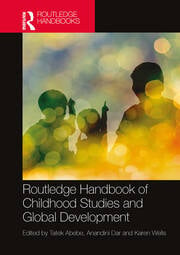
Routledge Handbook of Childhood Studies and Global Development / edited by Tatek Adebe, Anandini Dar and Karen Wells.
ISBN
9781003155843 (electronic bk.)
1003155847 (electronic bk.)
9781040109007 (electronic bk. : PDF)
1040109004 (electronic bk. : PDF)
9780367740443
9781040109069 (electronic bk. : EPUB)
1040109063 (electronic bk. : EPUB)
9780367740436
1003155847 (electronic bk.)
9781040109007 (electronic bk. : PDF)
1040109004 (electronic bk. : PDF)
9780367740443
9781040109069 (electronic bk. : EPUB)
1040109063 (electronic bk. : EPUB)
9780367740436
Dil Kodu
İngilizce
Yayın Bilgisi
London : Routledge, 2025.
Fiziksel Niteleme
1 online resource (632 pages).
İçindekiler Notu
Childhood Studies and Global Development - IntroductionTatek Abebe, Anandini Dar and Karen Wells Section 1: Researching Childhood and Development1. Section Introduction by Anandini Dar 2. The Dispersed Child: Indian Children and their Archival Presence in Missionary CollectionsHia Sen 3. Development Research with Children from A Decolonial Perspective: Experimentation with Knowledge and Learning to Think Otherwise Lucia Rabello de Castro 4. Participatory Knowledge Co-Generation with Children: Ethics and Politics of EngagementTatek Abebe and Hilde Refstie 5. Ethics and Consent in Research with Children and Young People in Global DevelopmentJulia Truscott, Antonia Canosa and Anne Graham 6. Visual ResearchKaren Wells 7. Using a Mixed Methods Approach to Identify Pathways to Adolescent Girl EmpowermentMallika Tharakan, R.Maithreyi, Manideep Govindu Section 2: Political activism and development 8. Section Introduction by Karen Wells 9. Political Socialization in Militarized State: Youth in Armed Conflict of Indian Administered KashmirKhalid Wasim Hassan 10. New Readings for Palestinian Children and Youth's Experiences During the British Mandate: the Birth of Children's Political AgencyJanette Habashi 11. "Capitalism Doesn't Empower Me": Latin American Children's Activism and Critiques of Neoliberal DevelopmentJessica K. Taft12. Children as Environmental Actors: a Generational Perspective on Climate Activism in an Overheated WorldTanu Biswas and Thomas Hylland Eriksen 13. Colombian Child-Soldiers and Their Status as Political ActorsDiana Carolina García Gómez Section 3: Migration, Children, and Development 14. Section Introduction by Anandini Dar 15. Exclusionary Locales of Migration and Education in India: Situating Heterogeneous Manifestations of NGO SchoolingVijitha Rajan 16. Children's health and well-being in the context of parental migration: the case of Southeast AsiaYao Fu, Lucy Jordan, Thida Kim and Elspeth Graham 17. The Politics of Unaccompanied Child Migration at the U.S./Mexico BorderKate Swanson 18. Transnational Migration and Childhood, Social Reproduction and Economic CrisisMichael Boampong Section 4: Health, Gender Norms, and Development 19. Section Introduction by Karen Wells 20. Sexual Violence Against ChildrenJanelle Rabe 21. Navigating Social and Gender Norms in Early Childhood - a Case Study in a Flood-Prone Area in Amazonian PeruKarina Padilla, Deborah Fry and María Cecilia Dedios 22. Influence of Policies on Early Adolescent's Sexual and Reproductive HealthLiseth Lourdes Arias López 23. Sexuality, Bodies and Desire through the Schooling of GirlsDeevia Bhana 24. Children and Adolescents Living with and Affected by HIV in African Countries: Converging Crises, Vulnerability, and ResilienceCourtney Myers, Edith Apondi, and Leslie A. Enane Section 5: Governing Childhoods: Law and Rights25. Section Introduction by Tatek Abebe 26. Child Rights Governance in International Development Anna Holzscheiter, Felix Stadelmann & Benjamin Stachursky 27. The Politics of Child Rights: Protecting the "World-Child", Governing the Future Jana Tabak 28. The Global Politics of Child Labour: A Critical AnalysisLaurence LeBlanc & Edward van Daalen 29. Disability and Education Under Conflict and Crisis in the Global SouthDina Kiwan 30. Explaining Variation in Compliance with Anti-FGM and Child Marriage Law in Burkina FasoJosephine Wouango & Susan L. Ostermann 31. A Critical Reflection on Ghana's Childhood, Child Rights and Child Labour Governance Modalities: A Case Study of Abolitionist Discourses and Practices on Children's Work in the Fishing SectorSam Okyere, Nana K Agyeman & Bernard Koomson Section 6: Childhood and Social Reproduction 32. Section Introduction by Tatek Abebe 33. Gendered Navigations of Space, Work and Education in Young Adivasi Lives in IndiaGunjan Wadhwa 34. 'Skilling' Educated Youth for Insecure Employment in the Informal Economy Sarada Balagopalan and Ketaki Prabha 35. Mothers' Reflections on Generational Changes in Childhood in a Mayan Town: Globalisation Challenges to Convivencia/Togetherness Itzel Aceves-Azuara, Barbara Rogoff, & Marta Navichoc Cotuc 36. Children as Agents of Change to Reach the Water Security Sustainable Development Goal in the Climate Crisis Martina Angela Caretta and Bronwyn Hayward 37. Early Childhood Education in Turkana Pastoralist Communities of KenyaJohn Ng'asike 38. From Post-Development to Post-Schooling: Rethinking Educational Pathways with Agro-pastoralists in Southwest EthiopiaSabrina Maurus Section 7: Culture, Childhood and Development 39. Section Introduction by Karen Wells 40. Language Policy, Development and Translanguaging in AfricaKaren Wells and Girma Muluneh 41. Children's Play Cultures in West AfricaPeace Mamle Tetteh 42. The Role of Videogames in The Socio-Cultural Life of Children in PeruJerjes Loayza 43. Sport for DevelopmentItamar Dubinsky 44. Resisting State-Sponsored Oppression through Applied Theatre: A Brazilian case studyMarina Henriques Coutinho with Tim Prentki
Özet, vb.
The Routledge Handbook of Childhood Studies and Global Development explores how global development agendas and processes of economic development influence children's lives. It demonstrates that children are not only the frequent targets or objects of development but that they also shape and influence processes of economic, political and sociocultural development. The handbook makes the case for the importance of placing children at the heart of development debates and demonstrates how researchers, policymakers and practitioners can engage children in development. Through reports on field research as well as a critical engagement with theories in development studies and childhood studies, contributors contest normative assumptions about childhood and global development. They tease out and tease apart the complex social, historical, cultural, economic, epidemiological, ecological, geopolitical, and institutional processes transforming what it means to be young in the world today. Showcasing research from both established scholars and early career researchers, and with particular prominence given to the work of authors from the global south, this book will be an essential reference for policymakers, practitioners, and for researchers and students across childhood studies, education, geography, sociology, and global development.
Konu
Child rearing.
Economic development.
SOCIAL SCIENCE / Third World Development __ bisacsh
SOCIAL SCIENCE / Children's Studies __ bisacsh
Economic development.
SOCIAL SCIENCE / Third World Development __ bisacsh
SOCIAL SCIENCE / Children's Studies __ bisacsh
Diğer Yazarlar
Veritabanı
