LEADER 03570cam a22005178i 4500
001 797037
003 TR_AnAIT
005 20260123011638
006 m o d
007 cr |||||||||||
008 220203s2022 nyu ob 001 0 eng
020 |a9781003215912|q(ebook)
020 |a1003215912
020 |a9781000613414|q(electronic bk. : PDF)
020 |a1000613410|q(electronic bk. : PDF)
020 |a9781000613469|q(electronic bk. : EPUB)
020 |a1000613461|q(electronic bk. : EPUB)
020 |z9781032101422|q(hardback)
020 |z9781032105604|q(paperback)
024 7 |a10.4324/9781003215912|2doi
035 |a(OCoLC)1298714253
035 |a(OCoLC-P)1298714253
040 |aOCoLC-P|beng|erda|cOCoLC-P
041 |aeng
049 |aTürk Tarih Kurumu Kütüphanesi
050 00|aBH301.N3
072 7|aART|x015060|2bisacsh
072 7|aART|x015080|2bisacsh
072 7|aAC|2bicssc
082 00|a111/.85|223/eng/20220215
100 1 |aPihas, Gabriel,|eauthor.
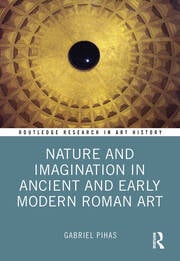
245 10|aNature and imagination in ancient and early modern Roman art /|cGabriel Pihas.
264 1|aNew York :|bRoutledge,|c2022.
300 |a1 online resource
336 |atext|btxt|2rdacontent
337 |acomputer|bc|2rdamedia
338 |aonline resource|bcr|2rdacarrier
505 0 |aThe Heavens, Ancient and Modern -- Ancient Art and the Problem of Hamlet -- Crossing the Cosmos in Santa Costanza -- A New Theology of Nature -- Michelangelo's Renewal of All Things -- Natural Things in Caravaggio's Early Religious Paintings -- Borromini's Restlessness and the Classical Tradition -- Epilogue: Nature and Ruin.
520 |a"This volume uses the art of Rome to help us understand the radical historical break between the fundamental ancient pre-supposition that there is a natural world or cosmos situating human life, and the equally fundamental modern emphasis on human imagination and its creative power. Rome's unique art history reveals a different side of the battle between ancients and moderns than that usually raised as an issue in the history of science and philosophy. The book traces the idea of a cosmos in pre-modern art in Rome, from the reception of Greek art in the Roman republic to the construction of the Pantheon, to early Christian art and architecture. It then sketches the disappearance of the presupposition of a cosmos in the High Renaissance and Baroque periods, as creativity became a new ideal. Through discussions of the art and architecture that defines proto-modern Rome- from Michelangelo's terribilita' in the Sistine Chapel, Caravaggio's realism, Baroque illusionism, the infinities of Borromini's architecture, to the Grand Tour's representations of ruins- through an interpretation of such major issues and works, this book shows how modern art liberates us while leaving us feeling estranged from our grounding in the natural world. The book will be of interest to scholars working in art history, architectural history, classics, philosophy, and early modern history and culture"--|cProvided by publisher.
588 |aOCLC-licensed vendor bibliographic record.
650 0|aNature (Aesthetics)
650 0|aPhilosophy of nature.
650 0|aArt, Roman|xThemes, motives.
650 0|aArt, Italian|zItaly|zRome|xThemes, motives.
650 7|aART / History / Ancient & Classical|2bisacsh
650 7|aART / History / Renaissance|2bisacsh
856 40|3Taylor & Francis|uhttps://www.taylorfrancis.com/books/9781003215912
856 42|3OCLC metadata license agreement|uhttp://www.oclc.org/content/dam/oclc/forms/terms/vbrl-201703.pdf
901 |aTaylor & Francis