

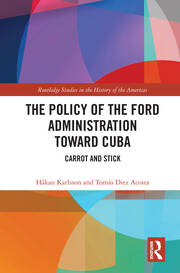
The policy of the Ford Administration toward Cuba : carrot and stick / Håkan Karlsson and Tomás Diez Acosta.
ISBN
9781000546606 (epub)
1000546608
9781003263418 (ebook)
1003263410
9781000546590 (adobe pdf)
1000546594
9781032203980 (hardback)
9781032204123 (paperback)
1000546608
9781003263418 (ebook)
1003263410
9781000546590 (adobe pdf)
1000546594
9781032203980 (hardback)
9781032204123 (paperback)
Dil Kodu
İngilizce
Yazar
Yayın Bilgisi
New York, NY : Routledge, [2022]
Fiziksel Niteleme
1 online resource.
Dizi
Routledge studies in the history of the Americas ; vol. 29
İçindekiler Notu
The Ford Administration between continuity and rupture -- The U.S. and the arrival of President Gerald R. Ford -- U.S. foreign policy and the break with Nixon's Cuba policy -- The "new dialogue" and the failure of the regional isolation of Cuba -- Cuba's domestic transformations and international perspective (1974-1976) -- Domestic politics in Cuba (1974-1976) -- Cuba's foreign policy between 1974 and 1976 -- The U.S. Congress and Cuba policy -- The secret talks between the U.S. and Cuba -- The beginning and the development of secret conversations -- The meeting at Hotel Pierre -- From a warm summer to a chilly autumn -- The impact of the Cuban Mission in Angola -- The civil war in Angola and the covert participation of the U.S. -- The Cuban support and the independence of Angola -- The defeat of the invaders and the punishment of Cuba -- The conservative offensive in Latin America and the Cuban counterrevolution -- The reactionary wave in Latin America -- Actions by terrorist organizations of Cuban origin (1974-1975) -- Counterrevolutionary terrorism in 1976.
Özet, vb.
"This book presents new aspects of the U.S. Cuba policy during Gerald R. Ford's presidency (August 9, 1974 to January 20, 1977). Based in governmental and other sources from the U.S. and Cuba, the book examines how the Ford administration broke with Nixon's hostile policy when the diplomatic and economic isolation of Cuba was ended in the OAS, even if the U.S. economic blockade prevailed. In line with the detente policy towards the USSR, the Ford administration strived to normalize the relations with Cuba through secret discussions. However, the Cuban involvement in the Angolan civil war ended this process of normalization, and the U.S. returned to a confrontational policy. Within this framework, counterrevolutionary groups in the U.S. could act, more or less with impunity, towards Cuba, but also against Cuban and third country targets both within and outside the U.S. The book describes the oscillating Cuba policy that was the hallmark of the Ford administration. The Cuban perspective adopted will complement and enrich the knowledge of the U.S. policy towards Cuba during Gerald Ford's presidency. It is of relevance to everyone interested in the issue, and especially for students and researchers within the disciplines of History and Political Science"-- Provided by publisher.
Konu
Counterrevolutions __ Cuba __ History __ 20th century.
HISTORY / Caribbean & West Indies / Cuba __ bisacsh
HISTORY / Latin America / General __ bisacsh
HISTORY / Modern / General __ bisacsh
United States __ Foreign relations __ Cuba.
Cuba __ Foreign relations __ United States.
United States __ Foreign relations __ 1974-1977.
Angola __ History __ Civil War, 1975-2002 __ Participation, Cuban.
Cuba __ Politics and government __ 1959-1990.
HISTORY / Caribbean & West Indies / Cuba __ bisacsh
HISTORY / Latin America / General __ bisacsh
HISTORY / Modern / General __ bisacsh
United States __ Foreign relations __ Cuba.
Cuba __ Foreign relations __ United States.
United States __ Foreign relations __ 1974-1977.
Angola __ History __ Civil War, 1975-2002 __ Participation, Cuban.
Cuba __ Politics and government __ 1959-1990.
Diğer Yazarlar
Veritabanı
Eseri Alıntıla
Referansları kullanmadan önce gözden geçirmeniz ve varsa gerekli düzeltmeleri yapmanız önerilir.
Dijital Kaynak
MARC Görünümü
LEADER 04625cam a22005898i 4500
001 797052
003 TR_AnAIT
005 20260123011653
006 m o d
007 cr |||||||||||
008 210915s2022 nyu ob 001 0 eng
020 |a9781000546606|q(epub)
020 |a1000546608
020 |a9781003263418|q(ebook)
020 |a1003263410
020 |a9781000546590|q(adobe pdf)
020 |a1000546594
020 |z9781032203980|q(hardback)
020 |z9781032204123|q(paperback)
035 |a(OCoLC)1268546356
035 |a(OCoLC-P)1268546356
040 |aOCoLC-P|beng|erda|cOCoLC-P
041 |aeng
049 |aTürk Tarih Kurumu Kütüphanesi
050 00|aE183.8.C9
072 7|aHIS|x041010|2bisacsh
072 7|aHIS|x024000|2bisacsh
072 7|aHIS|x037030|2bisacsh
072 7|aHBTW|2bicssc
082 00|a327.7307291/0904|223
100 1 |aKarlsson, Håkan,|d1962-|eauthor.
245 14|aThe policy of the Ford Administration toward Cuba :|bcarrot and stick /|cHåkan Karlsson and Tomás Diez Acosta.
264 1|aNew York, NY :|bRoutledge,|c[2022]
300 |a1 online resource.
336 |atext|btxt|2rdacontent
337 |acomputer|bc|2rdamedia
338 |aonline resource|bcr|2rdacarrier
490 0 |aRoutledge studies in the history of the Americas ;|vvol. 29
505 0 |aThe Ford Administration between continuity and rupture -- The U.S. and the arrival of President Gerald R. Ford -- U.S. foreign policy and the break with Nixon's Cuba policy -- The "new dialogue" and the failure of the regional isolation of Cuba -- Cuba's domestic transformations and international perspective (1974-1976) -- Domestic politics in Cuba (1974-1976) -- Cuba's foreign policy between 1974 and 1976 -- The U.S. Congress and Cuba policy -- The secret talks between the U.S. and Cuba -- The beginning and the development of secret conversations -- The meeting at Hotel Pierre -- From a warm summer to a chilly autumn -- The impact of the Cuban Mission in Angola -- The civil war in Angola and the covert participation of the U.S. -- The Cuban support and the independence of Angola -- The defeat of the invaders and the punishment of Cuba -- The conservative offensive in Latin America and the Cuban counterrevolution -- The reactionary wave in Latin America -- Actions by terrorist organizations of Cuban origin (1974-1975) -- Counterrevolutionary terrorism in 1976.
520 |a"This book presents new aspects of the U.S. Cuba policy during Gerald R. Ford's presidency (August 9, 1974 to January 20, 1977). Based in governmental and other sources from the U.S. and Cuba, the book examines how the Ford administration broke with Nixon's hostile policy when the diplomatic and economic isolation of Cuba was ended in the OAS, even if the U.S. economic blockade prevailed. In line with the detente policy towards the USSR, the Ford administration strived to normalize the relations with Cuba through secret discussions. However, the Cuban involvement in the Angolan civil war ended this process of normalization, and the U.S. returned to a confrontational policy. Within this framework, counterrevolutionary groups in the U.S. could act, more or less with impunity, towards Cuba, but also against Cuban and third country targets both within and outside the U.S. The book describes the oscillating Cuba policy that was the hallmark of the Ford administration. The Cuban perspective adopted will complement and enrich the knowledge of the U.S. policy towards Cuba during Gerald Ford's presidency. It is of relevance to everyone interested in the issue, and especially for students and researchers within the disciplines of History and Political Science"--|cProvided by publisher.
588 |aOCLC-licensed vendor bibliographic record.
647 7|aAngolan Civil War|c(Angola :|d1975-2002)|2fast|0(OCoLC)fst01352294
650 0|aCounterrevolutions|zCuba|xHistory|y20th century.
650 7|aHISTORY / Caribbean & West Indies / Cuba|2bisacsh
650 7|aHISTORY / Latin America / General|2bisacsh
650 7|aHISTORY / Modern / General|2bisacsh
651 0|aUnited States|xForeign relations|zCuba.
651 0|aCuba|xForeign relations|zUnited States.
651 0|aUnited States|xForeign relations|y1974-1977.
651 0|aAngola|xHistory|yCivil War, 1975-2002|xParticipation, Cuban.
651 0|aCuba|xPolitics and government|y1959-1990.
700 1 |aDiez Acosta, Tomás,|eauthor.
856 40|3Taylor & Francis|uhttps://www.taylorfrancis.com/books/9781003263418
856 42|3OCLC metadata license agreement|uhttp://www.oclc.org/content/dam/oclc/forms/terms/vbrl-201703.pdf
901 |aTaylor & Francis
001 797052
003 TR_AnAIT
005 20260123011653
006 m o d
007 cr |||||||||||
008 210915s2022 nyu ob 001 0 eng
020 |a9781000546606|q(epub)
020 |a1000546608
020 |a9781003263418|q(ebook)
020 |a1003263410
020 |a9781000546590|q(adobe pdf)
020 |a1000546594
020 |z9781032203980|q(hardback)
020 |z9781032204123|q(paperback)
035 |a(OCoLC)1268546356
035 |a(OCoLC-P)1268546356
040 |aOCoLC-P|beng|erda|cOCoLC-P
041 |aeng
049 |aTürk Tarih Kurumu Kütüphanesi
050 00|aE183.8.C9
072 7|aHIS|x041010|2bisacsh
072 7|aHIS|x024000|2bisacsh
072 7|aHIS|x037030|2bisacsh
072 7|aHBTW|2bicssc
082 00|a327.7307291/0904|223
100 1 |aKarlsson, Håkan,|d1962-|eauthor.
245 14|aThe policy of the Ford Administration toward Cuba :|bcarrot and stick /|cHåkan Karlsson and Tomás Diez Acosta.
264 1|aNew York, NY :|bRoutledge,|c[2022]
300 |a1 online resource.
336 |atext|btxt|2rdacontent
337 |acomputer|bc|2rdamedia
338 |aonline resource|bcr|2rdacarrier
490 0 |aRoutledge studies in the history of the Americas ;|vvol. 29
505 0 |aThe Ford Administration between continuity and rupture -- The U.S. and the arrival of President Gerald R. Ford -- U.S. foreign policy and the break with Nixon's Cuba policy -- The "new dialogue" and the failure of the regional isolation of Cuba -- Cuba's domestic transformations and international perspective (1974-1976) -- Domestic politics in Cuba (1974-1976) -- Cuba's foreign policy between 1974 and 1976 -- The U.S. Congress and Cuba policy -- The secret talks between the U.S. and Cuba -- The beginning and the development of secret conversations -- The meeting at Hotel Pierre -- From a warm summer to a chilly autumn -- The impact of the Cuban Mission in Angola -- The civil war in Angola and the covert participation of the U.S. -- The Cuban support and the independence of Angola -- The defeat of the invaders and the punishment of Cuba -- The conservative offensive in Latin America and the Cuban counterrevolution -- The reactionary wave in Latin America -- Actions by terrorist organizations of Cuban origin (1974-1975) -- Counterrevolutionary terrorism in 1976.
520 |a"This book presents new aspects of the U.S. Cuba policy during Gerald R. Ford's presidency (August 9, 1974 to January 20, 1977). Based in governmental and other sources from the U.S. and Cuba, the book examines how the Ford administration broke with Nixon's hostile policy when the diplomatic and economic isolation of Cuba was ended in the OAS, even if the U.S. economic blockade prevailed. In line with the detente policy towards the USSR, the Ford administration strived to normalize the relations with Cuba through secret discussions. However, the Cuban involvement in the Angolan civil war ended this process of normalization, and the U.S. returned to a confrontational policy. Within this framework, counterrevolutionary groups in the U.S. could act, more or less with impunity, towards Cuba, but also against Cuban and third country targets both within and outside the U.S. The book describes the oscillating Cuba policy that was the hallmark of the Ford administration. The Cuban perspective adopted will complement and enrich the knowledge of the U.S. policy towards Cuba during Gerald Ford's presidency. It is of relevance to everyone interested in the issue, and especially for students and researchers within the disciplines of History and Political Science"--|cProvided by publisher.
588 |aOCLC-licensed vendor bibliographic record.
647 7|aAngolan Civil War|c(Angola :|d1975-2002)|2fast|0(OCoLC)fst01352294
650 0|aCounterrevolutions|zCuba|xHistory|y20th century.
650 7|aHISTORY / Caribbean & West Indies / Cuba|2bisacsh
650 7|aHISTORY / Latin America / General|2bisacsh
650 7|aHISTORY / Modern / General|2bisacsh
651 0|aUnited States|xForeign relations|zCuba.
651 0|aCuba|xForeign relations|zUnited States.
651 0|aUnited States|xForeign relations|y1974-1977.
651 0|aAngola|xHistory|yCivil War, 1975-2002|xParticipation, Cuban.
651 0|aCuba|xPolitics and government|y1959-1990.
700 1 |aDiez Acosta, Tomás,|eauthor.
856 40|3Taylor & Francis|uhttps://www.taylorfrancis.com/books/9781003263418
856 42|3OCLC metadata license agreement|uhttp://www.oclc.org/content/dam/oclc/forms/terms/vbrl-201703.pdf
901 |aTaylor & Francis
Materyaller
Depodan talep edilen materyal sadece kütüphane içerisinde kullanılmaktadır.
Materyal dışarıya ödünç verilmemektedir.
Materyal dışarıya ödünç verilmemektedir.
