LEADER 03807cam a22005418i 4500
001 797115
003 TR_AnAIT
005 20260123011759
006 m o d
007 cr |||||||||||
008 230802s2024 enk ob 000 0 eng
020 |a9781003372455|q(ebook)
020 |a1003372457
020 |a9781000987256|q(electronic bk. : EPUB)
020 |a1000987256|q(electronic bk. : EPUB)
020 |a9781000987225|q(electronic bk. : PDF)
020 |a1000987221|q(electronic bk. : PDF)
020 |z9781032444963|q(hardback)
020 |z9781032444970|q(paperback)
024 7 |a10.4324/9781003372455|2doi
035 |a(OCoLC)1401057848
035 |a(OCoLC-P)1401057848
040 |aOCoLC-P|beng|erda|cOCoLC-P
041 |aeng
049 |aTürk Tarih Kurumu Kütüphanesi
050 00|aQ127.I742
072 7|aHIS|x026000|2bisacsh
072 7|aSCI|x034000|2bisacsh
072 7|aPDX|2bicssc
082 00|a509.17/670902|223/eng/20230928
100 1 |aBrentjes, Sonja,|eauthor.
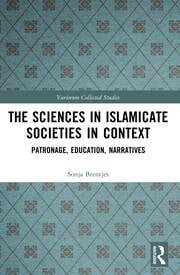
245 14|aThe sciences in Islamicate societies in context :|bpatronage, education, narratives /|cSonja Brentjes.
264 1|aAbingdon, Oxon ;|aNew York, NY :|bRoutledge,|c2024.
300 |a1 online resource.
336 |atext|btxt|2rdacontent
337 |acomputer|bc|2rdamedia
338 |aonline resource|bcr|2rdacarrier
490 0 |aVariorum collected studies
520 |a"This Variorum volume reprints ten papers on contextual elements of the so-called ancient sciences in Islamicate societies between the thirteenth and the seventeenth centuries. They address four major themes: the ancient sciences in educational institutions; courtly patronage of science; the role of the astral and other sciences in the Mamluk sultanate; and narratives about knowledge. The main arguments are directed against the then dominant historiographical claims about the exclusion of the ancient sciences from the madrasa and cognate educational institutes, the suppression of philosophy and other ancient sciences in Damascus after 1229, the limited role of the new experts for timekeeping in the educational and professional exercise of this science, and the marginal impact of astrology under Mamluk rule. It is shown that the muwaqqits (timekeepers) were important teachers at madrasas and Sufi convents, that Mamluk officers sought out astrologers for counselling and that narratives about knowledge reveal important information about scholarly debates and beliefs. Colophons and dedications are used to prove that courtly patronage for the ancient sciences continued uninterrupted until the end of the seventeenth century. Furthermore, these papers refute the idea of a continued and strong conflict between the ancient and modern sciences, showing rather shifting alliances between various of them and their regrouping in the classifications of the entire disciplinary edifice. These papers are suited for graduate teaching in the history of science and the intellectual, cultural and social history of the Middle East and for all readers interested in the study of the contexts of the sciences"--|cProvided by publisher.
588 |aOCLC-licensed vendor bibliographic record.
650 0|aScience|zIslamic countries|xHistory.
650 0|aMathematics|zIslamic countries|xHistory.
650 0|aScience|xStudy and teaching|zIslamic countries|xHistory.
650 0|aMathematics|xStudy and teaching|zIslamic countries|xHistory.
650 0|aIslam and science|xHistory.
650 7|aHISTORY / Middle East / General|2bisacsh
650 7|aSCIENCE / History|2bisacsh
651 0|aIslamic countries|xIntellectual life.
856 40|3Taylor & Francis|uhttps://www.taylorfrancis.com/books/9781003372455
856 42|3OCLC metadata license agreement|uhttp://www.oclc.org/content/dam/oclc/forms/terms/vbrl-201703.pdf
901 |aTaylor & Francis