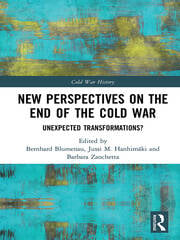
New Perspectives on the End of the Cold War : Unexpected Transformations? / editors, Bernhard Blumenau, Jussi M. Hanhimäki, Barbara Zanchetta.
Erişim Adresi
ISBN
9781315189031 (e-book : PDF)
9781351744898 (e-book: Mobi)
9781138731349 (hardback)
9781351744898 (e-book: Mobi)
9781138731349 (hardback)
Dil Kodu
İngilizce
Basım Bildirimi
First edition.
Yayın Bilgisi
London : Taylor and Francis, 2018.
Fiziksel Niteleme
1 online resource
Dizi
Cold War History
İçindekiler Notu
chapter Introduction -- Unexpected transformations? / Jussi M. Hanhimäki -- chapter 1 Threat or opportunity? -- Kissinger, Brzezinski, and the demise of the Soviet Union / Jussi M. Hanhimäki -- chapter 2 The Nuclear and Space Arms Talks, George Shultz, and the end of the Cold War / James Graham Wilson -- chapter 3 Nuclear weapons, “nuclear ideas”, and protests -- Did they matter? / Andrea Chiampan -- chapter 4 Eduard Shevardnadze, Anatoly Chernyaev, and German reunification -- The role of secondary political actors in ending the Cold War / Wolfgang Mueller -- chapter 5 German foreign policy and the “German Problem” during and after the Cold War -- Changes and continuities / Bernhard Blumenau -- chapter 6 Freer movement in return for cash -- Franz Josef Strauß, Alexander Schalck-Golodkowski, and the Milliardenkredit for the GDR, 1983–1984 * / Stephan Kieninger -- chapter 7 The opening of the Austrian–Hungarian border revisited -- How European détente contributed to overcoming the “Iron Curtain” / Maximilian Graf -- chapter 8 The Reagan administration and the promotion of human rights in Eastern Europe -- The case of Romanian emigration, 1981–1984 / Sielke Beata Kelner -- chapter 9 The Single European Act, European Political Cooperation, and the end of the Cold War / Maria Eleonora Guasconi -- chapter 10 The power of omission -- The IMF and the democratic transitions in Poland and Hungary / Fritz Bartel.
Özet, vb.
"This collection of essays makes a significant contribution to the historiography of the end of the Cold War. Research on the causes and consequences of the end of the Cold War is constantly growing. Initially, it was dominated by fairly simplistic, and often politically motivated, debates revolving around the role played by major "winners" and "losers". This volume addresses a number of diverse issues and seeks to challenge several "common wisdoms" about the end of the Cold War. Together, the contributions provide insights on the role of personalities as well as the impact of transnational movements and forces on the unexpected political transformations of the late 1980s and early 1990s. Geographically, the chapters largely focus on the United States, Europe, with special emphasis on Germany, and the Soviet Union. The individual chapters are drawn together by the overarching theme relating to a particular "common wisdom": were the transformations that occurred truly "unexpected"? This collection of essays will make an important contribution to the growing literature on the developments that produced the collapse of the Iron Curtain, the demise of the Soviet Union and the end of the Cold War. This volume will be of much interest to students of Cold War Studies, International History, European Politics and International Relations in general."--Provided by publisher.
Konu
Cold War.
International relations.
World history.
Cold War Studies
Foreign Policy
International Relations
World/International History
International relations.
World history.
Cold War Studies
Foreign Policy
International Relations
World/International History
Diğer Yazarlar
Veritabanı

Eseri Alıntıla
Referansları kullanmadan önce gözden geçirmeniz ve varsa gerekli düzeltmeleri yapmanız önerilir.
Dijital Kaynak
MARC Görünümü
LEADER 04411cam a2200457Ii 4500
001 797316
003 TR_AnAIT
005 20260123012152
008 180706s2018 xx a o 000 0 eng d
020 |a9781315189031|q(e-book : PDF)
020 |a9781351744898|q(e-book: Mobi)
020 |z9781138731349|q(hardback)
024 7 |a10.4324/9781315189031 |2doi
035 |a(OCoLC)1019662597
040 |aFlBoTFG|cFlBoTFG|erda
041 |aeng
049 |aTürk Tarih Kurumu Kütüphanesi
050 4|aD860
072 7|aHIS010000|2bisacsh
072 7|aHIS032000|2bisacsh
072 7|aPOL011000|2bisacsh
072 7|aPOL011010|2bisacsh
082 04|a909.82
245 00|aNew Perspectives on the End of the Cold War :|bUnexpected Transformations? /|ceditors, Bernhard Blumenau, Jussi M. Hanhimäki, Barbara Zanchetta.
250 |aFirst edition.
264 1|aLondon :|bTaylor and Francis,|c2018.
300 |a1 online resource
336 |atext|2rdacontent
337 |acomputer|2rdamedia
338 |aonline resource|2rdacarrier
490 0 |aCold War History
505 00|tchapter Introduction -- |tUnexpected transformations? /|r Jussi M. Hanhimäki -- |tchapter 1 Threat or opportunity? -- |tKissinger, Brzezinski, and the demise of the Soviet Union /|r Jussi M. Hanhimäki -- |tchapter 2 The Nuclear and Space Arms Talks, George Shultz, and the end of the Cold War /|r James Graham Wilson -- |tchapter 3 Nuclear weapons, “nuclear ideas”, and protests -- |tDid they matter? /|r Andrea Chiampan -- |tchapter 4 Eduard Shevardnadze, Anatoly Chernyaev, and German reunification -- |tThe role of secondary political actors in ending the Cold War /|r Wolfgang Mueller -- |tchapter 5 German foreign policy and the “German Problem” during and after the Cold War -- |tChanges and continuities /|r Bernhard Blumenau -- |tchapter 6 Freer movement in return for cash -- |tFranz Josef Strauß, Alexander Schalck-Golodkowski, and the Milliardenkredit for the GDR, 1983–1984 * /|r Stephan Kieninger -- |tchapter 7 The opening of the Austrian–Hungarian border revisited -- |tHow European détente contributed to overcoming the “Iron Curtain” /|r Maximilian Graf -- |tchapter 8 The Reagan administration and the promotion of human rights in Eastern Europe -- |tThe case of Romanian emigration, 1981–1984 /|r Sielke Beata Kelner -- |tchapter 9 The Single European Act, European Political Cooperation, and the end of the Cold War /|r Maria Eleonora Guasconi -- |tchapter 10 The power of omission -- |tThe IMF and the democratic transitions in Poland and Hungary /|r Fritz Bartel.
520 2 |a"This collection of essays makes a significant contribution to the historiography of the end of the Cold War. Research on the causes and consequences of the end of the Cold War is constantly growing. Initially, it was dominated by fairly simplistic, and often politically motivated, debates revolving around the role played by major "winners" and "losers". This volume addresses a number of diverse issues and seeks to challenge several "common wisdoms" about the end of the Cold War. Together, the contributions provide insights on the role of personalities as well as the impact of transnational movements and forces on the unexpected political transformations of the late 1980s and early 1990s. Geographically, the chapters largely focus on the United States, Europe, with special emphasis on Germany, and the Soviet Union. The individual chapters are drawn together by the overarching theme relating to a particular "common wisdom": were the transformations that occurred truly "unexpected"? This collection of essays will make an important contribution to the growing literature on the developments that produced the collapse of the Iron Curtain, the demise of the Soviet Union and the end of the Cold War. This volume will be of much interest to students of Cold War Studies, International History, European Politics and International Relations in general."--Provided by publisher.
650 0|aCold War.
650 0|aInternational relations.
650 0|aWorld history.
650 04|aCold War Studies
650 04|aForeign Policy
650 04|aInternational Relations
650 04|aWorld/International History
700 1 |aBlumenau, Bernhard,|eeditor.
700 1 |aHanhimäki, Jussi M.,|eeditor.
700 1 |aZanchetta, Barbara,|eeditor.
776 08|iPrint version: |z9781138731349
856 40|uhttps://www.taylorfrancis.com/books/9781315189031|zClick here to view.
901 |aTaylor & Francis
001 797316
003 TR_AnAIT
005 20260123012152
008 180706s2018 xx a o 000 0 eng d
020 |a9781315189031|q(e-book : PDF)
020 |a9781351744898|q(e-book: Mobi)
020 |z9781138731349|q(hardback)
024 7 |a10.4324/9781315189031 |2doi
035 |a(OCoLC)1019662597
040 |aFlBoTFG|cFlBoTFG|erda
041 |aeng
049 |aTürk Tarih Kurumu Kütüphanesi
050 4|aD860
072 7|aHIS010000|2bisacsh
072 7|aHIS032000|2bisacsh
072 7|aPOL011000|2bisacsh
072 7|aPOL011010|2bisacsh
082 04|a909.82
245 00|aNew Perspectives on the End of the Cold War :|bUnexpected Transformations? /|ceditors, Bernhard Blumenau, Jussi M. Hanhimäki, Barbara Zanchetta.
250 |aFirst edition.
264 1|aLondon :|bTaylor and Francis,|c2018.
300 |a1 online resource
336 |atext|2rdacontent
337 |acomputer|2rdamedia
338 |aonline resource|2rdacarrier
490 0 |aCold War History
505 00|tchapter Introduction -- |tUnexpected transformations? /|r Jussi M. Hanhimäki -- |tchapter 1 Threat or opportunity? -- |tKissinger, Brzezinski, and the demise of the Soviet Union /|r Jussi M. Hanhimäki -- |tchapter 2 The Nuclear and Space Arms Talks, George Shultz, and the end of the Cold War /|r James Graham Wilson -- |tchapter 3 Nuclear weapons, “nuclear ideas”, and protests -- |tDid they matter? /|r Andrea Chiampan -- |tchapter 4 Eduard Shevardnadze, Anatoly Chernyaev, and German reunification -- |tThe role of secondary political actors in ending the Cold War /|r Wolfgang Mueller -- |tchapter 5 German foreign policy and the “German Problem” during and after the Cold War -- |tChanges and continuities /|r Bernhard Blumenau -- |tchapter 6 Freer movement in return for cash -- |tFranz Josef Strauß, Alexander Schalck-Golodkowski, and the Milliardenkredit for the GDR, 1983–1984 * /|r Stephan Kieninger -- |tchapter 7 The opening of the Austrian–Hungarian border revisited -- |tHow European détente contributed to overcoming the “Iron Curtain” /|r Maximilian Graf -- |tchapter 8 The Reagan administration and the promotion of human rights in Eastern Europe -- |tThe case of Romanian emigration, 1981–1984 /|r Sielke Beata Kelner -- |tchapter 9 The Single European Act, European Political Cooperation, and the end of the Cold War /|r Maria Eleonora Guasconi -- |tchapter 10 The power of omission -- |tThe IMF and the democratic transitions in Poland and Hungary /|r Fritz Bartel.
520 2 |a"This collection of essays makes a significant contribution to the historiography of the end of the Cold War. Research on the causes and consequences of the end of the Cold War is constantly growing. Initially, it was dominated by fairly simplistic, and often politically motivated, debates revolving around the role played by major "winners" and "losers". This volume addresses a number of diverse issues and seeks to challenge several "common wisdoms" about the end of the Cold War. Together, the contributions provide insights on the role of personalities as well as the impact of transnational movements and forces on the unexpected political transformations of the late 1980s and early 1990s. Geographically, the chapters largely focus on the United States, Europe, with special emphasis on Germany, and the Soviet Union. The individual chapters are drawn together by the overarching theme relating to a particular "common wisdom": were the transformations that occurred truly "unexpected"? This collection of essays will make an important contribution to the growing literature on the developments that produced the collapse of the Iron Curtain, the demise of the Soviet Union and the end of the Cold War. This volume will be of much interest to students of Cold War Studies, International History, European Politics and International Relations in general."--Provided by publisher.
650 0|aCold War.
650 0|aInternational relations.
650 0|aWorld history.
650 04|aCold War Studies
650 04|aForeign Policy
650 04|aInternational Relations
650 04|aWorld/International History
700 1 |aBlumenau, Bernhard,|eeditor.
700 1 |aHanhimäki, Jussi M.,|eeditor.
700 1 |aZanchetta, Barbara,|eeditor.
776 08|iPrint version: |z9781138731349
856 40|uhttps://www.taylorfrancis.com/books/9781315189031|zClick here to view.
901 |aTaylor & Francis
Materyaller
Depodan talep edilen materyal sadece kütüphane içerisinde kullanılmaktadır.
Materyal dışarıya ödünç verilmemektedir.
