LEADER 03312cam a2200409Ii 4500
001 797613
003 TR_AnAIT
005 20260123012555
008 180706s2017 xx o 000 0 eng d
020 |a9781315795959|q(e-book : PDF)
020 |a9781317749073|q(e-book: Mobi)
020 |z9780415749688|q(hardback)
024 7 |a10.4324/9781315795959 |2doi
035 |a(OCoLC)994394896
040 |aFlBoTFG|cFlBoTFG|erda
041 |aeng
049 |aTürk Tarih Kurumu Kütüphanesi
050 4|aDS288.3|bS287 2017
082 04|a955.02
100 1 |aSavran, Scott,|eauthor.
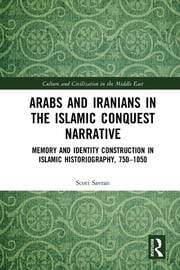
245 10|aArabs and Iranians in the Islamic Conquest Narrative :|bMemory and Identity Construction in Islamic Historiography, 750-1050 /|cScott Savran.
250 |aFirst edition.
264 1|aLondon :|bTaylor and Francis,|c2017.
300 |a1 online resource (304 pages)
336 |atext|2rdacontent
337 |acomputer|2rdamedia
338 |aonline resource|2rdacarrier
490 0 |aCulture and Civilization in the Middle East
505 00|tchapter 1 Introduction /|r Scott Savran -- |tchapter 2 Shifting patterns of identity and early Islamic historiography in context /|r Scott Savran -- |tchapter 3 The opening of the drama -- |tShāpūr and the Sheikh /|r Scott Savran -- |tchapter 4 Bahrām V Gūr, the Lakhmids, and the Hephthalite disaster /|r Scott Savran -- |tchapter 5 The twilight of Sasanian power -- |tKhusraw I Anūshirvān and the saga of Ḥimyar /|r Scott Savran -- |tchapter 6 The buildup to the confrontation -- |tKhusraw II Parvīz and the rise of the Arabs /|r Scott Savran -- |tchapter 7 The climax -- |tThe Islamic victory over the Sasanians /|r Scott Savran -- |tchapter 8 Conclusion /|r Scott Savran.
520 2 |aArabs and Iranians in the Islamic Conquest Narrative analyzes how early Muslim historians merged the pre-Islamic histories of the Arab and Iranian peoples into a didactic narrative culminating with the Arab conquest of Iran. This book provides an in-depth examination of Islamic historical accounts of the encounters between representatives of these two peoples that took place in the centuries prior to the coming of Islam. By doing this, it uncovers anachronistic projections of dynamic identity and political discourses within the contemporaneous Islamic world. It shows how the formulaic placement of such embellishment within the context of the narrative served to justify the Arabs’ rise to power, whilst also explaining the fall of the Iranian Sasanian empire. The objective of this book is not simply to mine Islamic historical chronicles for the factual data they contain about the pre-Islamic period, but rather to understand how the authors of these works thought about this era. By investigating the intersection between early Islamic memory, identity construction, and power discourses, this book will benefit researchers and students of Islamic history and literature and Middle Eastern Studies.
650 0|aArabs.
650 0|aHistoriography.
650 0|aIran.
650 0|aIslamic Empire.
650 0|aSassanids.
650 04|aMedieval History 400-1500
650 04|aMiddle East History
650 04|aMiddle East Studies
650 07|aSOCIAL SCIENCE / Regional Studies|2bisacsh
776 08|iPrint version: |z9780415749688|w(DLC) 2017016187
856 40|uhttps://www.taylorfrancis.com/books/9781315795959|zClick here to view.
901 |aTaylor & Francis