

Arabs and Iranians in the Islamic Conquest Narrative : Memory and Identity Construction in Islamic Historiography, 750-1050 / Scott Savran.
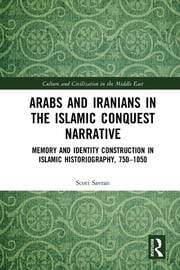
Erişim Adresi
ISBN
9781315795959 (e-book : PDF)
9781317749073 (e-book: Mobi)
9780415749688 (hardback)
9781317749073 (e-book: Mobi)
9780415749688 (hardback)
Dil Kodu
İngilizce
Yazar
Basım Bildirimi
First edition.
Yayın Bilgisi
London : Taylor and Francis, 2017.
Fiziksel Niteleme
1 online resource (304 pages)
Dizi
Culture and Civilization in the Middle East
İçindekiler Notu
chapter 1 Introduction / Scott Savran -- chapter 2 Shifting patterns of identity and early Islamic historiography in context / Scott Savran -- chapter 3 The opening of the drama -- Shāpūr and the Sheikh / Scott Savran -- chapter 4 Bahrām V Gūr, the Lakhmids, and the Hephthalite disaster / Scott Savran -- chapter 5 The twilight of Sasanian power -- Khusraw I Anūshirvān and the saga of Ḥimyar / Scott Savran -- chapter 6 The buildup to the confrontation -- Khusraw II Parvīz and the rise of the Arabs / Scott Savran -- chapter 7 The climax -- The Islamic victory over the Sasanians / Scott Savran -- chapter 8 Conclusion / Scott Savran.
Özet, vb.
Arabs and Iranians in the Islamic Conquest Narrative analyzes how early Muslim historians merged the pre-Islamic histories of the Arab and Iranian peoples into a didactic narrative culminating with the Arab conquest of Iran. This book provides an in-depth examination of Islamic historical accounts of the encounters between representatives of these two peoples that took place in the centuries prior to the coming of Islam. By doing this, it uncovers anachronistic projections of dynamic identity and political discourses within the contemporaneous Islamic world. It shows how the formulaic placement of such embellishment within the context of the narrative served to justify the Arabs’ rise to power, whilst also explaining the fall of the Iranian Sasanian empire. The objective of this book is not simply to mine Islamic historical chronicles for the factual data they contain about the pre-Islamic period, but rather to understand how the authors of these works thought about this era. By investigating the intersection between early Islamic memory, identity construction, and power discourses, this book will benefit researchers and students of Islamic history and literature and Middle Eastern Studies.
Konu
Arabs.
Historiography.
Iran.
Islamic Empire.
Sassanids.
Medieval History 400-1500
Middle East History
Middle East Studies
SOCIAL SCIENCE / Regional Studies __ bisacsh
Historiography.
Iran.
Islamic Empire.
Sassanids.
Medieval History 400-1500
Middle East History
Middle East Studies
SOCIAL SCIENCE / Regional Studies __ bisacsh
Veritabanı
