

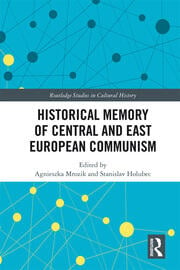
Historical Memory of Central and East European Communism / edited by Agnieszka Mrozik and Stanislav Holubec.
Erişim Adresi
ISBN
9781351009256 (e-book: Mobi)
9781351009287 (e-book : PDF)
9781138542266 (hardback)
9781351009287 (e-book : PDF)
9781138542266 (hardback)
Dil Kodu
İngilizce
Basım Bildirimi
First edition.
Yayın Bilgisi
London : Taylor and Francis, 2018.
Fiziksel Niteleme
1 online resource (vi, 285 pages)
Dizi
Routledge Studies in Cultural History
İçindekiler Notu
part, I Memory of the Left in Post-Socialist Europe -- chapter Introduction -- Historical Memory of European Communisms Before and After 1989 / Stanislav Holubec Agnieszka Mrozik -- chapter 1 “Of the Past Let Us Make a Clean Slate” -- The Lack of a Left-Wing Narrative and the Failure of the Hungarian Left / Csilla Kiss -- chapter 2 Communist Successors and Narratives of the Past -- Party Factions in the German PDS and the Russian CPRF, 1990–2005 / Thorsten Holzhauser Antony Kalashnikov -- chapter 3 The Memory and Identity of the Western European Left in the Light of European Integration -- View from Inside / Walter Baier -- part, II Memorial Landscapes in Central and Eastern Europe -- chapter 4 Dissonant Heritage -- Soviet Monuments in Central and Eastern Europe / Aleksandra Kuczyńska-Zonik -- chapter 5 Lenin, Marx and Local Heroes -- Socialist and Post-Socialist Memorial Landscapes in Eastern Germany and Czechoslovakia—The Case Study of Jena and Hradec Králové / Stanislav Holubec -- chapter 6 The Politics of Oblivion and the Practices of Remembrance -- Repression, Collective Memory and Nation-Building in Post-Soviet Russia 1 / Ekaterina V. Klimenko -- part, III Communist Politics of Memory Before 1989 -- chapter 7 What Happened in 1980? -- Memory Forging and the Official Story of Martial Law in the Polish United Workers’ Party / Jakub Szumski -- chapter 8 “We Must Reconstruct Our Own Past” -- 1960s Polish Communist Women’s Memoirs—Constructing the (Gender) History of the Polish Left / Agnieszka Mrozik -- chapter 9 Romanian Communists Under Gheorghiu-Dej -- Legitimation Before 1965 and Its Memory as Opposition to Ceauşescu / Monica Ciobanu -- chapter 10 Constructing New Friends and Enemies -- Rewriting Czechoslovak History After the Communist Takeover / Darina Volf -- chapter 11 Constructing Memoirs of the October Revolution in the 1920s / Oksana Klymenko.
Özet, vb.
"Every political movement creates its own historical memory. The communist movement, though originally oriented towards the future, was no exception: The theory of human history constitutes a substantial part of Marx's and Engels's writings, and the movement inspired by them very soon developed its own strong historical identity, combining the Marxist theory of history with the movement's victorious milestones such as the October Revolution and later the Great Patriotic War, which served as communist legitimization myths throughout almost the entire twentieth century. During the Stalinist period, however, the movement's history become strongly reinterpreted to suit Stalin's political goals. After 1956, this reinterpretation lost most of its legitimating power and instead began to be a burden. The (unwanted) memory of Stalinism and subsequent examples of violence (the Gulag, Katy?, the 1956 Budapest uprising and the 1968 Prague Spring) contributed to the crisis of Eastern European state socialism in the late 1980s and led to attempts at reformulating or even rejecting communist self-identity. This book's first section analyzes the post-1989 memory of communism and state socialism and the self-identity of the Eastern and Western European left. The second section examines the state-socialist and post-socialist memorial landscapes in the former German Democratic Republic, Czechoslovakia/Czech Republic, Poland, Lithuania, Ukraine and Russia. The final section concentrates on the narratives the movement established, when in power, about its own past, with the examples of the Soviet Union, Poland, Romania and Czechoslovakia."--Provided by publisher.
Konu
Communism __ Europe, Central __ History __ 20th century.
Communism __ Europe, Eastern __ History __ 20th century.
Europe, Central __ Civilization __ 20th century.
Europe, Eastern __ Civilization __ 20th century.
Communism __ Europe, Eastern __ History __ 20th century.
Europe, Central __ Civilization __ 20th century.
Europe, Eastern __ Civilization __ 20th century.
Diğer Yazarlar
Veritabanı
Eseri Alıntıla
Referansları kullanmadan önce gözden geçirmeniz ve varsa gerekli düzeltmeleri yapmanız önerilir.
Dijital Kaynak
MARC Görünümü
LEADER 05047cam a2200373Ii 4500
001 797629
003 TR_AnAIT
005 20260123012613
008 180706s2018 enkao ob 001 0 eng d
020 |a9781351009256|q(e-book: Mobi)
020 |a9781351009287|q(e-book : PDF)
020 |z9781138542266|q(hardback)
024 7 |a10.4324/9781351009287 |2doi
035 |a(OCoLC)1021741009
040 |aFlBoTFG|cFlBoTFG|erda
041 |aeng
043 |aee-----|aec-----
049 |aTürk Tarih Kurumu Kütüphanesi
050 4|aHX238.5|b.H57 2018
082 04|a335.43094|bH673
245 00|aHistorical Memory of Central and East European Communism /|cedited by Agnieszka Mrozik and Stanislav Holubec.
250 |aFirst edition.
264 1|aLondon :|bTaylor and Francis,|c2018.
300 |a1 online resource (vi, 285 pages)
336 |atext|2rdacontent
337 |acomputer|2rdamedia
338 |aonline resource|2rdacarrier
490 0 |aRoutledge Studies in Cultural History
505 00|tpart, I Memory of the Left in Post-Socialist Europe -- |tchapter Introduction -- |tHistorical Memory of European Communisms Before and After 1989 /|r Stanislav Holubec Agnieszka Mrozik -- |tchapter 1 “Of the Past Let Us Make a Clean Slate” -- |tThe Lack of a Left-Wing Narrative and the Failure of the Hungarian Left /|r Csilla Kiss -- |tchapter 2 Communist Successors and Narratives of the Past -- |tParty Factions in the German PDS and the Russian CPRF, 1990–2005 /|r Thorsten Holzhauser Antony Kalashnikov -- |tchapter 3 The Memory and Identity of the Western European Left in the Light of European Integration -- |tView from Inside /|r Walter Baier -- |tpart, II Memorial Landscapes in Central and Eastern Europe -- |tchapter 4 Dissonant Heritage -- |tSoviet Monuments in Central and Eastern Europe /|r Aleksandra Kuczyńska-Zonik -- |tchapter 5 Lenin, Marx and Local Heroes -- |tSocialist and Post-Socialist Memorial Landscapes in Eastern Germany and Czechoslovakia—The Case Study of Jena and Hradec Králové /|r Stanislav Holubec -- |tchapter 6 The Politics of Oblivion and the Practices of Remembrance -- |tRepression, Collective Memory and Nation-Building in Post-Soviet Russia 1 /|r Ekaterina V. Klimenko -- |tpart, III Communist Politics of Memory Before 1989 -- |tchapter 7 What Happened in 1980? -- |tMemory Forging and the Official Story of Martial Law in the Polish United Workers’ Party /|r Jakub Szumski -- |tchapter 8 “We Must Reconstruct Our Own Past” -- |t1960s Polish Communist Women’s Memoirs—Constructing the (Gender) History of the Polish Left /|r Agnieszka Mrozik -- |tchapter 9 Romanian Communists Under Gheorghiu-Dej -- |tLegitimation Before 1965 and Its Memory as Opposition to Ceauşescu /|r Monica Ciobanu -- |tchapter 10 Constructing New Friends and Enemies -- |tRewriting Czechoslovak History After the Communist Takeover /|r Darina Volf -- |tchapter 11 Constructing Memoirs of the October Revolution in the 1920s /|r Oksana Klymenko.
520 |a"Every political movement creates its own historical memory. The communist movement, though originally oriented towards the future, was no exception: The theory of human history constitutes a substantial part of Marx's and Engels's writings, and the movement inspired by them very soon developed its own strong historical identity, combining the Marxist theory of history with the movement's victorious milestones such as the October Revolution and later the Great Patriotic War, which served as communist legitimization myths throughout almost the entire twentieth century. During the Stalinist period, however, the movement's history become strongly reinterpreted to suit Stalin's political goals. After 1956, this reinterpretation lost most of its legitimating power and instead began to be a burden. The (unwanted) memory of Stalinism and subsequent examples of violence (the Gulag, Katy?, the 1956 Budapest uprising and the 1968 Prague Spring) contributed to the crisis of Eastern European state socialism in the late 1980s and led to attempts at reformulating or even rejecting communist self-identity. This book's first section analyzes the post-1989 memory of communism and state socialism and the self-identity of the Eastern and Western European left. The second section examines the state-socialist and post-socialist memorial landscapes in the former German Democratic Republic, Czechoslovakia/Czech Republic, Poland, Lithuania, Ukraine and Russia. The final section concentrates on the narratives the movement established, when in power, about its own past, with the examples of the Soviet Union, Poland, Romania and Czechoslovakia."--Provided by publisher.
650 0|aCommunism|zEurope, Central|xHistory|y20th century.
650 0|aCommunism|zEurope, Eastern|xHistory|y20th century.
651 0|aEurope, Central|xCivilization|y20th century.
651 0|aEurope, Eastern|xCivilization|y20th century.
700 1 |aHolubec, Stanislav,|eeditor.
700 1 |aMrozik, Agnieszka,|eeditor.
776 08|iPrint version:|z9781138542266
856 40|uhttps://www.taylorfrancis.com/books/9781351009287|zClick here to view.
901 |aTaylor & Francis
001 797629
003 TR_AnAIT
005 20260123012613
008 180706s2018 enkao ob 001 0 eng d
020 |a9781351009256|q(e-book: Mobi)
020 |a9781351009287|q(e-book : PDF)
020 |z9781138542266|q(hardback)
024 7 |a10.4324/9781351009287 |2doi
035 |a(OCoLC)1021741009
040 |aFlBoTFG|cFlBoTFG|erda
041 |aeng
043 |aee-----|aec-----
049 |aTürk Tarih Kurumu Kütüphanesi
050 4|aHX238.5|b.H57 2018
082 04|a335.43094|bH673
245 00|aHistorical Memory of Central and East European Communism /|cedited by Agnieszka Mrozik and Stanislav Holubec.
250 |aFirst edition.
264 1|aLondon :|bTaylor and Francis,|c2018.
300 |a1 online resource (vi, 285 pages)
336 |atext|2rdacontent
337 |acomputer|2rdamedia
338 |aonline resource|2rdacarrier
490 0 |aRoutledge Studies in Cultural History
505 00|tpart, I Memory of the Left in Post-Socialist Europe -- |tchapter Introduction -- |tHistorical Memory of European Communisms Before and After 1989 /|r Stanislav Holubec Agnieszka Mrozik -- |tchapter 1 “Of the Past Let Us Make a Clean Slate” -- |tThe Lack of a Left-Wing Narrative and the Failure of the Hungarian Left /|r Csilla Kiss -- |tchapter 2 Communist Successors and Narratives of the Past -- |tParty Factions in the German PDS and the Russian CPRF, 1990–2005 /|r Thorsten Holzhauser Antony Kalashnikov -- |tchapter 3 The Memory and Identity of the Western European Left in the Light of European Integration -- |tView from Inside /|r Walter Baier -- |tpart, II Memorial Landscapes in Central and Eastern Europe -- |tchapter 4 Dissonant Heritage -- |tSoviet Monuments in Central and Eastern Europe /|r Aleksandra Kuczyńska-Zonik -- |tchapter 5 Lenin, Marx and Local Heroes -- |tSocialist and Post-Socialist Memorial Landscapes in Eastern Germany and Czechoslovakia—The Case Study of Jena and Hradec Králové /|r Stanislav Holubec -- |tchapter 6 The Politics of Oblivion and the Practices of Remembrance -- |tRepression, Collective Memory and Nation-Building in Post-Soviet Russia 1 /|r Ekaterina V. Klimenko -- |tpart, III Communist Politics of Memory Before 1989 -- |tchapter 7 What Happened in 1980? -- |tMemory Forging and the Official Story of Martial Law in the Polish United Workers’ Party /|r Jakub Szumski -- |tchapter 8 “We Must Reconstruct Our Own Past” -- |t1960s Polish Communist Women’s Memoirs—Constructing the (Gender) History of the Polish Left /|r Agnieszka Mrozik -- |tchapter 9 Romanian Communists Under Gheorghiu-Dej -- |tLegitimation Before 1965 and Its Memory as Opposition to Ceauşescu /|r Monica Ciobanu -- |tchapter 10 Constructing New Friends and Enemies -- |tRewriting Czechoslovak History After the Communist Takeover /|r Darina Volf -- |tchapter 11 Constructing Memoirs of the October Revolution in the 1920s /|r Oksana Klymenko.
520 |a"Every political movement creates its own historical memory. The communist movement, though originally oriented towards the future, was no exception: The theory of human history constitutes a substantial part of Marx's and Engels's writings, and the movement inspired by them very soon developed its own strong historical identity, combining the Marxist theory of history with the movement's victorious milestones such as the October Revolution and later the Great Patriotic War, which served as communist legitimization myths throughout almost the entire twentieth century. During the Stalinist period, however, the movement's history become strongly reinterpreted to suit Stalin's political goals. After 1956, this reinterpretation lost most of its legitimating power and instead began to be a burden. The (unwanted) memory of Stalinism and subsequent examples of violence (the Gulag, Katy?, the 1956 Budapest uprising and the 1968 Prague Spring) contributed to the crisis of Eastern European state socialism in the late 1980s and led to attempts at reformulating or even rejecting communist self-identity. This book's first section analyzes the post-1989 memory of communism and state socialism and the self-identity of the Eastern and Western European left. The second section examines the state-socialist and post-socialist memorial landscapes in the former German Democratic Republic, Czechoslovakia/Czech Republic, Poland, Lithuania, Ukraine and Russia. The final section concentrates on the narratives the movement established, when in power, about its own past, with the examples of the Soviet Union, Poland, Romania and Czechoslovakia."--Provided by publisher.
650 0|aCommunism|zEurope, Central|xHistory|y20th century.
650 0|aCommunism|zEurope, Eastern|xHistory|y20th century.
651 0|aEurope, Central|xCivilization|y20th century.
651 0|aEurope, Eastern|xCivilization|y20th century.
700 1 |aHolubec, Stanislav,|eeditor.
700 1 |aMrozik, Agnieszka,|eeditor.
776 08|iPrint version:|z9781138542266
856 40|uhttps://www.taylorfrancis.com/books/9781351009287|zClick here to view.
901 |aTaylor & Francis
Materyaller
Depodan talep edilen materyal sadece kütüphane içerisinde kullanılmaktadır.
Materyal dışarıya ödünç verilmemektedir.
Materyal dışarıya ödünç verilmemektedir.
