LEADER 03014cam a2200445Ii 4500
001 797659
003 TR_AnAIT
005 20260123012645
008 180706s2018 xx o 000 0 eng d
020 |a9781351241618|q(e-book : PDF)
020 |z9780815374657|q(hardback)
024 7 |a10.4324/9781351241618 |2doi
035 |a(OCoLC)1027756098
040 |aFlBoTFG|cFlBoTFG|erda
041 |aeng
049 |aTürk Tarih Kurumu Kütüphanesi
072 7|aHIS002000|2bisacsh
100 1 |aBjelland Kartzow, Marianne,|eauthor.
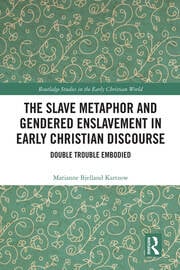
245 14|aThe Slave Metaphor and Gendered Enslavement in Early Christian Discourse :|bDouble Trouble Embodied /|cMarianne Bjelland Kartzow.
250 |aFirst edition.
264 1|aLondon :|bTaylor and Francis,|c2018.
300 |a1 online resource
336 |atext|2rdacontent
337 |acomputer|2rdamedia
338 |aonline resource|2rdacarrier
490 0 |aRoutledge Studies in the Early Christian World
505 00|tchapter Introduction -- |tchapter 1 Thinking with saleable bodies: an intersectional approach to the slavery metaphor -- |tchapter 2 Embodying the slavery metaphor: female characters and slavery language -- |tchapter 3 Metaphor and masculinity: the “no longer slave” formulations (John 15:15 and Gal 4:7) -- |tchapter 4 The paradox of slavery: all believers are slaves of the Lord, but some are more slaves than others -- |tchapter 5 From slave of a female owner to slave of God: negotiating gender, sexuality, and status in The Shepherd of Hermas -- |tchapter 6 Jesus, the slave trader: metaphor made real in The Acts of /|rThomas.
520 2 |a"The Slave Metaphor and Gendered Enslavement in Early Christian Discourse adds new knowledge to the ongoing discussion of slavery in early Christian discourse. Bjelland Kartzow argues that the complex tension between metaphor and social reality in early Christian discourse is undertheorized. A metaphor can be so much more than an innocent thought figure, since it involves bodies, relationships, life stories, and memory in complex ways. This study rethinks the potential meaning of the slavery metaphor in early Christian texts, by use of a variety of texts, read with a whole set of theoretical tools, taken from metaphor theory and intersectional gender studies, in particular. It also takes seriously the contemporary context of Modern Slavery, where slavery has re-appeared as a term to name trafficking, gendered violence, and inhuman power systems."--Provided by publisher.
630 00|aBible.
650 0|aChurch history|yPrimitive and early church, ca. 30-600.
650 0|aReligion|xHistory.
650 0|aReligious ethics.
650 0|aSlavery.
650 0|aTheology.
650 04|aBiblical Studies
650 04|aChristian Theology
650 04|aEarly Church
650 04|aGlobal Slavery
650 04|aLate Antiquity & Byzantium
650 04|aReligious Ethics
650 04|aReligious History
651 0|aByzantine antiquities.
776 08|iPrint version: |z9780815374657
856 40|uhttps://www.taylorfrancis.com/books/9781351241618|zClick here to view.
901 |aTaylor & Francis