LEADER 03801cam a2200529Ii 4500
001 797726
003 TR_AnAIT
005 20260123012740
006 m o d
007 cr cnu---unuuu
008 210108s2020 enk ob 001 0 eng d
020 |a9780367809317|q(electronic bk.)
020 |a0367809311|q(electronic bk.)
020 |a9781000245790|q(electronic bk. : PDF)
020 |a1000245799|q(electronic bk. : PDF)
020 |a9781000245806|q(electronic bk. : Mobipocket)
020 |a1000245802|q(electronic bk. : Mobipocket)
020 |a9781000245813|q(electronic bk. : EPUB)
020 |a1000245810|q(electronic bk. : EPUB)
020 |z9780367408282
020 |z0367408287
035 |a(OCoLC)1229166110
035 |a(OCoLC-P)1229166110
040 |aOCoLC-P|beng|erda|epn|cOCoLC-P
041 |aeng
049 |aTürk Tarih Kurumu Kütüphanesi
050 4|aCC79.5.H85|bW67 2020eb
072 7|aSOC|x062000|2bisacsh
072 7|aHD|2bicssc
082 04|a930.1|223
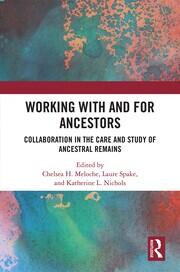
245 00|aWorking with and for ancestors :|bcollaboration in the care and study of ancestral remains /|cedited by Chelsea H. Meloche, Laure Spake, and Katherine L. Nichols.
264 1|aAbingdon, Oxon ;|aNew York, NY :|bRoutledge,|c2020.
300 |a1 online resource (1 volume) :|billustrations (black and white).
336 |atext|btxt|2rdacontent
337 |acomputer|bc|2rdamedia
338 |aonline resource|bcr|2rdacarrier
520 |a"Working with and for Ancestors examines collaborative partnerships that have developed around the study and care of Indigenous ancestral human remains. In the interest of reconciliation, museums and research institutions around the world have begun to actively seek input and direction from Indigenous descendants in establishing collections care and research policies. However, true collaboration is difficult, time-consuming, and sometimes awkward. By presenting examples of projects involving ancestral remains that are successfully engaged in collaboration, the book provides encouragement for scientists and descendant communities alike to have open and respectful discussions around the research and care of ancestral human remains. Key themes for discussion include new approaches to the care for ancestors, the development of culturally sensitive museum policies, the emergence of mutually beneficial research partnerships, and emerging issues such as intellectual property issues, digital data, and alternatives to destructive analyses. Critical discussions by leading scholars also identify the remaining challenges in the repatriation process and offer a means to continue moving forward. This volume will appeal to a broad, interdisciplinary audience interested in collaborative research and management strategies that are aimed at developing mutually beneficial relationships between researchers and descendant communities. This includes students and researchers in archaeology, anthropology, museums studies and, Indigenous communities"--|cProvided by publisher.
588 |aOCLC-licensed vendor bibliographic record.
650 0|aHuman remains (Archaeology)|xRepatriation.
650 0|aHuman remains (Archaeology)|xCollection and preservation.
650 0|aMuseums and indigenous peoples.
650 0|aAnthropological museums and collections|xMoral and ethical aspects.
650 0|aIndigenous peoples|xAntiquities|xCollection and preservation.
650 0|aArchaeological museums and collections|xMoral and ethical aspects.
700 1 |aMeloche, Chelsea H.,|eeditor.
700 1 |aSpake, Laure,|eeditor.
700 1 |aNichols, Katherine L.,|eeditor.
856 40|3Taylor & Francis|uhttps://www.taylorfrancis.com/books/9780367809317
856 42|3OCLC metadata license agreement|uhttp://www.oclc.org/content/dam/oclc/forms/terms/vbrl-201703.pdf
901 |aTaylor & Francis