LEADER 03236cam a2200397Ii 4500
001 797831
003 TR_AnAIT
005 20260123012917
008 180813t20182019fluab ob 001 0 eng d
020 |a9780429826351 (e-book: Mobi)|q(e-book : PDF)
035 |a(OCoLC)1048106161
040 |aFlBoTFG|cFlBoTFG|erda
041 |aeng
049 |aTürk Tarih Kurumu Kütüphanesi
050 4|aQ175.32.C65|bT457 2018
072 7|aHIS|x017000 |2bisacsh
072 7|aPOE|x009000 |2bisacsh
072 7|aSOC|x000000 |2bisacsh
072 7|a1F |2bicscc
082 04|a954.166|223
100 1 |aThirumal, P.,|eauthor.
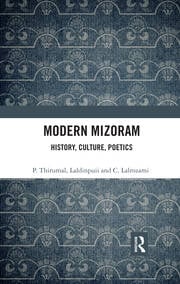
245 10|aModern mizoram :|bhistory, culture, poetics /|cby P. Thirumal, Laldinpuii and C. Lalrozami.
250 |aFirst edition.
264 4|c©2019.
264 1|aBoca Raton, FL :|bRoutledge India, an imprint of Taylor and Francis,|c[2018].
300 |a1 online resource (174 pages) :|b8 illustrations
336 |atext|2rdacontent
337 |acomputer|2rdamedia
338 |aonline resource|2rdacarrier
505 00|tchapter Introduction /|rP. Thirumal Laldinpuii C. Lalrozami -- |tchapter 1 On the discursive and material context of the first handwritten Lushai newspaper Mizo Chanchin Laishuih 1 /|rP. Thirumal Laldinpuii C. Lalrozami -- |tchapter 2 The celebration of Puma Zai and the self-fashioning of the Lushai /|rP. Thirumal Laldinpuii C. Lalrozami -- |tchapter 3 The postcolonial inheritance of Puma Zai /|rP. Thirumal Laldinpuii C. Lalrozami -- |tchapter 4 Cultural works and their conversation across temporalities -- |tThe Pheichham image /|rP. Thirumal Laldinpuii C. Lalrozami.
520 3 |aMizoram is situated at a unique cusp in North East India, in terms of both physical and social contexts. It shares its borders with Myanmar and Bangladesh, while cultural influences range from the indigenous to the Western. This book offers an alternative understanding of the modern history of Mizoram through an analysis of its cultural practices through language, music, poetry and festivals. It explores the roots of modern cultural works not just in Christianity, but also in precolonial Mizo traditional practices. The authors closely examine text, performance and sculptural images, including the first handwritten newspaper Mizo Chanchin Laisuih (1898) and the Puma Zai festival (1907–11) from the early colonial period along with a contemporary sculptural image. They argue that cultural works open up to new forms of interpretations and responses over time. The book indicates that the Mizo creative sensibility enmeshed in theological, capitalistic-material and political/ideological regimes informs its modern enclosures, be it region, religion or nation.This book will be of great interest to scholars and researchers of cultural studies, literature, media, history, politics, sociology and social anthropology, area studies, North East India studies and South Asian studies.
650 7|aPOETRY / Asian.|2bisacsh
650 7|aSOCIAL SCIENCE / General.|2bisacsh
650 0|aHistory.
650 0|aMissions|zIndia|xMizoram|xHistory.
700 1 |aLaldinpuii, K.,|eauthor.
700 1 |aLalrozami, C.,|eauthor.
710 2 |aTaylor and Francis.
776 08|iPrint version: |z9781138559639
856 40|uhttps://www.taylorfrancis.com/books/9780429826375|zClick here to view.
901 |aTaylor & Francis