LEADER 03266cam a2200517M 4500
001 798111
003 TR_AnAIT
005 20260123013404
006 m o d
007 cr |n|||||||||
008 221203s2022 xx o 0|| 0 eng d
020 |a9781000827750|q(electronic bk.)
020 |a1000827755|q(electronic bk.)
020 |a9781003360841|q(electronic bk.)
020 |a100336084X|q(electronic bk.)
020 |a9781000827835|q(electronic bk. : EPUB)
020 |a1000827836|q(electronic bk. : EPUB)
020 |z1032424036
020 |z9781032424033
020 |z9781032248189
020 |z1032248181
024 7 |a10.4324/9781003360841|2doi
035 |a(OCoLC)1352953420
035 |a(OCoLC-P)1352953420
040 |aOCoLC-P|beng|cOCoLC-P
041 |aeng
049 |aTürk Tarih Kurumu Kütüphanesi
050 4|aPK2169
072 7|aLCO|x000000|2bisacsh
072 7|aLIT|x000000|2bisacsh
072 7|aSOC|x000000|2bisacsh
072 7|a1F|2bicssc
082 04|a891.4391093855404|223
100 1 |aNarang, Gopi Chand,|d1931-2022,|eauthor.
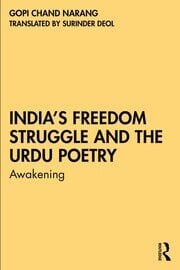
245 10|aINDIA'S FREEDOM STRUGGLE AND THE URDU POETRY|h[electronic resource] :|bawakening.
260 |a[S.l.] :|bROUTLEDGE,|c2022.
300 |a1 online resource
520 |aPoetry, mainly Urdu poetry, played a very significant role in India's freedom struggle. This book explores the poetic contributions going back centuries of colonial rule, which became songs of freedom and captured both the poignancy and fervor of revolution, protest, and hope. Urdu became one of the essential languages in colonial India, used by both political leaders and many young revolutionaries in speeches and writings as slogans for freedom and a call to action. Poets such as Josh Malihabadi, Firaq Gorakhpuri, Sahir, Makhdoom, Kaifi Azmi, Majaz, Majrooh, and Faiz Ahmad Faiz wrote highly patriotic poetry which was used not only to inspire and help mobilize people but also to offer criticism of existing socio-cultural practices in India and promote reform and equality. This work - a creative and selective translation of the book Hindustan Ki Tahriik-e Aazadi aur Urdu Shaa'yiri by Professor Gopi Chand Narang - includes English translations of poems from rare historical manuscripts as well as banned and witnessed poetry confiscated by the British. It looks at key events in India's struggle for freedom through the prism of literature, language, poetry, and culture while also delving into the lives of poets who became the voice of their generation. This book is an essential read for students and researchers of colonial and postcolonial literature, cultural studies, comparative studies, history, and South Asian literature and culture.
588 |aOCLC-licensed vendor bibliographic record.
650 0|aUrdu poetry|xHistory and criticism.
650 0|aLiberty in literature.
650 7|aLITERARY COLLECTIONS / General|2bisacsh
650 7|aLITERARY CRITICISM / General|2bisacsh
650 7|aSOCIAL SCIENCE / General|2bisacsh
651 0|aIndia|xHistory|y1947-
700 1 |aDeol, Surinder,|etranslator.
856 40|3Taylor & Francis|uhttps://www.taylorfrancis.com/books/9781003360841
856 42|3OCLC metadata license agreement|uhttp://www.oclc.org/content/dam/oclc/forms/terms/vbrl-201703.pdf
901 |aTaylor & Francis