LEADER 03473cam a22004938i 4500
001 798159
003 TR_AnAIT
005 20260123013504
006 m o d
007 cr |||||||||||
008 230627s2024 enk ob 001 0 eng
020 |a9781003442318|q(ebook)
020 |a1003442315
020 |a9781000968170|q(electronic bk. : EPUB)
020 |a1000968170|q(electronic bk. : EPUB)
020 |a9781000968156|q(electronic bk. : PDF)
020 |a1000968154|q(electronic bk. : PDF)
020 |z9781032569444|q(hardback)
020 |z9781032580555|q(paperback)
024 7 |a10.4324/9781003442318|2doi
035 |a(OCoLC)1387568952
035 |a(OCoLC-P)1387568952
040 |aOCoLC-P|beng|erda|cOCoLC-P
041 |aeng
049 |aTürk Tarih Kurumu Kütüphanesi
050 00|aBF175.4.E86
072 7|aPSY|x026000|2bisacsh
072 7|aSOC|x002010|2bisacsh
072 7|aJMAF|2bicssc
082 00|a150.19/5|223/eng/20230627
100 1 |aRobbins, Michael,|cM.D.,|eauthor.
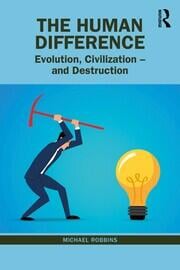
245 14|aThe human difference :|bevolution, civilization, and destruction /|cMichael Robbins.
264 1|aAbingdon, Oxon ;|aNew York, Ny :|bRoutledge,|c2024.
300 |a1 online resource
336 |atext|btxt|2rdacontent
337 |acomputer|bc|2rdamedia
338 |aonline resource|bcr|2rdacarrier
520 |a"In a volume that traverses multiple disciplines, Michael Robbins proposes that the structures of the mind that distinguish us as uniquely human also incline us towards destructive behaviours on a personal and societal level. Psychoanalysis was created by Freud in an effort to understand neurosis and psychosis, the names he gave to individual human destructiveness. His understanding was limited and incorrect because the science of evolution and the disciplines of sociology and cultural anthropology were in their infancy when he formulated his ideas. He did not comprehend that destructiveness is qualitatively different in humans than in other species and he ignored the problem of how biological instincts become mental processes. These limitations left psychoanalysis with one of its most perplexing unsolved problems, the mysterious leap from mind to body. The book explains how neoteny, the prolonged period of post-natal immaturity that distinguishes humans from other animals, requires and enables complex learning from caregivers. It is the knowledge acquired from this learning and its intergenerational transmission that links the biological theory of evolution with the psychosocial theory of psychoanalysis and explains how the human species is unique. The book will be of interest to those who want to learn about how integrating the findings of evolutionary science, primatology, sociology and cultural anthroplogy with the theory of psychoanalysis expands our understanding of what makes humans unique and its implications for the future of our species, and empowers us to influence the destiny of humankind"--|cProvided by publisher.
588 |aOCLC-licensed vendor bibliographic record.
600 10|aFreud, Sigmund,|d1856-1939.
650 0|aPsychoanalysis and evolution.
650 0|aSelf-destructive behavior.
650 7|aPSYCHOLOGY / Movements / Psychoanalysis|2bisacsh
650 7|aSOCIAL SCIENCE / Anthropology / Cultural|2bisacsh
856 40|3Taylor & Francis|uhttps://www.taylorfrancis.com/books/9781003442318
856 42|3OCLC metadata license agreement|uhttp://www.oclc.org/content/dam/oclc/forms/terms/vbrl-201703.pdf
901 |aTaylor & Francis