LEADER 03763cam a2200517 i 4500
001 798325
003 TR_AnAIT
005 20260123013800
006 m o d
007 cr |||||||||||
008 200506t20212021enka ob 001 0 eng
020 |a9781315190655|qelectronic book
020 |a1315190656|qelectronic book
020 |a9781351749732|q(electronic bk. : Mobipocket)
020 |a1351749730|q(electronic bk. : Mobipocket)
020 |a9781351749749|q(electronic bk. : EPUB)
020 |a1351749749|q(electronic bk. : EPUB)
020 |a9781351749756|q(electronic bk. : PDF)
020 |a1351749757|q(electronic bk. : PDF)
020 |z9781138727793|qhardcover
020 |z9781138727960|qpaperback
035 |a(OCoLC)1154124912
035 |a(OCoLC-P)1154124912
040 |aOCoLC-P|beng|erda|cOCoLC-P
041 |aeng
049 |aTürk Tarih Kurumu Kütüphanesi
050 00|aS494.5.P76|bB87 2021eb
072 7|aSOC|x026020|2bisacsh
072 7|aTQ|2bicssc
082 00|a630|223
100 1 |aBurton, Rob,|eauthor.
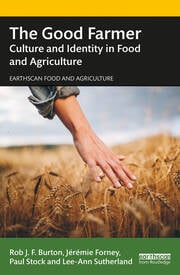
245 14|aThe good farmer :|bculture and identity in food and agriculture /|cRob J.F. Burton, Jérémie Forney, Paul Stock, and Lee-Ann Sutherland.
264 1|aAbingdon, Oxon ;|aNew York, NY :|bRoutledge,|c2021.
264 4|c©2021
300 |a1 online resource :|billustrations.
336 |atext|btxt|2rdacontent
337 |acomputer|bn|2rdamedia
338 |aonline resource|bnc|2rdacarrier
490 1 |aEarthscan food and agriculture series
505 0 |aThe 'good farmer': cultural dimensions of farming and social change -- The origins of the 'good farmer' -- How symbols of 'good farming' develop: the historical development of 'tidy farming' -- Theorising the 'good farmer': from common sense category to analytical construct -- Morality and the 'good farmer' -- The gendered 'good farmer' -- The 'good farmer' in communities of practice -- Future challenges for the 'good farmer'.
520 |a"Developed by the leading authors in the field, this book provides a cohesive and definitive theorisation of the concept of the 'good farmer', addressing the blind spots that have sprung up in agri-food literature as well as providing a springboard for future research. The concept of the good farmer has emerged in recent years as part of a move away from attitude and economics based understandings of farm decision-making towards a deeper understanding of culture and symbolism in agriculture. The Good Farmer shows why agricultural production is socially and culturally, as well as economically, important. It explores the history of the concept and its position in contemporary theory, as well as its use and meaning in a variety of different contexts, including landscape, environment, gender, society, and as a tool for resistance. By exploring the iÞa of the good farmer, it reveals the often-unforeseen assumptions implicit in food and agricultural policy that draw on culture, identity, and presumed notions of what is good. Finally, the book looks at the potential of the good farmer concept for addressing future, emerging issues in agriculture. This book will be of interest to students and scholars of food and agriculture and rural development, as well and professionals and policymakers involved in the food and agricultural industry"--|cProvided by publisher.
588 |aOCLC-licensed vendor bibliographic record.
650 0|aFarmers|xPsychology.
650 0|aAgriculture|xSocial aspects.
650 0|aAgriculture|xPsychological aspects.
650 7|aSOCIAL SCIENCE / Sociology / Rural|2bisacsh
856 40|3Taylor & Francis|uhttps://www.taylorfrancis.com/books/9781315190655
856 42|3OCLC metadata license agreement|uhttp://www.oclc.org/content/dam/oclc/forms/terms/vbrl-201703.pdf
901 |aTaylor & Francis