LEADER 03349cam a2200301Ii 4500
001 798339
003 TR_AnAIT
005 20260123013812
008 180706s2017 nyuad ob 001 0 eng d
020 |a9781315223117|q(e-book : PDF)
020 |a9781351839907|q(e-book: Mobi)
020 |z9780415788878|q(hardback)
024 7 |a10.4324/9781315223117 |2doi
035 |a(OCoLC)992366105
041 |aeng
043 |aa-io---
049 |aTürk Tarih Kurumu Kütüphanesi
050 4|aBP63.I5|bW555 2017
082 04|a297.27209598|bW725
100 1 |aWilliams, Mark S.,|eauthor.
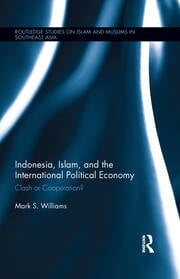
245 10|aIndonesia, Islam, and the international political economy :|bclash or cooperation? /|cMark S. Williams.
264 1|aNew York :|bRoutledge,|c2017.
300 |a1 online resource (viii, 147 pages)
490 0 |aRoutledge studies on Islam and Muslims in Southeast Asia ;|vVolume 2
505 0 |a1. The religious turn of IR and the ongoing silence of IPE -- 2. Islamic revival, colonial oppression -- 3. The Islamic ethic of cooperation and the politics of exclusion -- 4. The Orde Baru : the uses and abuses of Islam -- 5. Reformasi dan demokrasi : Islam as "identity politics," not "practical politics" -- 6. Contested Islam : pragmatists, revolutionaries, and the state.
520 |a"The Republic of Indonesia is a rising great power in the Asia-Pacific, set to become the eighth largest economy in the world in the coming decades. It is the most populous Muslim majority country in the world. The largest Islamic organizations and parties have supported Indonesia's participation with global markets, but this has not come from an ideological support for capitalism or economic liberalization. Islamic political culture has denounced the injustices caused by global capitalism and its excesses. In fact, support for Indonesia's engagement with the international political economy is born from political pragmatism, and from Indonesia's struggles to achieve economic development. This book examines the role of Islamic identity in Indonesia's foreign economic relations and in its engagement with the world order. There is no single expression of Islam in Indonesia, the politics espoused by Islamic parties and organizations are far from monolithic. Islamic sentiment has been invoked by the state to justify heinous acts of brutality, as well as by violent, subnational revolutionary groups. However, these expressions of Islam have deviated from the dominant narrative, which is in favour of international cooperation and economic development. Economic exploitation, political alienation, financial volatility, and aggression toward Muslims around the world that has caused some Islamic groups to radicalize. The political culture of Islam in Indonesia is a social force that is helping to foster a peaceful rise for Indonesia. However, a peaceful expression of Islam is not inevitable for the republic, nor can it be assumed that Islamic identity in Indonesia will unwaveringly support the global economic order, regardless of what might occur in global politics"--|cProvided by publisher.
650 0|aIslam|xEconomic aspects|zIndonesia.
650 0|aIslam and politics|zIndonesia.
650 0|aIslam and state|zIndonesia.
650 0|aInternational economic relations|xReligious aspects|xIslam.
776 08|iPrint version: |z9780415788878|w(DLC) 2016050169
856 40|uhttps://www.taylorfrancis.com/books/9781315223117|zClick here to view.
901 |aTaylor & Francis