

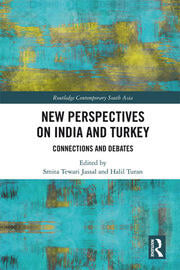
New perspectives on India and Turkey : connections and debates / edited by Smita Tewari Jassal and Halil Turan.
Erişim Adresi
ISBN
9781134976942 (e-book: PDF) (e-book : PDF)
9781138689329 (hardback)
9781138689329 (hardback)
Dil Kodu
İngilizce
Yayın Bilgisi
London ; New York, NY : Routledge, an imprint of the Taylor & Francis Group, 2018.
Fiziksel Niteleme
1 online resource (xiv, 237 pages)
Dizi
Routledge contemporary South Asia series ; 122
İçindekiler Notu
chapter Introduction / Smita Tewari Jassal -- part I History and memory -- chapter 1 India and Turkey -- Interplay of shadows and trajectories in the longue durée / Eyüp Özveren -- chapter 2 Sufis and Salafis in Ottoman and Mughal cities -- Reflections on love and violence in Islamic thought and politics / Shail Mayaram -- chapter 3 Echoes in the shrine -- Remembering and forgetting in two contexts / Smita Tewari Jassal -- part II Nationhood and leadership -- chapter 4 Republican Turkey and Tamil self-respecters -- Kemal Pasha in southern India / V. Geetha -- chapter 5 Halide Edib and Gandhi -- Literary modernity in India and Turkey / Emrah Efe Khayyat -- part III Secularism -- chapter 6 Temple and dam, fez and hat -- The secular roots of religious politics in India and Turkey 1 / Srirupa Roy -- chapter 7 Nehru against Nehruvians -- On religion and secularism / Rajeev Bhargava -- chapter 8 Redefining the minority -- Alevis in Turkey 1 / Mustafa ?en -- part IV Development debates -- chapter 9 Locating agency in global connections -- The case of India and Turkey as ‘rising powers’ / Derya Göçer Akder -- chapter 10 Diaspora engagement in the United States -- The case of India and Turkey / ?ebnem Kö?er Akçapar -- chapter 11 Perspectives on development incentives -- 18th-century philosophers, India and Turkey / Halil Turan -- chapter 12 Waterproof development? -- Impact of advocacy networks on anti-dam movements in India and Turkey 1 / Zeynep Kadirbeyo?lu -- part V Claiming the city -- chapter 13 Notes on informal vending in Istanbul and Calcutta / Durba Chattaraj -- chapter 14 The endangered pleasures of Indian cities -- Notes from the good life in Istanbul / Kushanava Choudhury -- chapter 15 A political analysis of middle-class-based social movements -- India and Turkey compared / Ceren Ergenç.
Özet, vb.
"India and Turkey, Asia Minor and the Subcontinent of Hindustan and the Ottomans and Mughals have had shared histories of contact, engagement, and dialogue over the centuries. Much of northern India was under the control of rulers from Central Asia since at least the thirteenth century. Startling glimpses of the presence of Turkic-speaking peoples from Central Asia are still visible, for example, in north Indian material cultures - languages, cuisine, religion, architecture, and medicine.? This book places the Indian subcontinent side by side with the Turkic speaking world, both past and present, in order to understand one geographical context in relation to the other. The juxtaposition of the two countries throws up some startling commonalities as well as considerable differences, and it is both the variations as well as similarities that allow for comparability. By exploring historical connections and providing a comparative perspective in terms of spirituality and religion, social movements, political economy and foreign policy, it initiates productive cross-cultural conversations, allowing concerns from one location to illuminate the other. The book is split into five parts: History and Memory, Nationhood and Leadership, Secularism, Debating Development, and claiming the City. The first comparison of the Subcontinent and present-day Turkey, the book emphasizes the importance of cross-regional comparative analysis in order to overcome some of the pitfalls of area-focused analysis. Filling a gap in the existing literature, it will be of interest to scholars from various disciplines, including politics, religion, history, urbanization and development in the Middle East and Asia."--Provided by publisher.
Konu
India __ Relations __ Turkey.
Turkey __ Relations __ India.
Turkey __ Relations __ India.
Diğer Yazarlar
Veritabanı
Eseri Alıntıla
Referansları kullanmadan önce gözden geçirmeniz ve varsa gerekli düzeltmeleri yapmanız önerilir.
Dijital Kaynak
MARC Görünümü
LEADER 04840cam a2200313Ii 4500
001 798405
003 TR_AnAIT
005 20260123013907
008 180706s2018 enk ob 001 0 eng d
020 |a9781134976942 (e-book: PDF)|q(e-book : PDF)
020 |z9781138689329|q(hardback)
024 7 |a10.4324/9781315537757 |2doi
035 |a(OCoLC)1020561376
040 |aFlBoTFG|cFlBoTFG|erda
041 |aeng
049 |aTürk Tarih Kurumu Kütüphanesi
050 4|aDS445|b.N49 2018
082 04|a327.54|bN532
245 00|aNew perspectives on India and Turkey :|bconnections and debates /|cedited by Smita Tewari Jassal and Halil Turan.
264 1|aLondon ;|aNew York, NY :|bRoutledge, an imprint of the Taylor & Francis Group,|c2018.
300 |a1 online resource (xiv, 237 pages)
336 |atext|2rdacontent
337 |acomputer|2rdamedia
338 |aonline resource|2rdacarrier
490 0 |aRoutledge contemporary South Asia series ;|v122
505 00|tchapter Introduction /|rSmita Tewari Jassal -- |tpart I History and memory -- |tchapter 1 India and Turkey -- |tInterplay of shadows and trajectories in the longue durée /|rEyüp Özveren -- |tchapter 2 Sufis and Salafis in Ottoman and Mughal cities -- |tReflections on love and violence in Islamic thought and politics /|rShail Mayaram -- |tchapter 3 Echoes in the shrine -- |tRemembering and forgetting in two contexts /|rSmita Tewari Jassal -- |tpart II Nationhood and leadership -- |tchapter 4 Republican Turkey and Tamil self-respecters -- |tKemal Pasha in southern India /|rV. Geetha -- |tchapter 5 Halide Edib and Gandhi -- |tLiterary modernity in India and Turkey /|rEmrah Efe Khayyat -- |tpart III Secularism -- |tchapter 6 Temple and dam, fez and hat -- |tThe secular roots of religious politics in India and Turkey 1 /|rSrirupa Roy -- |tchapter 7 Nehru against Nehruvians -- |tOn religion and secularism /|rRajeev Bhargava -- |tchapter 8 Redefining the minority -- |tAlevis in Turkey 1 /|rMustafa ?en -- |tpart IV Development debates -- |tchapter 9 Locating agency in global connections -- |tThe case of India and Turkey as ‘rising powers’ /|rDerya Göçer Akder -- |tchapter 10 Diaspora engagement in the United States -- |tThe case of India and Turkey /|r?ebnem Kö?er Akçapar -- |tchapter 11 Perspectives on development incentives -- |t18th-century philosophers, India and Turkey /|rHalil Turan -- |tchapter 12 Waterproof development? -- |tImpact of advocacy networks on anti-dam movements in India and Turkey 1 /|rZeynep Kadirbeyo?lu -- |tpart V Claiming the city -- |tchapter 13 Notes on informal vending in Istanbul and Calcutta /|rDurba Chattaraj -- |tchapter 14 The endangered pleasures of Indian cities -- |tNotes from the good life in Istanbul /|rKushanava Choudhury -- |tchapter 15 A political analysis of middle-class-based social movements -- |tIndia and Turkey compared /|rCeren Ergenç.
520 |a"India and Turkey, Asia Minor and the Subcontinent of Hindustan and the Ottomans and Mughals have had shared histories of contact, engagement, and dialogue over the centuries. Much of northern India was under the control of rulers from Central Asia since at least the thirteenth century. Startling glimpses of the presence of Turkic-speaking peoples from Central Asia are still visible, for example, in north Indian material cultures - languages, cuisine, religion, architecture, and medicine.? This book places the Indian subcontinent side by side with the Turkic speaking world, both past and present, in order to understand one geographical context in relation to the other. The juxtaposition of the two countries throws up some startling commonalities as well as considerable differences, and it is both the variations as well as similarities that allow for comparability. By exploring historical connections and providing a comparative perspective in terms of spirituality and religion, social movements, political economy and foreign policy, it initiates productive cross-cultural conversations, allowing concerns from one location to illuminate the other. The book is split into five parts: History and Memory, Nationhood and Leadership, Secularism, Debating Development, and claiming the City. The first comparison of the Subcontinent and present-day Turkey, the book emphasizes the importance of cross-regional comparative analysis in order to overcome some of the pitfalls of area-focused analysis. Filling a gap in the existing literature, it will be of interest to scholars from various disciplines, including politics, religion, history, urbanization and development in the Middle East and Asia."--Provided by publisher.
651 0|aIndia|xRelations|zTurkey.
651 0|aTurkey|xRelations|zIndia.
700 1 |aJassal, Smita Tewari,|eeditor.
700 1 |aTuran, Halil,|eeditor.
776 08|iPrint version:|z9781138689329
856 40|uhttps://www.taylorfrancis.com/books/9781134976942|zClick here to view.
901 |aTaylor & Francis
001 798405
003 TR_AnAIT
005 20260123013907
008 180706s2018 enk ob 001 0 eng d
020 |a9781134976942 (e-book: PDF)|q(e-book : PDF)
020 |z9781138689329|q(hardback)
024 7 |a10.4324/9781315537757 |2doi
035 |a(OCoLC)1020561376
040 |aFlBoTFG|cFlBoTFG|erda
041 |aeng
049 |aTürk Tarih Kurumu Kütüphanesi
050 4|aDS445|b.N49 2018
082 04|a327.54|bN532
245 00|aNew perspectives on India and Turkey :|bconnections and debates /|cedited by Smita Tewari Jassal and Halil Turan.
264 1|aLondon ;|aNew York, NY :|bRoutledge, an imprint of the Taylor & Francis Group,|c2018.
300 |a1 online resource (xiv, 237 pages)
336 |atext|2rdacontent
337 |acomputer|2rdamedia
338 |aonline resource|2rdacarrier
490 0 |aRoutledge contemporary South Asia series ;|v122
505 00|tchapter Introduction /|rSmita Tewari Jassal -- |tpart I History and memory -- |tchapter 1 India and Turkey -- |tInterplay of shadows and trajectories in the longue durée /|rEyüp Özveren -- |tchapter 2 Sufis and Salafis in Ottoman and Mughal cities -- |tReflections on love and violence in Islamic thought and politics /|rShail Mayaram -- |tchapter 3 Echoes in the shrine -- |tRemembering and forgetting in two contexts /|rSmita Tewari Jassal -- |tpart II Nationhood and leadership -- |tchapter 4 Republican Turkey and Tamil self-respecters -- |tKemal Pasha in southern India /|rV. Geetha -- |tchapter 5 Halide Edib and Gandhi -- |tLiterary modernity in India and Turkey /|rEmrah Efe Khayyat -- |tpart III Secularism -- |tchapter 6 Temple and dam, fez and hat -- |tThe secular roots of religious politics in India and Turkey 1 /|rSrirupa Roy -- |tchapter 7 Nehru against Nehruvians -- |tOn religion and secularism /|rRajeev Bhargava -- |tchapter 8 Redefining the minority -- |tAlevis in Turkey 1 /|rMustafa ?en -- |tpart IV Development debates -- |tchapter 9 Locating agency in global connections -- |tThe case of India and Turkey as ‘rising powers’ /|rDerya Göçer Akder -- |tchapter 10 Diaspora engagement in the United States -- |tThe case of India and Turkey /|r?ebnem Kö?er Akçapar -- |tchapter 11 Perspectives on development incentives -- |t18th-century philosophers, India and Turkey /|rHalil Turan -- |tchapter 12 Waterproof development? -- |tImpact of advocacy networks on anti-dam movements in India and Turkey 1 /|rZeynep Kadirbeyo?lu -- |tpart V Claiming the city -- |tchapter 13 Notes on informal vending in Istanbul and Calcutta /|rDurba Chattaraj -- |tchapter 14 The endangered pleasures of Indian cities -- |tNotes from the good life in Istanbul /|rKushanava Choudhury -- |tchapter 15 A political analysis of middle-class-based social movements -- |tIndia and Turkey compared /|rCeren Ergenç.
520 |a"India and Turkey, Asia Minor and the Subcontinent of Hindustan and the Ottomans and Mughals have had shared histories of contact, engagement, and dialogue over the centuries. Much of northern India was under the control of rulers from Central Asia since at least the thirteenth century. Startling glimpses of the presence of Turkic-speaking peoples from Central Asia are still visible, for example, in north Indian material cultures - languages, cuisine, religion, architecture, and medicine.? This book places the Indian subcontinent side by side with the Turkic speaking world, both past and present, in order to understand one geographical context in relation to the other. The juxtaposition of the two countries throws up some startling commonalities as well as considerable differences, and it is both the variations as well as similarities that allow for comparability. By exploring historical connections and providing a comparative perspective in terms of spirituality and religion, social movements, political economy and foreign policy, it initiates productive cross-cultural conversations, allowing concerns from one location to illuminate the other. The book is split into five parts: History and Memory, Nationhood and Leadership, Secularism, Debating Development, and claiming the City. The first comparison of the Subcontinent and present-day Turkey, the book emphasizes the importance of cross-regional comparative analysis in order to overcome some of the pitfalls of area-focused analysis. Filling a gap in the existing literature, it will be of interest to scholars from various disciplines, including politics, religion, history, urbanization and development in the Middle East and Asia."--Provided by publisher.
651 0|aIndia|xRelations|zTurkey.
651 0|aTurkey|xRelations|zIndia.
700 1 |aJassal, Smita Tewari,|eeditor.
700 1 |aTuran, Halil,|eeditor.
776 08|iPrint version:|z9781138689329
856 40|uhttps://www.taylorfrancis.com/books/9781134976942|zClick here to view.
901 |aTaylor & Francis
Materyaller
Depodan talep edilen materyal sadece kütüphane içerisinde kullanılmaktadır.
Materyal dışarıya ödünç verilmemektedir.
Materyal dışarıya ödünç verilmemektedir.
