

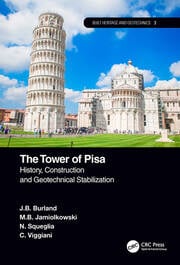
The Tower of Pisa : history, construction and geotechnical stabilization / J.B. Burland, Imperial College, London, M.B. Jamiolkowski, Politecnico di Torino, Italy, N. Squeglia, Università di Pisa, Italy, C. Viggiani, Università di Napoli, Italy.
ISBN
9781003046127 (electronic bk.)
1003046126 (electronic bk.)
9781000164688 (electronic bk.)
1000164683 (electronic bk.)
9780367469047 hardcover ; acid-free paper
9780367494285 paperback ; acid-free paper
9781000164589 (electronic bk. : PDF)
1000164586 (electronic bk. : PDF)
9781000164633 (electronic bk. : Mobipocket)
1000164632 (electronic bk. : Mobipocket)
1003046126 (electronic bk.)
9781000164688 (electronic bk.)
1000164683 (electronic bk.)
9780367469047 hardcover ; acid-free paper
9780367494285 paperback ; acid-free paper
9781000164589 (electronic bk. : PDF)
1000164586 (electronic bk. : PDF)
9781000164633 (electronic bk. : Mobipocket)
1000164632 (electronic bk. : Mobipocket)
Dil Kodu
İngilizce
Yazar
Yayın Bilgisi
Boca Raton: CRC Press, Taylor & Francis Group, [2021]
Fiziksel Niteleme
1 online resource (vii, 54 pages) : illustrations (some color), maps (some color).
Dizi
Built heritage and geotechnics ; volume 3
İçindekiler Notu
1. Introduction. 2. The Leaning Tower. 3. The subsoil of the Tower. 4. History of the construction and inclination. 5. The results of monitoring: 1911-1990. 6. Studies and undertakings in the 20thcentury. 7. Leaning instability. 8. The work of the International Committee, 1990-2001. 9. And now? 10. Concluding remarks
Özet, vb.
"The Leaning Tower of Pisa is known worldwide for its five-degree lean. The Tower is the Campanile of the Cathedral, which together with the Baptistry and Cemetery form a breath-taking collection of monuments which are regarded as supreme examples of early Renaissance Romanesque architecture. In March 1990 the Tower was closed to the public as it was declared unsafe and close to collapse. A Commission was set up by the Italian Government with the task of developing and implementing stabilisation measures. This book begins with a brief description of the history of the Tower and its construction. The reader is then introduced to the huge challenges faced by the Commission in designing and implementing appropriate stabilisation measures whilst at the same time satisfying the demanding requirements of conserving a world heritage monument. In particular, two historical studies are described which proved to be most valuable in arriving at suitable stabilisation measures. The first was a deduction of the history of inclination of the tower during and subsequent to construction. The results of this study were used to calibrate a sophisticated numerical model of the tower and the underlying very soft ground which proved vital in evaluating the effectiveness of various stabilisation schemes. The second study was of measurements of movement made since 1911. This latter study revealed an unexpected mechanism of foundation movement which proved crucial in developing the temporary and permanent stabilisation measures and which resulted in the Tower being re-opened to the public in June 2001. The book will appeal to both professionals and students in the fields of Architecture and Civil Engineering. It will also interest specialised audiences of geotechnical engineers and conservation architects. It may also be of wider interest to anyone planning to visit Pisa or who is intrigued as to what caused the Tower to lean and how it was stabilised"-- Provided by publisher.
Konu
Leaning Tower (Pisa, Italy) __ History.
Architecture __ Conservation and restoration __ Italy __ Pisa.
SOCIAL SCIENCE / Archaeology __ bisacsh
Pisa (Italy) __ Buildings, structures, etc.
Architecture __ Conservation and restoration __ Italy __ Pisa.
SOCIAL SCIENCE / Archaeology __ bisacsh
Pisa (Italy) __ Buildings, structures, etc.
Diğer Yazarlar
Veritabanı
Eseri Alıntıla
Referansları kullanmadan önce gözden geçirmeniz ve varsa gerekli düzeltmeleri yapmanız önerilir.
Dijital Kaynak
MARC Görünümü
LEADER 04700cam a2200553 i 4500
001 798831
003 TR_AnAIT
005 20260123014501
006 m o d
007 cr cnu---unuuu
008 200306s2021 fluab ob 000 0 eng
020 |a9781003046127|q(electronic bk.)
020 |a1003046126|q(electronic bk.)
020 |a9781000164688|q(electronic bk.)
020 |a1000164683|q(electronic bk.)
020 |z9780367469047|qhardcover ;|qacid-free paper
020 |z9780367494285|qpaperback ;|qacid-free paper
020 |a9781000164589|q(electronic bk. : PDF)
020 |a1000164586|q(electronic bk. : PDF)
020 |a9781000164633|q(electronic bk. : Mobipocket)
020 |a1000164632|q(electronic bk. : Mobipocket)
035 |a(OCoLC)1156415355|z(OCoLC)1195705692|z(OCoLC)1197637569
035 |a(OCoLC-P)1156415355
040 |aOCoLC-P|beng|erda|cOCoLC-P
041 |aeng
049 |aTürk Tarih Kurumu Kütüphanesi
050 04|aNA5621.P716|bB87 2021eb
072 7|aTEC|x063000|2bisacsh
072 7|aSOC|x003000|2bisacsh
072 7|aTN|2bicssc
082 00|a720.945/551|223
100 1 |aBurland, J. B.,|eauthor.
245 14|aThe Tower of Pisa :|bhistory, construction and geotechnical stabilization /|cJ.B. Burland, Imperial College, London, M.B. Jamiolkowski, Politecnico di Torino, Italy, N. Squeglia, Università di Pisa, Italy, C. Viggiani, Università di Napoli, Italy.
264 1|aBoca Raton:|bCRC Press, Taylor & Francis Group,|c[2021]
300 |a1 online resource (vii, 54 pages) :|billustrations (some color), maps (some color).
336 |atext|btxt|2rdacontent
337 |acomputer|bc|2rdamedia
338 |aonline resource|bcr|2rdacarrier
490 1 |aBuilt heritage and geotechnics ;|vvolume 3
505 0 |a1. Introduction. 2. The Leaning Tower. 3. The subsoil of the Tower. 4. History of the construction and inclination. 5. The results of monitoring: 1911-1990. 6. Studies and undertakings in the 20thcentury. 7. Leaning instability. 8. The work of the International Committee, 1990-2001. 9. And now? 10. Concluding remarks
520 |a"The Leaning Tower of Pisa is known worldwide for its five-degree lean. The Tower is the Campanile of the Cathedral, which together with the Baptistry and Cemetery form a breath-taking collection of monuments which are regarded as supreme examples of early Renaissance Romanesque architecture. In March 1990 the Tower was closed to the public as it was declared unsafe and close to collapse. A Commission was set up by the Italian Government with the task of developing and implementing stabilisation measures. This book begins with a brief description of the history of the Tower and its construction. The reader is then introduced to the huge challenges faced by the Commission in designing and implementing appropriate stabilisation measures whilst at the same time satisfying the demanding requirements of conserving a world heritage monument. In particular, two historical studies are described which proved to be most valuable in arriving at suitable stabilisation measures. The first was a deduction of the history of inclination of the tower during and subsequent to construction. The results of this study were used to calibrate a sophisticated numerical model of the tower and the underlying very soft ground which proved vital in evaluating the effectiveness of various stabilisation schemes. The second study was of measurements of movement made since 1911. This latter study revealed an unexpected mechanism of foundation movement which proved crucial in developing the temporary and permanent stabilisation measures and which resulted in the Tower being re-opened to the public in June 2001. The book will appeal to both professionals and students in the fields of Architecture and Civil Engineering. It will also interest specialised audiences of geotechnical engineers and conservation architects. It may also be of wider interest to anyone planning to visit Pisa or who is intrigued as to what caused the Tower to lean and how it was stabilised"--|cProvided by publisher.
588 |aOCLC-licensed vendor bibliographic record.
650 0|aLeaning Tower (Pisa, Italy)|xHistory.
650 0|aArchitecture|xConservation and restoration|zItaly|zPisa.
650 7|aSOCIAL SCIENCE / Archaeology|2bisacsh
651 0|aPisa (Italy)|xBuildings, structures, etc.
700 1 |aJamiolkowski, M. B.,|eauthor.
700 1 |aSqueglia, Nunziante,|eauthor.
700 1 |aViggiani, Carlo,|eauthor.
856 40|3Taylor & Francis|uhttps://www.taylorfrancis.com/books/9781003046127
856 42|3OCLC metadata license agreement|uhttp://www.oclc.org/content/dam/oclc/forms/terms/vbrl-201703.pdf
901 |aTaylor & Francis
001 798831
003 TR_AnAIT
005 20260123014501
006 m o d
007 cr cnu---unuuu
008 200306s2021 fluab ob 000 0 eng
020 |a9781003046127|q(electronic bk.)
020 |a1003046126|q(electronic bk.)
020 |a9781000164688|q(electronic bk.)
020 |a1000164683|q(electronic bk.)
020 |z9780367469047|qhardcover ;|qacid-free paper
020 |z9780367494285|qpaperback ;|qacid-free paper
020 |a9781000164589|q(electronic bk. : PDF)
020 |a1000164586|q(electronic bk. : PDF)
020 |a9781000164633|q(electronic bk. : Mobipocket)
020 |a1000164632|q(electronic bk. : Mobipocket)
035 |a(OCoLC)1156415355|z(OCoLC)1195705692|z(OCoLC)1197637569
035 |a(OCoLC-P)1156415355
040 |aOCoLC-P|beng|erda|cOCoLC-P
041 |aeng
049 |aTürk Tarih Kurumu Kütüphanesi
050 04|aNA5621.P716|bB87 2021eb
072 7|aTEC|x063000|2bisacsh
072 7|aSOC|x003000|2bisacsh
072 7|aTN|2bicssc
082 00|a720.945/551|223
100 1 |aBurland, J. B.,|eauthor.
245 14|aThe Tower of Pisa :|bhistory, construction and geotechnical stabilization /|cJ.B. Burland, Imperial College, London, M.B. Jamiolkowski, Politecnico di Torino, Italy, N. Squeglia, Università di Pisa, Italy, C. Viggiani, Università di Napoli, Italy.
264 1|aBoca Raton:|bCRC Press, Taylor & Francis Group,|c[2021]
300 |a1 online resource (vii, 54 pages) :|billustrations (some color), maps (some color).
336 |atext|btxt|2rdacontent
337 |acomputer|bc|2rdamedia
338 |aonline resource|bcr|2rdacarrier
490 1 |aBuilt heritage and geotechnics ;|vvolume 3
505 0 |a1. Introduction. 2. The Leaning Tower. 3. The subsoil of the Tower. 4. History of the construction and inclination. 5. The results of monitoring: 1911-1990. 6. Studies and undertakings in the 20thcentury. 7. Leaning instability. 8. The work of the International Committee, 1990-2001. 9. And now? 10. Concluding remarks
520 |a"The Leaning Tower of Pisa is known worldwide for its five-degree lean. The Tower is the Campanile of the Cathedral, which together with the Baptistry and Cemetery form a breath-taking collection of monuments which are regarded as supreme examples of early Renaissance Romanesque architecture. In March 1990 the Tower was closed to the public as it was declared unsafe and close to collapse. A Commission was set up by the Italian Government with the task of developing and implementing stabilisation measures. This book begins with a brief description of the history of the Tower and its construction. The reader is then introduced to the huge challenges faced by the Commission in designing and implementing appropriate stabilisation measures whilst at the same time satisfying the demanding requirements of conserving a world heritage monument. In particular, two historical studies are described which proved to be most valuable in arriving at suitable stabilisation measures. The first was a deduction of the history of inclination of the tower during and subsequent to construction. The results of this study were used to calibrate a sophisticated numerical model of the tower and the underlying very soft ground which proved vital in evaluating the effectiveness of various stabilisation schemes. The second study was of measurements of movement made since 1911. This latter study revealed an unexpected mechanism of foundation movement which proved crucial in developing the temporary and permanent stabilisation measures and which resulted in the Tower being re-opened to the public in June 2001. The book will appeal to both professionals and students in the fields of Architecture and Civil Engineering. It will also interest specialised audiences of geotechnical engineers and conservation architects. It may also be of wider interest to anyone planning to visit Pisa or who is intrigued as to what caused the Tower to lean and how it was stabilised"--|cProvided by publisher.
588 |aOCLC-licensed vendor bibliographic record.
650 0|aLeaning Tower (Pisa, Italy)|xHistory.
650 0|aArchitecture|xConservation and restoration|zItaly|zPisa.
650 7|aSOCIAL SCIENCE / Archaeology|2bisacsh
651 0|aPisa (Italy)|xBuildings, structures, etc.
700 1 |aJamiolkowski, M. B.,|eauthor.
700 1 |aSqueglia, Nunziante,|eauthor.
700 1 |aViggiani, Carlo,|eauthor.
856 40|3Taylor & Francis|uhttps://www.taylorfrancis.com/books/9781003046127
856 42|3OCLC metadata license agreement|uhttp://www.oclc.org/content/dam/oclc/forms/terms/vbrl-201703.pdf
901 |aTaylor & Francis
Materyaller
Depodan talep edilen materyal sadece kütüphane içerisinde kullanılmaktadır.
Materyal dışarıya ödünç verilmemektedir.
Materyal dışarıya ödünç verilmemektedir.
