LEADER 03589cam a2200589Ii 4500
001 798862
003 TR_AnAIT
005 20260123014531
006 m o d
007 cr cnu|||unuuu
008 200528s2020 enka ob 001 0 eng d
020 |a9781003084495|q(electronic bk.)
020 |a1003084494|q(electronic bk.)
020 |z9781350170049
020 |z9781350089853
020 |a9781000182323|q(electronic bk. : EPUB)
020 |a1000182320|q(electronic bk. : EPUB)
020 |a9781000185508|q(electronic bk. : PDF)
020 |a1000185508|q(electronic bk. : PDF)
020 |a9781000188950|q(electronic bk. : Mobipocket)
020 |a1000188957|q(electronic bk. : Mobipocket)
020 |z9781501365430
035 |a(OCoLC)1155638028
035 |a(OCoLC-P)1155638028
040 |aOCoLC-P|beng|erda|epn|cOCoLC-P
041 |aeng
049 |aTürk Tarih Kurumu Kütüphanesi
050 4|aGV1493
072 7|aSOC|x002000|2bisacsh
072 7|aMAT|x015000|2bisacsh
072 7|aSOC|x002010|2bisacsh
072 7|aJHM|2bicssc
082 04|a793.73|223
100 1 |aDanesi, Marcel,|d1946-|eauthor.
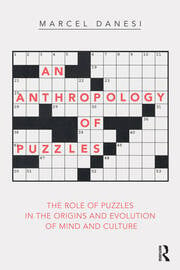
245 13|aAn anthropology of puzzles :|bthe role of puzzles in the origins and evolution of mind and culture /|cMarcel Danesi.
264 1|aLondon :|bRoutledge, Taylor & Francis Group,|c2020.
300 |a1 online resource (232 pages) :|billustrations
336 |atext|btxt|2rdacontent
337 |acomputer|bc|2rdamedia
338 |aonline resource|bcr|2rdacarrier
500 |a"First published in 2019 by Bloomsbury Academic."
505 0 |aList of FiguresPrefaceAcknowledgements1. Puzzles in Mind and History2. Riddles3. Word Games4. Visual Puzzles 5. Puzzles in Mathematics6. Puzzles and Logic7. Puzzles and Human IntelligenceReferencesIndex
520 |aAn Anthropology of Puzzles argues that the human brain is a "puzzling organ" which allows humans to literally solve their own problems of existence through puzzle format. Noting the presence of puzzles everywhere in everyday life, Marcel Danesi looks at puzzles in society since the dawn of history, showing how their presence has guided large sections of human history, from discoveries in mathematics to disquisitions in philosophy. Danesi examines the cognitive processes that are involved in puzzle making and solving, and connects them to the actual physical manifestations of classic puzzles. Building on a concept of puzzles as based on Jungian archetypes, such as the river crossing image, the path metaphor, and the journey, Danesi suggests this could be one way to understand the public fascination with puzzles. As well as drawing on underlying mental archetypes, the act of solving puzzles also provides an outlet to move beyond biological evolution, and Danesi shows that puzzles could be the product of the same basic neural mechanism that produces language and culture. Finally, Danesi explores how understanding puzzles can be a new way of understanding our human culture.
588 |aOCLC-licensed vendor bibliographic record.
650 7|aSOCIAL SCIENCE / Anthropology / General|2bisacsh
650 7|aMATHEMATICS / History & Philosophy|2bisacsh
650 7|aSOCIAL SCIENCE / Anthropology / Cultural|2bisacsh
650 0|aPuzzles|xSocial aspects.
650 0|aPuzzles|xPsychological aspects.
650 0|aCognition.
650 0|aHuman evolution.
650 0|aBrain|xEvolution.
856 40|3Taylor & Francis|uhttps://www.taylorfrancis.com/books/9781003084495
856 42|3OCLC metadata license agreement|uhttp://www.oclc.org/content/dam/oclc/forms/terms/vbrl-201703.pdf
901 |aTaylor & Francis