LEADER 03343cam a2200469M 4500
001 798987
003 TR_AnAIT
005 20260123014729
006 m o d
007 cr |n|||||||||
008 210830s2021 xx o 0|| 0 eng d
020 |a9781000454710|q(electronic bk.)
020 |a1000454711|q(electronic bk.)
020 |a9781003215493|q(electronic bk.)
020 |a1003215491|q(electronic bk.)
020 |a9781000454789|q(electronic bk. : EPUB)
020 |a1000454789|q(electronic bk. : EPUB)
020 |z1032052651
020 |z9781032052656
035 |a(OCoLC)1265580866
035 |a(OCoLC-P)1265580866
040 |aOCoLC-P|beng|cOCoLC-P
041 |aeng
049 |aTürk Tarih Kurumu Kütüphanesi
050 4|aDS484.7
072 7|aHIS|x000000|2bisacsh
072 7|aHIS|x017000|2bisacsh
072 7|aSOC|x000000|2bisacsh
072 7|aHB|2bicssc
082 04|a954.82031|223
100 1 |aReddy, Moola Atchi,|eauthor.
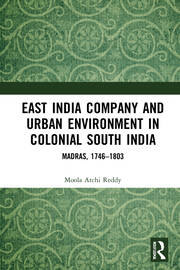
245 10|aEAST INDIA COMPANY AND URBAN ENVIRONMENT IN COLONIAL SOUTH INDIA|h[electronic resource] :|bmadras, 1746-1803.
260 |a[S.l.] :|bROUTLEDGE,|c2021.
300 |a1 online resource
520 |aThis book makes a pioneering attempt to analyse the linkages between the rule of East India Company and urban environment in colonial India over more than a half-century - from 1746 to 1803 - througha study of the city of Madras (present Chennai). The book traces urban development in colonial South India from a broad economic history point of view and with a focus on its environmental dimension, covering the period from the First Carnatic War until the 18th century by which time the English East India Company had consolidated its power. It discusses themes such as urban development; infrastructural development; housing and buildings, city and suburbs; and development of land and roads in the colonial period. Using extensive archival resources, it offers new insights on the various aspects of the shifting urban physical environment and captures the development of Madras city limits; road infrastructure, building of paved streets, whitewashed walls and compounded houses; establishment of garden houses; use of land resources; development of masonry bridges by merchants; housing problems; and the building of Fort House, Garden House, Admiralty House, Pantheon House, Custom House, etc. in Madras, to describe the impact of colonialism on urban environment. An important contribution to the history of urban economics and environment, this book with its lucid style and rich illustrationswill be an essential read for scholars and researchers of colonial history, modern Indian history, environmental history, urban environment, urban history, political economy, urban economic history, Indian history, and South Asian studies.
588 |aOCLC-licensed vendor bibliographic record.
610 20|aEast India Company.
650 0|aCities and towns|zIndia|xGrowth|xHistory|y19th century.
650 7|aHISTORY / General|2bisacsh
650 7|aHISTORY / Asia / India & South Asia|2bisacsh
650 7|aSOCIAL SCIENCE / General|2bisacsh
651 0|aChennai (India)|xHistory|y19th century.
856 40|3Taylor & Francis|uhttps://www.taylorfrancis.com/books/9781003215493
856 42|3OCLC metadata license agreement|uhttp://www.oclc.org/content/dam/oclc/forms/terms/vbrl-201703.pdf
901 |aTaylor & Francis