LEADER 03531cam a22006017i 4500
001 799171
003 TR_AnAIT
005 20260123015024
006 m o d
007 cr |n|||||||||
008 250423s2025 enk ob 000 0 eng d
020 |a9781040160275|q(electronic bk.)
020 |a1040160271|q(electronic bk.)
020 |a9781003537120|q(electronic bk.)
020 |a100353712X|q(electronic bk.)
020 |a9781040160244|q(electronic bk. : PDF)
020 |a1040160247|q(electronic bk. : PDF)
020 |z103223380X
020 |z9781032233802
024 7 |a10.4324/9781003537120|2doi
035 |a(OCoLC)1516171786
035 |a(OCoLC-P)1516171786
040 |aOCoLC-P|beng|erda|cOCoLC-P
041 |aeng
049 |aTürk Tarih Kurumu Kütüphanesi
050 4|aBQ4055
072 7|aHREP|2bicssc
072 7|aREL007010|2bisacsh
072 7|aHBTB|2bicssc
072 7|aHRAX|2bicssc
072 7|aJPSD|2bicssc
072 7|aGTB|2bicssc
072 7|aPOL054000|2bisacsh
072 7|aPOL011000|2bisacsh
072 7|aSOC008020|2bisacsh
072 7|aPOL011010|2bisacsh
072 7|aREL007020|2bisacsh
072 7|aSOC053000|2bisacsh
072 7|aSOC000000|2bisacsh
082 04|a294.3|223/eng/20250501
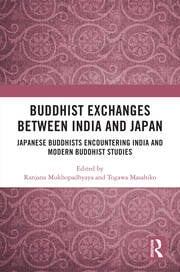
245 00|aBuddhist exchanges between India and Japan :|bJapanese Buddhists encountering India and modern Buddhist studies /|cedited by Ranjana Mukhopadhyaya and Togawa Masahiko.
264 1|aAbingdon, Oxon ;|aNew York, NY :|bRoutledge, Taylor & Francis Group,|c2025.
300 |a1 online resource
336 |atext|btxt|2rdacontent
337 |acomputer|bc|2rdamedia
338 |aonline resource|bcr|2rdacarrier
520 |aThis book examines the role of Buddhism in India-Japan relations through three approaches.First, it studies the history of interactions between India and Japan, especially through Buddhist pilgrimages from Japan to India and how it has influenced both Japanese and Indian Buddhism, particularly the Buddhist revival movements and the development of Buddhist sacred sites, such as Bodhgaya, in India. Second, it analyses the ideological implications of these Buddhist interactions between Japan and India by focusing on the role of Japanese monks and scholars as agents of Buddhist encounters between the two countries, and their contribution towards Buddhist scholarship in Japan, and the development of ideologies such as Buddhist nationalism or Pan-Asianism in India, Japan, as well as in other Asian countries. Finally, it highlights how these historic Buddhist linkages between India and Japan have led to transnational collaborations between Buddhists/Buddhist organizations as well as the governments of the two countries, and the use of Buddhist heritage as a soft power in the diplomatic relations between India and Japan.Drawing on inter-disciplinary studies, the essays in the volume will be of interest to scholars in history, heritage studies, religious studies, especially Buddhist studies, international relations, and Asian studies.
588 |aOCLC-licensed vendor bibliographic record.
650 0|aBuddhism.
650 0|aBuddhism|zIndia|xHistory.
650 0|aBuddhism|zJapan|xHistory.
700 1 |aMukopadiyāya, Ranjana,|d1971-|eeditor.|1https://id.oclc.org/worldcat/entity/E39PCjFbTXby7yMRPF99k9Wpbm
700 1 |aMasahiko, Togawa,|eeditor.
856 40|3Taylor & Francis|uhttps://www.taylorfrancis.com/books/9781003537120
856 42|3OCLC metadata license agreement|uhttp://www.oclc.org/content/dam/oclc/forms/terms/vbrl-201703.pdf
901 |aTaylor & Francis