

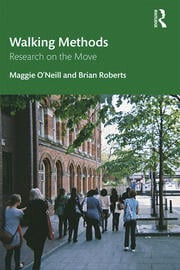
Walking methods : research on the move / Maggie O'Neill and Brian Roberts.
ISBN
9781315646442 (electronic bk.)
1315646447 (electronic bk.)
9781317295020 (electronic bk. : EPUB)
1317295021 (electronic bk. : EPUB)
9781317295013 (electronic bk. : Mobipocket)
1317295013 (electronic bk. : Mobipocket)
9781317295037 (electronic bk. : PDF)
131729503X (electronic bk. : PDF)
9781138182479
9781138182486
1315646447 (electronic bk.)
9781317295020 (electronic bk. : EPUB)
1317295021 (electronic bk. : EPUB)
9781317295013 (electronic bk. : Mobipocket)
1317295013 (electronic bk. : Mobipocket)
9781317295037 (electronic bk. : PDF)
131729503X (electronic bk. : PDF)
9781138182479
9781138182486
Dil Kodu
İngilizce
Yazar
Yayın Bilgisi
London : Routledge, 2020.
Fiziksel Niteleme
1 online resource (x, 280 pages).
İçindekiler Notu
Introduction -- Part I: Theorizing/Observing/Thinking. 1. Methods on the Move: Moving Methods ; 2. Theorizing Walking in the Sociological Imagination - Walking in Context ; 3. Walking, Art-Making and Biographical Research ; Exercise One: Walking and Theorizing - Observing/Thinking -- Part II: Experiencing. 4. Migration, Memory and Place - Connecting with Memory and Place in Urban Landscapes ; 5. Walking as Re-Formative and Transgressive: Health, Pilgrimage, Trespass, Marching ; 6. Walking in the Downtown Eastside - Experiencing the WIBM as Participatory, Visual and Ethnographic ; Exercise Two: Walking, Sensing, Experiencing -- Part III: Imagining. 7. Walking, Sex Work, and Community: Towards a Radical Democratic and Imaginative Space for addressing Sexual and Social Inequalities ; 8. The Phenomenology of Walking in a Garden ; 9. Walking Artists: Critical Dialogues and Imaginaries ; 10. Auto/Biographical Encounters in Time and Space - Roots and Routes ; Exercise Three: Walking and Imagining - Time/Memory/Making -- Conclusion: The Future of the Walking Interview as a Biographical Method -- Exercise Four: WIBM Exercise - Observing, Experiencing, Imagining The Walking Interview as a Biographical Method - Principles and Practice: A Framework.
Özet, vb.
This book introduces and critically explores walking as an innovative method for doing social research, showing how its sensate and kinaesthetic attributes facilitate connections with lived experiences, journeys and memories, communities and identities. The book situates walking methods historically, sociologically, and in relation to biographical and arts-based research, as well as new work on mobilities, the digital, spatial, and the sensory. The book is organised into three sections: theorising; experiencing; and imagining walking as a new method for doing biographical research. There is a key focus upon the Walking Interview as a Biographical Method (WIBM) on the move to usefully explore migration, memory, and urban landscapes, as part of participatory, visual, and ethnographic research with marginalised communities and artists and as re-formative and transgressive. The book concludes with autobiographical walks taken by the authors and a discussion about the future of the walking interview as biographical method. Walking Methods combines theory with a series of original ethnographic and participatory research examples. Practical exercises and a guide to using walking as a method help to make this a rich resource for social science researchers, students, walking artists, and biographical researchers.
Konu
Social sciences __ Research.
Walking.
SOCIAL SCIENCE / General __ bisacsh
SOCIAL SCIENCE / Sociology / General __ bisacsh
Walking.
SOCIAL SCIENCE / General __ bisacsh
SOCIAL SCIENCE / Sociology / General __ bisacsh
Diğer Yazarlar
Veritabanı
Eseri Alıntıla
Referansları kullanmadan önce gözden geçirmeniz ve varsa gerekli düzeltmeleri yapmanız önerilir.
Dijital Kaynak
MARC Görünümü
LEADER 04398cam a2200517Ii 4500
001 799474
003 TR_AnAIT
005 20260123015426
006 m o d
007 cr cnu|||unuuu
008 190711s2020 enk eob 001 0 eng d
020 |a9781315646442|q(electronic bk.)
020 |a1315646447|q(electronic bk.)
020 |a9781317295020|q(electronic bk. : EPUB)
020 |a1317295021|q(electronic bk. : EPUB)
020 |a9781317295013|q(electronic bk. : Mobipocket)
020 |a1317295013|q(electronic bk. : Mobipocket)
020 |a9781317295037|q(electronic bk. : PDF)
020 |a131729503X|q(electronic bk. : PDF)
020 |z9781138182479
020 |z9781138182486
035 |a(OCoLC)1107880335
035 |a(OCoLC-P)1107880335
040 |aOCoLC-P|beng|erda|epn|cOCoLC-P
041 |aeng
049 |aTürk Tarih Kurumu Kütüphanesi
050 4|aH62
072 7|aSOC|x000000|2bisacsh
072 7|aSOC|x026000|2bisacsh
072 7|aJHB|2bicssc
082 04|a300.72|223
100 1 |aO'Neill, Maggie.
245 10|aWalking methods :|bresearch on the move /|cMaggie O'Neill and Brian Roberts.
264 1|aLondon :|bRoutledge,|c2020.
300 |a1 online resource (x, 280 pages).
336 |atext|btxt|2rdacontent
337 |acomputer|bc|2rdamedia
338 |aonline resource|bcr|2rdacarrier
505 0 |aIntroduction -- Part I: Theorizing/Observing/Thinking. 1. Methods on the Move: Moving Methods ; 2. Theorizing Walking in the Sociological Imagination - Walking in Context ; 3. Walking, Art-Making and Biographical Research ; Exercise One: Walking and Theorizing - Observing/Thinking -- Part II: Experiencing. 4. Migration, Memory and Place - Connecting with Memory and Place in Urban Landscapes ; 5. Walking as Re-Formative and Transgressive: Health, Pilgrimage, Trespass, Marching ; 6. Walking in the Downtown Eastside - Experiencing the WIBM as Participatory, Visual and Ethnographic ; Exercise Two: Walking, Sensing, Experiencing -- Part III: Imagining. 7. Walking, Sex Work, and Community: Towards a Radical Democratic and Imaginative Space for addressing Sexual and Social Inequalities ; 8. The Phenomenology of Walking in a Garden ; 9. Walking Artists: Critical Dialogues and Imaginaries ; 10. Auto/Biographical Encounters in Time and Space - Roots and Routes ; Exercise Three: Walking and Imagining - Time/Memory/Making -- Conclusion: The Future of the Walking Interview as a Biographical Method -- Exercise Four: WIBM Exercise - Observing, Experiencing, Imagining The Walking Interview as a Biographical Method - Principles and Practice: A Framework.
520 |aThis book introduces and critically explores walking as an innovative method for doing social research, showing how its sensate and kinaesthetic attributes facilitate connections with lived experiences, journeys and memories, communities and identities. The book situates walking methods historically, sociologically, and in relation to biographical and arts-based research, as well as new work on mobilities, the digital, spatial, and the sensory. The book is organised into three sections: theorising; experiencing; and imagining walking as a new method for doing biographical research. There is a key focus upon the Walking Interview as a Biographical Method (WIBM) on the move to usefully explore migration, memory, and urban landscapes, as part of participatory, visual, and ethnographic research with marginalised communities and artists and as re-formative and transgressive. The book concludes with autobiographical walks taken by the authors and a discussion about the future of the walking interview as biographical method. Walking Methods combines theory with a series of original ethnographic and participatory research examples. Practical exercises and a guide to using walking as a method help to make this a rich resource for social science researchers, students, walking artists, and biographical researchers.
588 |aOCLC-licensed vendor bibliographic record.
650 0|aSocial sciences|xResearch.
650 0|aWalking.
650 7|aSOCIAL SCIENCE / General|2bisacsh
650 7|aSOCIAL SCIENCE / Sociology / General|2bisacsh
700 1 |aRoberts, Brian,|d1950-
856 40|3Taylor & Francis|uhttps://www.taylorfrancis.com/books/9781315646442
856 42|3OCLC metadata license agreement|uhttp://www.oclc.org/content/dam/oclc/forms/terms/vbrl-201703.pdf
901 |aTaylor & Francis
001 799474
003 TR_AnAIT
005 20260123015426
006 m o d
007 cr cnu|||unuuu
008 190711s2020 enk eob 001 0 eng d
020 |a9781315646442|q(electronic bk.)
020 |a1315646447|q(electronic bk.)
020 |a9781317295020|q(electronic bk. : EPUB)
020 |a1317295021|q(electronic bk. : EPUB)
020 |a9781317295013|q(electronic bk. : Mobipocket)
020 |a1317295013|q(electronic bk. : Mobipocket)
020 |a9781317295037|q(electronic bk. : PDF)
020 |a131729503X|q(electronic bk. : PDF)
020 |z9781138182479
020 |z9781138182486
035 |a(OCoLC)1107880335
035 |a(OCoLC-P)1107880335
040 |aOCoLC-P|beng|erda|epn|cOCoLC-P
041 |aeng
049 |aTürk Tarih Kurumu Kütüphanesi
050 4|aH62
072 7|aSOC|x000000|2bisacsh
072 7|aSOC|x026000|2bisacsh
072 7|aJHB|2bicssc
082 04|a300.72|223
100 1 |aO'Neill, Maggie.
245 10|aWalking methods :|bresearch on the move /|cMaggie O'Neill and Brian Roberts.
264 1|aLondon :|bRoutledge,|c2020.
300 |a1 online resource (x, 280 pages).
336 |atext|btxt|2rdacontent
337 |acomputer|bc|2rdamedia
338 |aonline resource|bcr|2rdacarrier
505 0 |aIntroduction -- Part I: Theorizing/Observing/Thinking. 1. Methods on the Move: Moving Methods ; 2. Theorizing Walking in the Sociological Imagination - Walking in Context ; 3. Walking, Art-Making and Biographical Research ; Exercise One: Walking and Theorizing - Observing/Thinking -- Part II: Experiencing. 4. Migration, Memory and Place - Connecting with Memory and Place in Urban Landscapes ; 5. Walking as Re-Formative and Transgressive: Health, Pilgrimage, Trespass, Marching ; 6. Walking in the Downtown Eastside - Experiencing the WIBM as Participatory, Visual and Ethnographic ; Exercise Two: Walking, Sensing, Experiencing -- Part III: Imagining. 7. Walking, Sex Work, and Community: Towards a Radical Democratic and Imaginative Space for addressing Sexual and Social Inequalities ; 8. The Phenomenology of Walking in a Garden ; 9. Walking Artists: Critical Dialogues and Imaginaries ; 10. Auto/Biographical Encounters in Time and Space - Roots and Routes ; Exercise Three: Walking and Imagining - Time/Memory/Making -- Conclusion: The Future of the Walking Interview as a Biographical Method -- Exercise Four: WIBM Exercise - Observing, Experiencing, Imagining The Walking Interview as a Biographical Method - Principles and Practice: A Framework.
520 |aThis book introduces and critically explores walking as an innovative method for doing social research, showing how its sensate and kinaesthetic attributes facilitate connections with lived experiences, journeys and memories, communities and identities. The book situates walking methods historically, sociologically, and in relation to biographical and arts-based research, as well as new work on mobilities, the digital, spatial, and the sensory. The book is organised into three sections: theorising; experiencing; and imagining walking as a new method for doing biographical research. There is a key focus upon the Walking Interview as a Biographical Method (WIBM) on the move to usefully explore migration, memory, and urban landscapes, as part of participatory, visual, and ethnographic research with marginalised communities and artists and as re-formative and transgressive. The book concludes with autobiographical walks taken by the authors and a discussion about the future of the walking interview as biographical method. Walking Methods combines theory with a series of original ethnographic and participatory research examples. Practical exercises and a guide to using walking as a method help to make this a rich resource for social science researchers, students, walking artists, and biographical researchers.
588 |aOCLC-licensed vendor bibliographic record.
650 0|aSocial sciences|xResearch.
650 0|aWalking.
650 7|aSOCIAL SCIENCE / General|2bisacsh
650 7|aSOCIAL SCIENCE / Sociology / General|2bisacsh
700 1 |aRoberts, Brian,|d1950-
856 40|3Taylor & Francis|uhttps://www.taylorfrancis.com/books/9781315646442
856 42|3OCLC metadata license agreement|uhttp://www.oclc.org/content/dam/oclc/forms/terms/vbrl-201703.pdf
901 |aTaylor & Francis
Materyaller
Depodan talep edilen materyal sadece kütüphane içerisinde kullanılmaktadır.
Materyal dışarıya ödünç verilmemektedir.
Materyal dışarıya ödünç verilmemektedir.
