LEADER 04043cam a2200553 i 4500
001 799649
003 TR_AnAIT
005 20260123015643
006 m o d
007 cr |||||||||||
008 200421t20212021enkab ob 001 0 eng
020 |a9780203701256|qelectronic book
020 |a0203701259|qelectronic book
020 |a9781351330008|qelectronic book
020 |a1351330004|qelectronic book
020 |a9781351330022|qelectronic book
020 |a1351330020|qelectronic book
020 |a9781351330015|qelectronic book
020 |a1351330012|qelectronic book
020 |z9781138574144|qhardcover
020 |z1138574147
035 |a(OCoLC)1152462580|z(OCoLC)1199083637
035 |a(OCoLC-P)1152462580
040 |aOCoLC-P|beng|erda|cOCoLC-P
041 |aeng
049 |aTürk Tarih Kurumu Kütüphanesi
050 04|aDJK32|b.C87 2021
072 7|aHIS|x000000|2bisacsh
072 7|aHBLC1|2bicssc
082 00|a943.7/021|223
100 1 |aCurta, Florin,|eauthor.
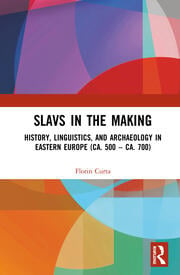
245 10|aSlavs in the making :|bhistory, linguistics and archaeology in Eastern Europe (ca. 500 - ca. 700) /|cFlorin Curta.
264 1|aAbingdon, Oxon ;|aNew York, NY :|bRoutledge,|c2021.
264 4|c©2021
300 |a1 online resource (xiii, 351 pages) :|billustrations, maps
336 |atext|btxt|2rdacontent
337 |acomputer|bc|2rdamedia
338 |aonline resource|bcr|2rdacarrier
505 0 |aTheoretical framework -- Approaching the early Slavs -- Written sources -- The Carpathian Basin -- The East German and Czech lands -- Poland -- Western (Right-Bank) Ukraine and Belarus -- Eastern (Left-Bank) Ukraine and western Russia -- Migration -- Language -- Ethnicity -- Conclusion.
520 |a"Slavs in the Making takes a fresh look at archaeological evidence from parts of Slavic-speaking Europe north of the Lower Danube, including the present-day territories of the Czech Republic, Slovakia, Poland, Belarus, Ukraine, and Russia. Nothing is known about what the inhabitants of those remote lands called themselves during the sixth century, or whether they spoke a Slavic language. The book engages critically with the archaeological evidence from these regions, and questions its association with the "Slavs" that has often been taken for granted. It also deals with the linguistic evidence-primarily names of rivers and other bodies of water-that has been used to identify the primordial homeland of the Slavs, and from which their migration towards the Lower Danube is believed to have started. It is precisely in that area that sociolinguistics can offer a serious alternative to the language tree model currently favored in linguistic paleontology. The question of how best to explain the spread of Slavic remains a controversial issue. This book attempts to provide an answer, and not just a critique of the method of linguistic paleontology upon which the theory of the Slavic migration and homeland relies. The book proposes a model of interpretation that builds upon the idea that (Common) Slavic cannot possibly be the result of Slavic migration. It addresses the question of migration in the archaeology of early medieval Eastern Europe, and makes a strong case for a more nuanced interpretation of the archaeological evidence of mobility. It will appeal to scholars and students interested in medieval history, migration, and the history of Eastern and Central Europe"--|cProvided by publisher.
588 |aOCLC-licensed vendor bibliographic record.
650 0|aExcavations (Archaeology)|zEurope, Eastern.
650 0|aSlav (The Slavic root)
650 0|aSlavic languages|xHistory.
650 7|aHISTORY / General|2bisacsh
651 0|aEurope, Eastern|xHistoriography.
651 0|aSlavic countries|xHistoriography.
651 0|aEurope, Eastern|xAntiquities.
651 0|aEurope, Eastern|xLanguages|xHistory.
856 40|3Taylor & Francis|uhttps://www.taylorfrancis.com/books/9780203701256
856 42|3OCLC metadata license agreement|uhttp://www.oclc.org/content/dam/oclc/forms/terms/vbrl-201703.pdf
901 |aTaylor & Francis