LEADER 03453cam a2200493 i 4500
001 799838
003 TR_AnAIT
005 20260123015937
006 m o d
007 cr |||||||||||
008 200331t20202020nyua ob 001 0 eng
020 |a9781003037774|qelectronic book
020 |a1003037771|qelectronic book
020 |a9781000082524|qelectronic book
020 |a1000082520|qelectronic book
020 |a9781000082487|qelectronic book
020 |a1000082482|qelectronic book
020 |a9781000082500|qelectronic book
020 |a1000082504|qelectronic book
020 |z9780367458430|qhardcover
035 |a(OCoLC)1149231478
035 |a(OCoLC-P)1149231478
040 |aOCoLC-P|beng|erda|cOCoLC-P
041 |aeng
049 |aTürk Tarih Kurumu Kütüphanesi
050 04|aBD161|b.E77 2020
072 7|aPHI|x004000|2bisacsh
072 7|aHPK|2bicssc
082 00|a121|223
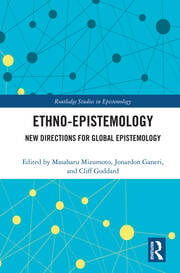
245 00|aEthno-epistemology :|bnew directions for global epistemology /|cedited by Masaharu Mizumoto, Jonardon Ganeri and Cliff Goddard.
264 1|aNew York, NY :|bRoutledge,|c2020.
264 4|c©2020
300 |a1 online resource (vi, 281 pages) :|billustrations.
336 |atext|btxt|2rdacontent
337 |acomputer|bc|2rdamedia
338 |aonline resource|bcr|2rdacarrier
490 1 |aRoutledge studies in epistemology
520 |a"This volume features new perspectives on the implications of cross-linguistic and cultural diversity for epistemology. It brings together philosophers, linguists, and scholars working on knowledge traditions to advance work in epistemology that moves beyond the Anglophone sphere. The first group of chapters provide evidence of cross-linguistic or cultural diversity relevant to epistemology and discuss its possible implications. These essays defend epistemic pluralism based on Sanskrit data as a commitment to pluralism about epistemic stances, analyze the use of two Japanese knowledge verbs in relation to knowledge how, explore the Confucian notion of justification, and surveys cultural differences about the testimonial knowledge. The second group of chapters defends "core monism"-which claims that despite the cross-linguistic diversity of knowledge verbs, there is certain core epistemological meaning shared by all languages-from both a Natural Semantic Metalanguage (NSM) and skeptical perspective. The third cluster of essays considers the implications of cultural diversity for epistemology based on anthropological studies. These chapters explore real disparities in folk epistemology across cultures. Finally, the last two chapters discuss methods or perspectives to unify epistemology despite and based on the diversity of folk intuitions and epistemological concepts. Ethno-Epistemology is an essential resource for philosophers working in epistemology and comparative philosophy, as well as linguists and cultural anthropologists interested in the cultural-linguistic diversity of knowledge traditions"--|cProvided by publisher.
588 |aOCLC-licensed vendor bibliographic record.
650 0|aKnowledge, Theory of.
650 7|aPHILOSOPHY / Epistemology|2bisacsh
700 1 |aMizumoto, Masaharu,|eeditor.
700 1 |aGaneri, Jonardon,|eeditor.
700 1 |aGoddard, Cliff,|eeditor.
856 40|3Taylor & Francis|uhttps://www.taylorfrancis.com/books/9781003037774
856 42|3OCLC metadata license agreement|uhttp://www.oclc.org/content/dam/oclc/forms/terms/vbrl-201703.pdf
901 |aTaylor & Francis