LEADER 03783cam a2200565Ii 4500
001 799854
003 TR_AnAIT
005 20260123015951
006 m o d
007 cr cnu|||unuuu
008 200528s2020 enka ob 001 0 eng d
020 |a9781003085331|q(electronic bk.)
020 |a1003085334|q(electronic bk.)
020 |a9781000181517|q(electronic bk. : EPUB)
020 |a1000181510|q(electronic bk. : EPUB)
020 |a9781000188141|q(electronic bk. : Mobipocket)
020 |a1000188140|q(electronic bk. : Mobipocket)
020 |a9781000184693|q(electronic bk. : PDF)
020 |a1000184692|q(electronic bk. : PDF)
020 |z9781350071001
035 |a(OCoLC)1155637970
035 |a(OCoLC-P)1155637970
040 |aOCoLC-P|beng|erda|epn|cOCoLC-P
041 |aeng
049 |aTürk Tarih Kurumu Kütüphanesi
050 4|aGN346|b.C36 2020eb
072 7|aSOC|x002000|2bisacsh
072 7|aSOC|x002010|2bisacsh
072 7|aSOC|x002020|2bisacsh
072 7|aJHM|2bicssc
082 04|a305.8/00723|223
100 1 |aCantarella, Luke,|eauthor.
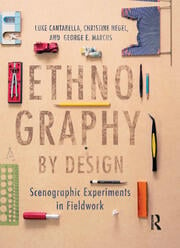
245 10|aEthnography by design :|bscenographic experiments in fieldwork /|cLuke Cantarella, Christine Hegal, George E. Marcus.
264 1|aLondon :|bRoutledge, Taylor & Francis Group,|c2020.
300 |a1 online resource (176 pages) :|bcolor illustrations
336 |atext|btxt|2rdacontent
337 |acomputer|bc|2rdamedia
338 |aonline resource|bcr|2rdacarrier
500 |a"First published 2019 by Bloomsbury Academic."
505 0 |aList of Figures, Preface, Acknowledgements, Project Credits1. Introduction, Part One 2. On Scenography 3. Productive Encounters 4. Practices for an Ethnography by Design Part Two 5. Unfolding a Process 6. A Workshop Model 7. Operations and Micro-strategies Appendix: Games and Exercises, Bibliography, Index
520 |aEthnography by Design, unlike many investigations into how ethnography can be done, focuses on the benefits of sustained collaboration across projects to ethnographic enquiry, and the possibilities of experimental co-design as part of field research. The book translates specifically scenic design practices, which include processes like speculation, materialization, and iteration, and applies them to ethnographic inquiry, emphasizing both the value of design studio processes and "designed" field encounters. The authors make it clear that design studio practices allow ethnographers to ask and develop very different questions within their own and others' research and thus, design also offers a framework for shaping the conditions of encounter in ways that make anthropological suppositions tangible and visually apparent. Written by two anthropologists and a designer, and based on their experience of their collective endeavours during three projects, Luke Cantarella, Christine Hegel, and George E. Marcus examine their works as a way to continue a broader inquiry into what the practice of ethnography can be in the twenty-first century, and how any project distinctively moves beyond standard perspectives through its crafted modes of participation and engagement.
588 |aOCLC-licensed vendor bibliographic record.
650 7|aSOCIAL SCIENCE / Anthropology / General|2bisacsh
650 7|aSOCIAL SCIENCE / Anthropology / Cultural|2bisacsh
650 7|aSOCIAL SCIENCE / Anthropology / Physical|2bisacsh
650 0|aEthnology|xFieldwork.
650 0|aEthnology|xMethodology.
650 0|aEthnologists|xProfessional relationships.
700 1 |aHegel, Christine,|eauthor.
700 1 |aMarcus, George E.,|eauthor.
856 40|3Taylor & Francis|uhttps://www.taylorfrancis.com/books/9781003085331
856 42|3OCLC metadata license agreement|uhttp://www.oclc.org/content/dam/oclc/forms/terms/vbrl-201703.pdf
901 |aTaylor & Francis