LEADER 04103cam a2200565 i 4500
001 799891
003 TR_AnAIT
005 20260123020024
006 m d u
007 cr |||||||||||
008 200806t20212021enk ob 001 0 eng
020 |a9781000292343|qelectronic book
020 |a1000292347|qelectronic book
020 |a9781003098898|qelectronic book
020 |a1003098894|qelectronic book
020 |a9781000292442|qelectronic book
020 |a1000292444|qelectronic book
020 |a9781000292398|qelectronic book
020 |a1000292398|qelectronic book
020 |z9780367566777|qhardcover
035 |a(OCoLC)1184123930|z(OCoLC)1202255363|z(OCoLC)1202456688|z(OCoLC)1202462362
035 |a(OCoLC-P)1184123930
040 |aOCoLC-P|beng|erda|cOCoLC-P
041 |aeng
049 |aTürk Tarih Kurumu Kütüphanesi
050 04|aHD87|b.D66 2021
072 7|aBUS|x038000|2bisacsh
072 7|aBUS|x083000|2bisacsh
072 7|aBUS|x069030|2bisacsh
072 7|aKCD|2bicssc
082 00|a331.13/3|223
100 1 |aDonovan, Paul,|d1972-|eauthor.
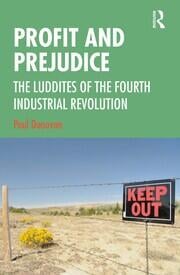
245 10|aProfit and prejudice :|bthe luddites of the fourth industrial revolution /|cPaul Donovan.
264 1|aAbingdon, Oxon ;|aNew York, NY :|bRoutledge,|c2021.
264 4|c©2021
300 |a1 online resource (ix, 263 pages)
336 |atext|btxt|2rdacontent
337 |acomputer|bn|2rdamedia
338 |aonline resource|bnc|2rdacarrier
505 0 |aCover -- Half Title -- Title Page -- Copyright Page -- Dedication -- Table of Contents -- Acknowledgements -- 1 Profit and Prejudice -- 2 The Revolutions we have had -- 3 The Revolution has Started -- 4 Change and Prejudice -- 5 Does Technology Make Prejudice Worse? The Good News -- 6 Does Technology Make Prejudice Worse? The Bad news -- 7 The Economic Damage of Prejudice -- Part 1: Firms -- 8 The Economic Damage of Prejudice -- Part 2: The Economy -- 9 The Economic Damage of Gender Prejudice -- 10 The Economic Damage of Sexuality Prejudice -- 11 Fighting Back -- 12 Profit and Prejudice
520 |a"Avoiding prejudice will be critical to economic success in the fourth industrial revolution. It is not the new and innovative technology that will matter in the next decade, but what we do with it. Using technology properly, with diverse decision making, is the difference between success and failure in a changing world. This will require putting the right person in the right job at the right time. Prejudice stops that happening. Profit and Prejudice takes us through the relationship between economic success and prejudice in labour markets. It starts with the major changes that occur in periods of economic upheaval. These changes tend to be unpopular and complex - and complexity encourages people to turn to the simplistic arguments of 'scapegoat economics' and prejudice. Some of the changes of the fourth industrial revolution will help fight prejudice, but some will make it far worse. The more prejudice there is, the harder it will be for companies and countries to profit from the changes ahead. Profit is not the main argument against prejudice, but can certainly help fight it. This book tells a story of the damage that prejudice can do. Using economics without jargon, students, investors and the public will be able to follow the narrative and see how prejudice can be opposed. Prejudice is bad for business and the economy. Profit and Prejudice explains why"--|cProvided by publisher.
588 |aOCLC-licensed vendor bibliographic record.
650 0|aEconomic policy|y21st century.
650 0|aSex discrimination in employment.
650 0|aDiscrimination in employment.
650 0|aManpower planning.
650 0|aOrganizational change.
650 7|aBUSINESS & ECONOMICS / Labor|2bisacsh
650 7|aBUSINESS & ECONOMICS / Information Management|2bisacsh
650 7|aBUSINESS & ECONOMICS / Economics / Theory|2bisacsh
856 40|3Taylor & Francis|uhttps://www.taylorfrancis.com/books/9781003098898
856 42|3OCLC metadata license agreement|uhttp://www.oclc.org/content/dam/oclc/forms/terms/vbrl-201703.pdf
901 |aTaylor & Francis