LEADER 04099cam a22005298i 4500
001 800007
003 TR_AnAIT
005 20260123020210
006 m o d
007 cr |||||||||||
008 220218t20222022nyu ob 001 0 eng
020 |a9781003254799|q(eBook)
020 |a1003254799
020 |z9781032169941|q(Hardback)
020 |z9781032184920|q(Paperback)
020 |a9781000584578|q(electronic bk.)
020 |a1000584577|q(electronic bk.)
020 |a9781000584585|q(electronic bk. : EPUB)
020 |a1000584585|q(electronic bk. : EPUB)
020 |z103216994X
024 7 |a10.4324/9781003254799|2doi
035 |a(OCoLC)1302014599
035 |a(OCoLC-P)1302014599
040 |aOCoLC-P|beng|erda|cOCoLC-P
041 |aeng
049 |aTürk Tarih Kurumu Kütüphanesi
050 00|aJZ1480
072 7|aPOL|x011000|2bisacsh
072 7|aPOL|x040000|2bisacsh
072 7|aHBJK|2bicssc
082 00|a327.73009/04|223/eng/20220304
100 1 |aHill, Matthew Alan,|eauthor.
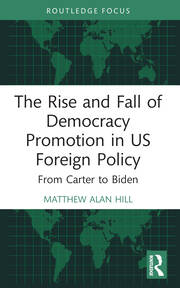
245 14|aThe rise and fall of democracy promotion in US foreign policy :|bfrom Carter to Biden /|cMatthew Alan Hill.
264 1|aNew York :|bRoutledge,|c2022.
300 |a1 online resource
336 |atext|btxt|2rdacontent
337 |acomputer|bc|2rdamedia
338 |aonline resource|bcr|2rdacarrier
505 0 |aIntroduction -- Understanding transformational change and democracy promotion -- The Rise: The emergence of democracy in policy-making -- The Fall: An end to unipolarity and the rejection of democracy promotion -- Conclusion: The end of democracy promotion is nigh.
520 |a"The Rise and Fall of Democracy Promotion in US Foreign Policy employs a Transformational Change framework to understand US democracy promotion from 1977 until the present day. American exceptionalism is a framework that has driven the US since the founding days of the republic, charging the US to promote the universal values of liberty and the pursuit of happiness around the world. Providing a frame of continuity for successive administrations, it reinforces the mythology of American exceptionalism in the eyes of the American people and the world. In different eras, different presidential worldviews, along with different international and domestic factors have shaped how each administration has acted in the international arena and yet all have employed this language regardless of the policies pursued. This timely volume maps-out and interrogates through four key indicators the rise and fall of democracy promotion at the conceptualisation, rhetorical and implementation levels. It argues that there were two transformational changes during this period. The first was the expansion of democracy promotion in US foreign policy and confirmed with the election of Jimmy Carter to the White House in 1977. The second was the rejection of liberal ideology and institutions confirmed with Donald Trump's election in 2016. It is nuanced in that it shows how these changes in the acceptance and then rejection of democracy promotion as a foreign policy tool played out. In examining these two administrations, and those in-between, this work also observes that the rise and fall of democracy promotion as an effective foreign policy tool mirrored the relative dominance of the US in the international arena. This book will be of interest to students and scholars of American foreign policy, international relations, and American history"--|cProvided by publisher.
588 |aOCLC-licensed vendor bibliographic record.
650 0|aDemocracy|xGovernment policy|zUnited States.
650 7|aPOLITICAL SCIENCE / International Relations / General|2bisacsh
650 7|aPOLITICAL SCIENCE / Government / General|2bisacsh
651 0|aUnited States|xForeign relations|y1977-1981.
651 0|aUnited States|xForeign relations|y1981-1989.
651 0|aUnited States|xForeign relations|y1989-
856 40|3Taylor & Francis|uhttps://www.taylorfrancis.com/books/9781003254799
856 42|3OCLC metadata license agreement|uhttp://www.oclc.org/content/dam/oclc/forms/terms/vbrl-201703.pdf
901 |aTaylor & Francis