

Language and Social Justice in Practice / edited by Netta Avineri, Laura R. Graham, Eric J. Johnson, Robin Conley Riner and Jonathan Rosa.
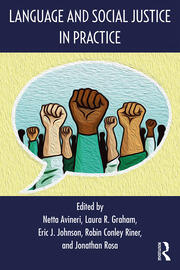
Erişim Adresi
ISBN
9781315115702(e-book : PDF)
Dil Kodu
İngilizce
Basım Bildirimi
First edition.
Yayın Bilgisi
Boca Raton, FL : Routledge, [2018].
©2019.
©2019.
Fiziksel Niteleme
1 online resource (268 pages) : 20 illustrations, text file, PDF
Bibliyografi, vb. Notu
Includes bibliographical references and index.
İçindekiler Notu
Language and Social Justice in Practice -- Editors: Netta Avineri, Laura R. Graham, Eric J. Johnson, Robin Conley Riner, Jonathan Rosa -- Table of Contents -- Acknowledgements -- Introduction: Reimagining Language and Social Justice By Netta Avineri, Laura R. Graham, Eric J. Johnson, Robin Conley Riner, Jonathan Rosa -- Section I: Language & Race -- Section Introduction and Critical Questions -- Chapter 1: Never Tell Me How to Say It: Race, Language Ideologies, and Harm Reduction in Secondary English ClassroomsBy Julia DanielsChapter 2: Identifying Racists While Ignoring Racism: The Case of the Alleged Slur on George Zimmermans 911 TapeBy Adam Hodges Chapter 3: Contesting Representations of Migrant Illegality through the Drop the I-Word Campaign: Rethinking Language Change and Social ChangeBy Jonathan RosaChapter 4: Communicating and Contesting IslamophobiaBy Mariam Durrani Chapter 5: Languages of Liberation: Digital Discourses of Emphatic BlacknessBy Krystal Smalls -- Section II: Language & Education -- Section Introduction and Critical Questions -- Chapter 6: Issues of Equity in Dual Language Bilingual Education By Kathryn Henderson, Lina Martn-Corredor, & Genevieve Caffrey -- Chapter 7: Colorados READ Act: A Case Study in Policy Advocacy against Monolingual NormativityBy Kara Mitchell Viesca & Luis PozaChapter 8: Dual Language Education as a State Equity StrategyBy Kathryn Lindholm-Leary, Martha Martinez, & Rosa Molina -- Chapter 9: Ubuntu Translanguaging and Social Justice: Negotiating Power and Identity through Multilingual Education in TanzaniaBy Monica Shank Chapter 10: A Critical Interrogation of the Language GapBy Eric Johnson -- Section III: Language and Health -- Section Introduction and Critical Questions -- Chapter 11: Language, Justice, and Rabies: Notes from a Fatal CrossroadsBy Charles BriggsChapter 12: Ethics, Expertise, and Inequities in Global Health Discourses: The Case of Non-Profit HIV/AIDS Research in South AfricaBy Steven Black -- Chapter 13: Interpreting Deaf HIV/AIDS: A DialogueBy Mark Byrd & Leila Monaghan -- Chapter 14: Language as Health: Healing in Indigenous Communities in Guatemala through the Revitalization of Mayan LanguagesBy David Flood, Anita Chary, Peter Rohloff, & Brent Henderson -- Section IV: Language & Social Activism -- Section Introduction and Critical Questions -- Chapter 15: Mascots, Name Calling, and Racial Slurs: Seeking Social Justice through Audience Coalescence By Netta Avineri & Bernard Perley -- Chapter 16: The Language of Activism: Representations of Social Justice in a University Space in Argentina By Suriati Abas & James DamicoChapter 17: California Latinx Youth as Agents of Sociolinguistic JusticeBy Mary Bucholtz, Dolores Ins Casillas, & Jin Sook LeeChapter 18: Pronouns and Possibilities: Transgender Language Activism and Reform By Lal Zimman -- Chapter 19: (De)Occupying LanguageH. Samy Alim -- Section V: Language, Law, & Policy -- Section Introduction and Critical Questions -- Chapter 20: Auw-Xavante Represent: Rights and Resistance in Native Language Signage on Brazils Federal HighwaysBy Laura R. Graham -- Chapter 21: The Universal Declaration of Linguistic RightsBy Joyce Milambiling -- Chapter 22: Linguistically Isolated: Challenging the U.S. Census Bureaus Harmful ClassificationBy Ana Celia Zentella Chapter 23: Immigrants Facing Linguistic Barriers in the U.S. Justice System: Case Studies from North Carolina By Dominika Baran & Quinn HolmquistChapter 24: Communicating Humanity: How Defense Attorneys Use Mitigation Narratives to Advocate for ClientsBy Robin Conley Riner & Elizabeth Vartkessian.
Özet, vb.
From bilingual education and racial epithets to gendered pronouns and immigration discourses, language is a central concern in contemporary conversations and controversies surrounding social inequality. Developed as a collaborative effort by members of the American Anthropological Association’s Language and Social Justice Task Force, this innovative volume synthesizes scholarly insights on the relationship between patterns of communication and the creation of more just societies. Using case studies by leading and emergent scholars and practitioners written especially for undergraduate audiences, the book is ideal for introductory courses on social justice in linguistics and anthropology.
Konu
LANGUAGE ARTS & DISCIPLINES / Linguistics / General. __ bisacsh
anthropology. __ bisacsh
language. __ bisacsh
linguistics. __ bisacsh
practice. __ bisacsh
social justice. __ bisacsh
Sociolinguistics.
Social justice.
Electronic books.
anthropology. __ bisacsh
language. __ bisacsh
linguistics. __ bisacsh
practice. __ bisacsh
social justice. __ bisacsh
Sociolinguistics.
Social justice.
Electronic books.
Kurum Adı
Veritabanı
Eseri Alıntıla
Referansları kullanmadan önce gözden geçirmeniz ve varsa gerekli düzeltmeleri yapmanız önerilir.
Dijital Kaynak
MARC Görünümü
LEADER 06158nam a2200541Ii 4500
001 800312
003 TR_AnAIT
005 20260123020717
006 m o d
007 cr
008 190122t20182019fluab ob 001 0 eng d
020 |a9781315115702(e-book : PDF)
035 |a(OCoLC)1048389444
040 |aFlBoTFG|cFlBoTFG|erda
041 |aeng
049 |aTürk Tarih Kurumu Kütüphanesi
050 4|aP40
072 7|aLAN|x000000 |2bisacsh
072 7|aLAN|x009000 |2bisacsh
072 7|aJHMC |2bicscc
082 04|a306.44|223
245 00|aLanguage and Social Justice in Practice /|cedited by Netta Avineri, Laura R. Graham, Eric J. Johnson, Robin Conley Riner and Jonathan Rosa.
250 |aFirst edition.
264 1|aBoca Raton, FL :|bRoutledge,|c[2018].
264 4|c©2019.
300 |a1 online resource (268 pages) :|b20 illustrations, text file, PDF
336 |atext|2rdacontent
337 |acomputer|2rdamedia
338 |aonline resource|2rdacarrier
504 |aIncludes bibliographical references and index.
505 00|tLanguage and Social Justice in Practice -- Editors: Netta Avineri, Laura R. Graham, Eric J. Johnson, Robin Conley Riner, Jonathan Rosa -- Table of Contents -- Acknowledgements -- Introduction: Reimagining Language and Social Justice By Netta Avineri, Laura R. Graham, Eric J. Johnson, Robin Conley Riner, Jonathan Rosa -- Section I: Language & Race -- Section Introduction and Critical Questions -- Chapter 1: Never Tell Me How to Say It: Race, Language Ideologies, and Harm Reduction in Secondary English ClassroomsBy Julia DanielsChapter 2: Identifying Racists While Ignoring Racism: The Case of the Alleged Slur on George Zimmermans 911 TapeBy Adam Hodges Chapter 3: Contesting Representations of Migrant Illegality through the Drop the I-Word Campaign: Rethinking Language Change and Social ChangeBy Jonathan RosaChapter 4: Communicating and Contesting IslamophobiaBy Mariam Durrani Chapter 5: Languages of Liberation: Digital Discourses of Emphatic BlacknessBy Krystal Smalls -- Section II: Language & Education -- Section Introduction and Critical Questions -- Chapter 6: Issues of Equity in Dual Language Bilingual Education By Kathryn Henderson, Lina Martn-Corredor, & Genevieve Caffrey -- Chapter 7: Colorados READ Act: A Case Study in Policy Advocacy against Monolingual NormativityBy Kara Mitchell Viesca & Luis PozaChapter 8: Dual Language Education as a State Equity StrategyBy Kathryn Lindholm-Leary, Martha Martinez, & Rosa Molina -- Chapter 9: Ubuntu Translanguaging and Social Justice: Negotiating Power and Identity through Multilingual Education in TanzaniaBy Monica Shank Chapter 10: A Critical Interrogation of the Language GapBy Eric Johnson -- Section III: Language and Health -- Section Introduction and Critical Questions -- Chapter 11: Language, Justice, and Rabies: Notes from a Fatal CrossroadsBy Charles BriggsChapter 12: Ethics, Expertise, and Inequities in Global Health Discourses: The Case of Non-Profit HIV/AIDS Research in South AfricaBy Steven Black -- Chapter 13: Interpreting Deaf HIV/AIDS: A DialogueBy Mark Byrd & Leila Monaghan -- Chapter 14: Language as Health: Healing in Indigenous Communities in Guatemala through the Revitalization of Mayan LanguagesBy David Flood, Anita Chary, Peter Rohloff, & Brent Henderson -- Section IV: Language & Social Activism -- Section Introduction and Critical Questions -- Chapter 15: Mascots, Name Calling, and Racial Slurs: Seeking Social Justice through Audience Coalescence By Netta Avineri & Bernard Perley -- Chapter 16: The Language of Activism: Representations of Social Justice in a University Space in Argentina By Suriati Abas & James DamicoChapter 17: California Latinx Youth as Agents of Sociolinguistic JusticeBy Mary Bucholtz, Dolores Ins Casillas, & Jin Sook LeeChapter 18: Pronouns and Possibilities: Transgender Language Activism and Reform By Lal Zimman -- Chapter 19: (De)Occupying LanguageH. Samy Alim -- Section V: Language, Law, & Policy -- Section Introduction and Critical Questions -- Chapter 20: Auw-Xavante Represent: Rights and Resistance in Native Language Signage on Brazils Federal HighwaysBy Laura R. Graham -- Chapter 21: The Universal Declaration of Linguistic RightsBy Joyce Milambiling -- Chapter 22: Linguistically Isolated: Challenging the U.S. Census Bureaus Harmful ClassificationBy Ana Celia Zentella Chapter 23: Immigrants Facing Linguistic Barriers in the U.S. Justice System: Case Studies from North Carolina By Dominika Baran & Quinn HolmquistChapter 24: Communicating Humanity: How Defense Attorneys Use Mitigation Narratives to Advocate for ClientsBy Robin Conley Riner & Elizabeth Vartkessian.
520 3 |aFrom bilingual education and racial epithets to gendered pronouns and immigration discourses, language is a central concern in contemporary conversations and controversies surrounding social inequality. Developed as a collaborative effort by members of the American Anthropological Association’s Language and Social Justice Task Force, this innovative volume synthesizes scholarly insights on the relationship between patterns of communication and the creation of more just societies. Using case studies by leading and emergent scholars and practitioners written especially for undergraduate audiences, the book is ideal for introductory courses on social justice in linguistics and anthropology.
530 |aAlso available in print format.
650 7|aLANGUAGE ARTS & DISCIPLINES / Linguistics / General.|2bisacsh
650 7|aanthropology.|2bisacsh
650 7|alanguage.|2bisacsh
650 7|alinguistics.|2bisacsh
650 7|apractice.|2bisacsh
650 7|asocial justice.|2bisacsh
650 0|aSociolinguistics.
650 0|aSocial justice.
655 0|aElectronic books.
700 1 |aAvineri, Netta,|eeditor.
700 1 |aGraham, Laura R.,|eeditor.
700 1 |aJohnson, Eric J.,|eeditor.
700 1 |aConley Riner, Robin,|eeditor.
700 1 |aRosa, Jonathan,|eeditor.
710 2 |aTaylor and Francis.
776 08|iPrint version: |z9781138069442
856 40|uhttps://www.taylorfrancis.com/books/9781315115702|zClick here to view
901 |aTaylor & Francis
001 800312
003 TR_AnAIT
005 20260123020717
006 m o d
007 cr
008 190122t20182019fluab ob 001 0 eng d
020 |a9781315115702(e-book : PDF)
035 |a(OCoLC)1048389444
040 |aFlBoTFG|cFlBoTFG|erda
041 |aeng
049 |aTürk Tarih Kurumu Kütüphanesi
050 4|aP40
072 7|aLAN|x000000 |2bisacsh
072 7|aLAN|x009000 |2bisacsh
072 7|aJHMC |2bicscc
082 04|a306.44|223
245 00|aLanguage and Social Justice in Practice /|cedited by Netta Avineri, Laura R. Graham, Eric J. Johnson, Robin Conley Riner and Jonathan Rosa.
250 |aFirst edition.
264 1|aBoca Raton, FL :|bRoutledge,|c[2018].
264 4|c©2019.
300 |a1 online resource (268 pages) :|b20 illustrations, text file, PDF
336 |atext|2rdacontent
337 |acomputer|2rdamedia
338 |aonline resource|2rdacarrier
504 |aIncludes bibliographical references and index.
505 00|tLanguage and Social Justice in Practice -- Editors: Netta Avineri, Laura R. Graham, Eric J. Johnson, Robin Conley Riner, Jonathan Rosa -- Table of Contents -- Acknowledgements -- Introduction: Reimagining Language and Social Justice By Netta Avineri, Laura R. Graham, Eric J. Johnson, Robin Conley Riner, Jonathan Rosa -- Section I: Language & Race -- Section Introduction and Critical Questions -- Chapter 1: Never Tell Me How to Say It: Race, Language Ideologies, and Harm Reduction in Secondary English ClassroomsBy Julia DanielsChapter 2: Identifying Racists While Ignoring Racism: The Case of the Alleged Slur on George Zimmermans 911 TapeBy Adam Hodges Chapter 3: Contesting Representations of Migrant Illegality through the Drop the I-Word Campaign: Rethinking Language Change and Social ChangeBy Jonathan RosaChapter 4: Communicating and Contesting IslamophobiaBy Mariam Durrani Chapter 5: Languages of Liberation: Digital Discourses of Emphatic BlacknessBy Krystal Smalls -- Section II: Language & Education -- Section Introduction and Critical Questions -- Chapter 6: Issues of Equity in Dual Language Bilingual Education By Kathryn Henderson, Lina Martn-Corredor, & Genevieve Caffrey -- Chapter 7: Colorados READ Act: A Case Study in Policy Advocacy against Monolingual NormativityBy Kara Mitchell Viesca & Luis PozaChapter 8: Dual Language Education as a State Equity StrategyBy Kathryn Lindholm-Leary, Martha Martinez, & Rosa Molina -- Chapter 9: Ubuntu Translanguaging and Social Justice: Negotiating Power and Identity through Multilingual Education in TanzaniaBy Monica Shank Chapter 10: A Critical Interrogation of the Language GapBy Eric Johnson -- Section III: Language and Health -- Section Introduction and Critical Questions -- Chapter 11: Language, Justice, and Rabies: Notes from a Fatal CrossroadsBy Charles BriggsChapter 12: Ethics, Expertise, and Inequities in Global Health Discourses: The Case of Non-Profit HIV/AIDS Research in South AfricaBy Steven Black -- Chapter 13: Interpreting Deaf HIV/AIDS: A DialogueBy Mark Byrd & Leila Monaghan -- Chapter 14: Language as Health: Healing in Indigenous Communities in Guatemala through the Revitalization of Mayan LanguagesBy David Flood, Anita Chary, Peter Rohloff, & Brent Henderson -- Section IV: Language & Social Activism -- Section Introduction and Critical Questions -- Chapter 15: Mascots, Name Calling, and Racial Slurs: Seeking Social Justice through Audience Coalescence By Netta Avineri & Bernard Perley -- Chapter 16: The Language of Activism: Representations of Social Justice in a University Space in Argentina By Suriati Abas & James DamicoChapter 17: California Latinx Youth as Agents of Sociolinguistic JusticeBy Mary Bucholtz, Dolores Ins Casillas, & Jin Sook LeeChapter 18: Pronouns and Possibilities: Transgender Language Activism and Reform By Lal Zimman -- Chapter 19: (De)Occupying LanguageH. Samy Alim -- Section V: Language, Law, & Policy -- Section Introduction and Critical Questions -- Chapter 20: Auw-Xavante Represent: Rights and Resistance in Native Language Signage on Brazils Federal HighwaysBy Laura R. Graham -- Chapter 21: The Universal Declaration of Linguistic RightsBy Joyce Milambiling -- Chapter 22: Linguistically Isolated: Challenging the U.S. Census Bureaus Harmful ClassificationBy Ana Celia Zentella Chapter 23: Immigrants Facing Linguistic Barriers in the U.S. Justice System: Case Studies from North Carolina By Dominika Baran & Quinn HolmquistChapter 24: Communicating Humanity: How Defense Attorneys Use Mitigation Narratives to Advocate for ClientsBy Robin Conley Riner & Elizabeth Vartkessian.
520 3 |aFrom bilingual education and racial epithets to gendered pronouns and immigration discourses, language is a central concern in contemporary conversations and controversies surrounding social inequality. Developed as a collaborative effort by members of the American Anthropological Association’s Language and Social Justice Task Force, this innovative volume synthesizes scholarly insights on the relationship between patterns of communication and the creation of more just societies. Using case studies by leading and emergent scholars and practitioners written especially for undergraduate audiences, the book is ideal for introductory courses on social justice in linguistics and anthropology.
530 |aAlso available in print format.
650 7|aLANGUAGE ARTS & DISCIPLINES / Linguistics / General.|2bisacsh
650 7|aanthropology.|2bisacsh
650 7|alanguage.|2bisacsh
650 7|alinguistics.|2bisacsh
650 7|apractice.|2bisacsh
650 7|asocial justice.|2bisacsh
650 0|aSociolinguistics.
650 0|aSocial justice.
655 0|aElectronic books.
700 1 |aAvineri, Netta,|eeditor.
700 1 |aGraham, Laura R.,|eeditor.
700 1 |aJohnson, Eric J.,|eeditor.
700 1 |aConley Riner, Robin,|eeditor.
700 1 |aRosa, Jonathan,|eeditor.
710 2 |aTaylor and Francis.
776 08|iPrint version: |z9781138069442
856 40|uhttps://www.taylorfrancis.com/books/9781315115702|zClick here to view
901 |aTaylor & Francis
Materyaller
Depodan talep edilen materyal sadece kütüphane içerisinde kullanılmaktadır.
Materyal dışarıya ödünç verilmemektedir.
Materyal dışarıya ödünç verilmemektedir.
