

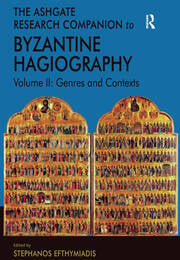
Ashgate research companion to Byzantine hagiography. Volume II, Genres and contexts / edited by Stephanos Efthymiades.
ISBN
9781351393270 (ePub ebook)
1351393278
9781315141909 (ebook)
1315141906
9781351393263 (Mobipocket ebook)
135139326X
9781351393287 (PDF ebook)
1351393286
1351393278
9781315141909 (ebook)
1315141906
9781351393263 (Mobipocket ebook)
135139326X
9781351393287 (PDF ebook)
1351393286
Dil Kodu
İngilizce
Basım Bildirimi
1st.
Yayın Bilgisi
London : Routledge, 2017.
Fiziksel Niteleme
1 online resource
İçindekiler Notu
Introduction, Stephanos Efthymiadis. Part I Genres, Varieties and Forms: Byzantine hagiography and its literary genres. Some critical observations, Martin Hinterberger; Greek passions of the martyrs in Byzantium, Marina Detoraki; Collections of miracles (fifth-fifteenth centuries), Stephanos Efthymiadis; Collections of edifying stories, André Binggeli; Greek Byzantine hagiography in verse, Stephanos Efthymiadis; Symeon Metaphrastes and the metaphrastic movement, Christian HÃıgel; Synaxaria and the synaxarion of Constantinople, Andrea Luzzi. Part II Hagiography as Literature: The Byzantine hagiographer and his text, Martin Hinterberger; Audience, language and patronage in Byzantine hagiography, Stephanos Efthymiadis -- Nikos Kalogeras; Byzantine hagiography and hymnography: an interrelationship, Antonia Giannouli; Fiction and/or novelisation in Byzantine hagiography, Charis Messis; Holy actors and actresses fools and cross-dressers as the protagonists of saints' Lives, Stavroula Constantinou; The literary portrait of Byzantine female saints, Nathalie Delierneux. Part III Hagiography and Society: Economy and society in Byzantine hagiography: realia and methodological questions, Michel Kaplan -- Eleonora Kountoura-Galaki; The city in Byzantine hagiography, Helen G. Saradi; The hagiography of doubt and scepticism, Anthony Kaldellis. Indexes.
Özet, vb.
For an entire millennium, Byzantine hagiography, inspired by the veneration of many saints, exhibited literary dynamism and a capacity to vary its basic forms. The subgenres into which it branched out after its remarkable start in the fourth century underwent alternating phases of development and decline that were intertwined with changes in the political, social and literary spheres. The selection of saintly heroes, an interest in depicting social landscapes, and the modulation of linguistic and stylistic registers captured the voice of homo byzantinus down to the end of the empire in the fifteenth century. The seventeen chapters in this companion form the sequel to those in volume I which dealt with the periods and regions of Byzantine hagiography, and complete the first comprehensive survey ever produced in this field. The book is the work of an international group of experts in the field and is addressed to both a broader public and the scholarly community of Byzantinists, medievalists, historians of religion and theorists of narrative. It highlights the literary dimension and the research potential of a representative number of texts, not only those appreciated by the Byzantines themselves but those which modern readers rank high due to their literary quality or historical relevance.
Konu
Hagiography.
HISTORY / Ancient / General __ bisacsh
HISTORY / Medieval __ bisacsh
RELIGION / Christianity / Orthodox Churches __ bisacsh
Byzantine Empire __ Religion.
HISTORY / Ancient / General __ bisacsh
HISTORY / Medieval __ bisacsh
RELIGION / Christianity / Orthodox Churches __ bisacsh
Byzantine Empire __ Religion.
Diğer Yazarlar
Veritabanı
Eseri Alıntıla
Referansları kullanmadan önce gözden geçirmeniz ve varsa gerekli düzeltmeleri yapmanız önerilir.
Dijital Kaynak
MARC Görünümü
LEADER 04460cam a22005291i 4500
001 800313
003 TR_AnAIT
005 20260123020718
006 m d
007 cr |||||||||||
008 170515s2017 enk o 000 0 eng d
020 |a9781351393270|q(ePub ebook) :
020 |a1351393278
020 |a9781315141909|q(ebook) :
020 |a1315141906
020 |a9781351393263|q(Mobipocket ebook) :
020 |a135139326X
020 |a9781351393287|q(PDF ebook) :
020 |a1351393286
024 7 |a10.4324/9781315141909|2doi
035 |a(OCoLC)1144724587
035 |a(OCoLC-P)1144724587
040 |aOCoLC-P|beng|erda|epn|cOCoLC-P
041 |aeng
049 |aTürk Tarih Kurumu Kütüphanesi
050 4|aBX300
072 7|aHIS|x002000|2bisacsh
072 7|aHIS|x037010|2bisacsh
072 7|aREL|x049000|2bisacsh
072 7|aHBLA1|2bicssc
082 04|a235.2094961|223
245 00|aAshgate research companion to Byzantine hagiography.|nVolume II,|pGenres and contexts /|cedited by Stephanos Efthymiades.
250 |a1st.
264 1|aLondon :|bRoutledge,|c2017.
300 |a1 online resource
336 |atext|2rdacontent
337 |acomputer|2rdamedia
338 |aonline resource|2rdacarrier
505 0 |aIntroduction, Stephanos Efthymiadis. Part I Genres, Varieties and Forms: Byzantine hagiography and its literary genres. Some critical observations, Martin Hinterberger; Greek passions of the martyrs in Byzantium, Marina Detoraki; Collections of miracles (fifth-fifteenth centuries), Stephanos Efthymiadis; Collections of edifying stories, André Binggeli; Greek Byzantine hagiography in verse, Stephanos Efthymiadis; Symeon Metaphrastes and the metaphrastic movement, Christian HÃıgel; Synaxaria and the synaxarion of Constantinople, Andrea Luzzi. Part II Hagiography as Literature: The Byzantine hagiographer and his text, Martin Hinterberger; Audience, language and patronage in Byzantine hagiography, Stephanos Efthymiadis -- Nikos Kalogeras; Byzantine hagiography and hymnography: an interrelationship, Antonia Giannouli; Fiction and/or novelisation in Byzantine hagiography, Charis Messis; Holy actors and actresses fools and cross-dressers as the protagonists of saints' Lives, Stavroula Constantinou; The literary portrait of Byzantine female saints, Nathalie Delierneux. Part III Hagiography and Society: Economy and society in Byzantine hagiography: realia and methodological questions, Michel Kaplan -- Eleonora Kountoura-Galaki; The city in Byzantine hagiography, Helen G. Saradi; The hagiography of doubt and scepticism, Anthony Kaldellis. Indexes.
520 |aFor an entire millennium, Byzantine hagiography, inspired by the veneration of many saints, exhibited literary dynamism and a capacity to vary its basic forms. The subgenres into which it branched out after its remarkable start in the fourth century underwent alternating phases of development and decline that were intertwined with changes in the political, social and literary spheres. The selection of saintly heroes, an interest in depicting social landscapes, and the modulation of linguistic and stylistic registers captured the voice of homo byzantinus down to the end of the empire in the fifteenth century. The seventeen chapters in this companion form the sequel to those in volume I which dealt with the periods and regions of Byzantine hagiography, and complete the first comprehensive survey ever produced in this field. The book is the work of an international group of experts in the field and is addressed to both a broader public and the scholarly community of Byzantinists, medievalists, historians of religion and theorists of narrative. It highlights the literary dimension and the research potential of a representative number of texts, not only those appreciated by the Byzantines themselves but those which modern readers rank high due to their literary quality or historical relevance.
588 |aOCLC-licensed vendor bibliographic record.
650 0|aHagiography.
650 7|aHISTORY / Ancient / General|2bisacsh
650 7|aHISTORY / Medieval|2bisacsh
650 7|aRELIGION / Christianity / Orthodox Churches|2bisacsh
651 0|aByzantine Empire|xReligion.
700 1 |aEfthymiadis, Stephanos,|eeditor.
856 40|3Taylor & Francis|uhttps://www.taylorfrancis.com/books/9781315141909
856 42|3OCLC metadata license agreement|uhttp://www.oclc.org/content/dam/oclc/forms/terms/vbrl-201703.pdf
901 |aTaylor & Francis
001 800313
003 TR_AnAIT
005 20260123020718
006 m d
007 cr |||||||||||
008 170515s2017 enk o 000 0 eng d
020 |a9781351393270|q(ePub ebook) :
020 |a1351393278
020 |a9781315141909|q(ebook) :
020 |a1315141906
020 |a9781351393263|q(Mobipocket ebook) :
020 |a135139326X
020 |a9781351393287|q(PDF ebook) :
020 |a1351393286
024 7 |a10.4324/9781315141909|2doi
035 |a(OCoLC)1144724587
035 |a(OCoLC-P)1144724587
040 |aOCoLC-P|beng|erda|epn|cOCoLC-P
041 |aeng
049 |aTürk Tarih Kurumu Kütüphanesi
050 4|aBX300
072 7|aHIS|x002000|2bisacsh
072 7|aHIS|x037010|2bisacsh
072 7|aREL|x049000|2bisacsh
072 7|aHBLA1|2bicssc
082 04|a235.2094961|223
245 00|aAshgate research companion to Byzantine hagiography.|nVolume II,|pGenres and contexts /|cedited by Stephanos Efthymiades.
250 |a1st.
264 1|aLondon :|bRoutledge,|c2017.
300 |a1 online resource
336 |atext|2rdacontent
337 |acomputer|2rdamedia
338 |aonline resource|2rdacarrier
505 0 |aIntroduction, Stephanos Efthymiadis. Part I Genres, Varieties and Forms: Byzantine hagiography and its literary genres. Some critical observations, Martin Hinterberger; Greek passions of the martyrs in Byzantium, Marina Detoraki; Collections of miracles (fifth-fifteenth centuries), Stephanos Efthymiadis; Collections of edifying stories, André Binggeli; Greek Byzantine hagiography in verse, Stephanos Efthymiadis; Symeon Metaphrastes and the metaphrastic movement, Christian HÃıgel; Synaxaria and the synaxarion of Constantinople, Andrea Luzzi. Part II Hagiography as Literature: The Byzantine hagiographer and his text, Martin Hinterberger; Audience, language and patronage in Byzantine hagiography, Stephanos Efthymiadis -- Nikos Kalogeras; Byzantine hagiography and hymnography: an interrelationship, Antonia Giannouli; Fiction and/or novelisation in Byzantine hagiography, Charis Messis; Holy actors and actresses fools and cross-dressers as the protagonists of saints' Lives, Stavroula Constantinou; The literary portrait of Byzantine female saints, Nathalie Delierneux. Part III Hagiography and Society: Economy and society in Byzantine hagiography: realia and methodological questions, Michel Kaplan -- Eleonora Kountoura-Galaki; The city in Byzantine hagiography, Helen G. Saradi; The hagiography of doubt and scepticism, Anthony Kaldellis. Indexes.
520 |aFor an entire millennium, Byzantine hagiography, inspired by the veneration of many saints, exhibited literary dynamism and a capacity to vary its basic forms. The subgenres into which it branched out after its remarkable start in the fourth century underwent alternating phases of development and decline that were intertwined with changes in the political, social and literary spheres. The selection of saintly heroes, an interest in depicting social landscapes, and the modulation of linguistic and stylistic registers captured the voice of homo byzantinus down to the end of the empire in the fifteenth century. The seventeen chapters in this companion form the sequel to those in volume I which dealt with the periods and regions of Byzantine hagiography, and complete the first comprehensive survey ever produced in this field. The book is the work of an international group of experts in the field and is addressed to both a broader public and the scholarly community of Byzantinists, medievalists, historians of religion and theorists of narrative. It highlights the literary dimension and the research potential of a representative number of texts, not only those appreciated by the Byzantines themselves but those which modern readers rank high due to their literary quality or historical relevance.
588 |aOCLC-licensed vendor bibliographic record.
650 0|aHagiography.
650 7|aHISTORY / Ancient / General|2bisacsh
650 7|aHISTORY / Medieval|2bisacsh
650 7|aRELIGION / Christianity / Orthodox Churches|2bisacsh
651 0|aByzantine Empire|xReligion.
700 1 |aEfthymiadis, Stephanos,|eeditor.
856 40|3Taylor & Francis|uhttps://www.taylorfrancis.com/books/9781315141909
856 42|3OCLC metadata license agreement|uhttp://www.oclc.org/content/dam/oclc/forms/terms/vbrl-201703.pdf
901 |aTaylor & Francis
Materyaller
Depodan talep edilen materyal sadece kütüphane içerisinde kullanılmaktadır.
Materyal dışarıya ödünç verilmemektedir.
Materyal dışarıya ödünç verilmemektedir.
