LEADER 03357cam a2200553 i 4500
001 800329
003 TR_AnAIT
005 20260123020732
006 m o d
007 cr |||||||||||
008 180514t20192019enk ob 000 0 eng
020 |a9781351675123|qelectronic book
020 |a9781315164762|qelectronic book
020 |a1315164760|qelectronic book
020 |a1351675125|qelectronic book
020 |a9781351675116|qelectronic book
020 |a1351675117|qelectronic book
020 |a9781351675109|qkindle
020 |a1351675109|qkindle
020 |z9781138057654|qhardcover
020 |z1138057657|qhardcover
035 |a(OCoLC)1035770133|z(OCoLC)1053623409|z(OCoLC)1053987613
035 |a(OCoLC-P)1035770133
040 |aOCoLC-P|beng|erda|cOCoLC-P
041 |aeng
049 |aTürk Tarih Kurumu Kütüphanesi
050 14|aBF1556|b.C64 2019
072 7|aSOC|x011000|2bisacsh
072 7|aPSY|x007000|2bisacsh
072 7|aMMJT|2bicssc
082 00|a398/.45|223
100 1 |aCohen, David,|d1946-|eauthor.
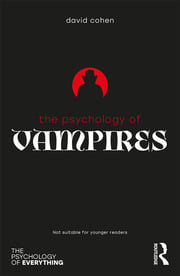
245 14|aThe psychology of vampires /|cDavid Cohen.
264 1|aAbingdon, Oxon ;|aNew York, NY :|bRoutledge,|c2019.
264 4|c©2019
300 |a1 online resource (xvii, 136 pages).
336 |atext|btxt|2rdacontent
337 |acomputer|bc|2rdamedia
338 |aonline resource|bcr|2rdacarrier
490 1 |aThe psychology of everything
505 0 |aAperitif -- the vampires' favourite ice cream -- Poor Polidori and the human jam -- The early history of vampires -- Dracula on the couch -- The doctor who wanted to be something different -- The vampire develops and the poet flees from the bailiffs -- Dip the pen in blood -- Theology, child abuse -- and the vampire 'syndrome' -- The first proper story -- Sucking out energy -- the passive aggressive personality -- In print -- Vampires on the ward -- A modern Oedipus, bloodletting and three more deaths -- Polidori's cultural legacy.
520 |aWhy have vampires become such a feature of modern culture? Can vampire-like conditions be explained by medical research? Is there a connection between vampirism and Freud? The Psychology of Vampires presents a captivating look at the origins of vampires in myth and history, and the psychological theories which try to explain why they fascinate us. It traces the development of vampires from the first ever vampire tale, written by John Polidori in 1819, to their modern cultural legacy. Together with historical detail about Polidori's eventful life, the book also examines the characteristics of vampires, and explores how and why people might identify as vampires today. From sanguinarians who drink blood, to psychic vampires who suck the energy from those around them, The Psychology of Vampires explores the absorbing connections between vampirism and psychology, theology, medicine and culture.
588 |aOCLC-licensed vendor bibliographic record.
600 10|aPolidori, John William,|d1795-1821.
650 0|aVampires.
650 0|aDemonology.
650 0|aPsychology.
650 7|aSOCIAL SCIENCE / Folklore & Mythology.|2bisacsh
650 7|aPSYCHOLOGY / Clinical Psychology|2bisacsh
856 40|3Taylor & Francis|uhttps://www.taylorfrancis.com/books/9781315164762
856 42|3OCLC metadata license agreement|uhttp://www.oclc.org/content/dam/oclc/forms/terms/vbrl-201703.pdf
901 |aTaylor & Francis