

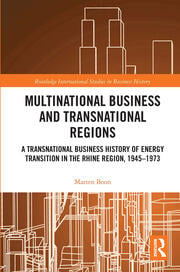
Multinational enterprise and transnational regions : a transnational business history of energy transition in the Rhine region, 1945-1973.
ISBN
9781315455969 (ebook)
9781315455976 (ebook)
1315455978 (ebook)
131545596X (ebook)
9781315455952 (ePub ebook)
1315455951
9781315455945 (Mobipocket ebook)
1315455943
9781138210127 (hardcover)
9781315455976 (ebook)
1315455978 (ebook)
131545596X (ebook)
9781315455952 (ePub ebook)
1315455951
9781315455945 (Mobipocket ebook)
1315455943
9781138210127 (hardcover)
Dil Kodu
İngilizce
Yazar
Yayın Bilgisi
New York, NY ; Abingdon, Oxon : Routledge, 2018
©2018
©2018
Fiziksel Niteleme
1 online resource (239 pages)
Dizi
Routledge International Studies in Business History Ser.
İçindekiler Notu
Transnational Economic Regions: Capturing an Illusive Phenomenon; Resurrecting the Rhine as an Economic Region; Energy Transition in the Rhine Region; Part I Regional Transformation: Energy Transition in the Rhine Region; 1 The Post-War Reconstruction and the Rise of Oil ; 1.1 Introduction; 1.2 The Question of Energy in Post-War Western Europe; 1.3 The Impact of the Allied Occupation on the Ruhr Coal Industry; 1.4 The Allied Refining Program: Restarting the Hydrogenation Plants.
1.5 The Case of Union Kraftstoff1.6 The Geographical Consequences of the Allied Occupation; 1.7 Conclusion; 2 Oil Unbounded: The Coal Crisis of 1958; 2.1 Introduction; 2.2 The Competition Between Coal and Oil, 1950 ; 2.3 The Rise of Fuel Oil and the 1958 Coal Crisis; 2.4 Stemming the Tide: Attempts to Limit the Rise of Fuel Oil; 2.5 Conclusion; 3 The Growth of Chemical Clusters in the Rhine Region, 1960 1973; 3.1 Introduction; 3.2 The Rhine-Ruhr Refineries; 3.3 Deutsche Shell and Union Kraftstoff, 1951 ;1958; 3.4 The Rhineland Refinery of Deutsche Shell. 3.5 The Post-War Transition of the Chemical Industry3.6 An Oil and Petrochemical Cluster in the Rhine-Ruhr Area; 3.7 Effect of the Transition on Transport Demand in the Hinterland; 3.8 Conclusions; Part II Regional Connections: From Rhine to Pipeline; 4 Pipelines: The National Approach;1956; 4.1 Introduction; 4.2 A Pipeline to the Rhine-Ruhr Area; 4.3 Rotterdam Competing With Wilhelmshaven; 4.4 Wilhelmshaven ;The Best Deep Water Port in Europea 4.5 Conclusions; 5 The Trans-European Pipeline: The Transnational Approach: 1956;1958; 5.1 Introduction. 5.2 From National to Transnational: The Trans-European Pipeline Plan5.3 Further Complications; 5.4 France, Oil and the Cold War; 5.5 Endgame: The Failure of the Trans-European Pipeline; 5.6 Why the Trans-European Pipeline Never Materialised; 5.7 Conclusion; 6 Expanding Transnational Connections, 1959 ;1973; 6.1 Introduction; 6.2 The Hydrocarbon Hub: The Rotterdam Port Between 1950 and 1973; 6.3 The Expansion of the Rotterdam-Rhine Pipeline, 1965 1968; 6.4 The Rhine-Main Pipeline, 1965 ;1971; 6.5 Integrating Chemical Clusters in the Rhine Basin, 1965; 1973. 6.6 The Rotterdam-Antwerp Pipeline, 1967 1969 6.7 Conclusion; 7 Transnational Connections in the Rhine Region: Evidence From Transport Flows; 7.1 Introduction; 7.2 Gateway to the Rhine? Rotterdam From Transitopolis to Industrial Port; 7.3 Oil Flows in the Rhine Region: The Impact of Pipelines; 7.4 Transnational Connections; 7.5 Conclusion; 8 Conclusion; Primary Sources; Bibliography; Press Articles, Trade Journals and Company Publications; Statistical Material; Index.
1.5 The Case of Union Kraftstoff1.6 The Geographical Consequences of the Allied Occupation; 1.7 Conclusion; 2 Oil Unbounded: The Coal Crisis of 1958; 2.1 Introduction; 2.2 The Competition Between Coal and Oil, 1950 ; 2.3 The Rise of Fuel Oil and the 1958 Coal Crisis; 2.4 Stemming the Tide: Attempts to Limit the Rise of Fuel Oil; 2.5 Conclusion; 3 The Growth of Chemical Clusters in the Rhine Region, 1960 1973; 3.1 Introduction; 3.2 The Rhine-Ruhr Refineries; 3.3 Deutsche Shell and Union Kraftstoff, 1951 ;1958; 3.4 The Rhineland Refinery of Deutsche Shell. 3.5 The Post-War Transition of the Chemical Industry3.6 An Oil and Petrochemical Cluster in the Rhine-Ruhr Area; 3.7 Effect of the Transition on Transport Demand in the Hinterland; 3.8 Conclusions; Part II Regional Connections: From Rhine to Pipeline; 4 Pipelines: The National Approach;1956; 4.1 Introduction; 4.2 A Pipeline to the Rhine-Ruhr Area; 4.3 Rotterdam Competing With Wilhelmshaven; 4.4 Wilhelmshaven ;The Best Deep Water Port in Europea 4.5 Conclusions; 5 The Trans-European Pipeline: The Transnational Approach: 1956;1958; 5.1 Introduction. 5.2 From National to Transnational: The Trans-European Pipeline Plan5.3 Further Complications; 5.4 France, Oil and the Cold War; 5.5 Endgame: The Failure of the Trans-European Pipeline; 5.6 Why the Trans-European Pipeline Never Materialised; 5.7 Conclusion; 6 Expanding Transnational Connections, 1959 ;1973; 6.1 Introduction; 6.2 The Hydrocarbon Hub: The Rotterdam Port Between 1950 and 1973; 6.3 The Expansion of the Rotterdam-Rhine Pipeline, 1965 1968; 6.4 The Rhine-Main Pipeline, 1965 ;1971; 6.5 Integrating Chemical Clusters in the Rhine Basin, 1965; 1973. 6.6 The Rotterdam-Antwerp Pipeline, 1967 1969 6.7 Conclusion; 7 Transnational Connections in the Rhine Region: Evidence From Transport Flows; 7.1 Introduction; 7.2 Gateway to the Rhine? Rotterdam From Transitopolis to Industrial Port; 7.3 Oil Flows in the Rhine Region: The Impact of Pipelines; 7.4 Transnational Connections; 7.5 Conclusion; 8 Conclusion; Primary Sources; Bibliography; Press Articles, Trade Journals and Company Publications; Statistical Material; Index.
Konu
Business enterprises __ Rhine River Valley __ History __ 20th century.
International business enterprises.
Rhine River Valley __ Economic conditions __ 20th century.
International business enterprises.
Rhine River Valley __ Economic conditions __ 20th century.
Veritabanı
Eseri Alıntıla
Referansları kullanmadan önce gözden geçirmeniz ve varsa gerekli düzeltmeleri yapmanız önerilir.
Dijital Kaynak
MARC Görünümü
LEADER 04375cam a2200469Ii 4500
001 800408
003 TR_AnAIT
005 20260123020836
006 m o d
007 cr |n|---|||||
008 180331t20182018nyu ob 001 0 eng d
020 |a9781315455969|q(ebook)
020 |a9781315455976|q(ebook)
020 |a1315455978|q(ebook)
020 |a131545596X|q(ebook)
020 |a9781315455952|q(ePub ebook)
020 |a1315455951
020 |a9781315455945|q(Mobipocket ebook)
020 |a1315455943
020 |z9781138210127|q(hardcover)
035 |a(OCoLC)1030027743
035 |a(OCoLC-P)1030027743
040 |aOCoLC-P|beng|erda|epn|cOCoLC-P
041 |aeng
049 |aTürk Tarih Kurumu Kütüphanesi
050 4|aHF1008
082 04|a330.9434
100 1 |aBoon, Marten.,|eauthor.
245 10|aMultinational enterprise and transnational regions :|ba transnational business history of energy transition in the Rhine region, 1945-1973.
264 1|aNew York, NY ;|aAbingdon, Oxon :|bRoutledge,|c2018
264 4|c©2018
300 |a1 online resource (239 pages)
336 |atext|btxt|2rdacontent
337 |acomputer|bc|2rdamedia
338 |aonline resource|bcr|2rdacarrier
490 1 |aRoutledge International Studies in Business History Ser.
505 0 |aTransnational Economic Regions: Capturing an Illusive Phenomenon; Resurrecting the Rhine as an Economic Region; Energy Transition in the Rhine Region; Part I Regional Transformation: Energy Transition in the Rhine Region; 1 The Post-War Reconstruction and the Rise of Oil ; 1.1 Introduction; 1.2 The Question of Energy in Post-War Western Europe; 1.3 The Impact of the Allied Occupation on the Ruhr Coal Industry; 1.4 The Allied Refining Program: Restarting the Hydrogenation Plants.
505 8 |a1.5 The Case of Union Kraftstoff1.6 The Geographical Consequences of the Allied Occupation; 1.7 Conclusion; 2 Oil Unbounded: The Coal Crisis of 1958; 2.1 Introduction; 2.2 The Competition Between Coal and Oil, 1950 ; 2.3 The Rise of Fuel Oil and the 1958 Coal Crisis; 2.4 Stemming the Tide: Attempts to Limit the Rise of Fuel Oil; 2.5 Conclusion; 3 The Growth of Chemical Clusters in the Rhine Region, 1960 1973; 3.1 Introduction; 3.2 The Rhine-Ruhr Refineries; 3.3 Deutsche Shell and Union Kraftstoff, 1951 ;1958; 3.4 The Rhineland Refinery of Deutsche Shell. 3.5 The Post-War Transition of the Chemical Industry3.6 An Oil and Petrochemical Cluster in the Rhine-Ruhr Area; 3.7 Effect of the Transition on Transport Demand in the Hinterland; 3.8 Conclusions; Part II Regional Connections: From Rhine to Pipeline; 4 Pipelines: The National Approach;1956; 4.1 Introduction; 4.2 A Pipeline to the Rhine-Ruhr Area; 4.3 Rotterdam Competing With Wilhelmshaven; 4.4 Wilhelmshaven ;The Best Deep Water Port in Europea 4.5 Conclusions; 5 The Trans-European Pipeline: The Transnational Approach: 1956;1958; 5.1 Introduction. 5.2 From National to Transnational: The Trans-European Pipeline Plan5.3 Further Complications; 5.4 France, Oil and the Cold War; 5.5 Endgame: The Failure of the Trans-European Pipeline; 5.6 Why the Trans-European Pipeline Never Materialised; 5.7 Conclusion; 6 Expanding Transnational Connections, 1959 ;1973; 6.1 Introduction; 6.2 The Hydrocarbon Hub: The Rotterdam Port Between 1950 and 1973; 6.3 The Expansion of the Rotterdam-Rhine Pipeline, 1965 1968; 6.4 The Rhine-Main Pipeline, 1965 ;1971; 6.5 Integrating Chemical Clusters in the Rhine Basin, 1965; 1973. 6.6 The Rotterdam-Antwerp Pipeline, 1967 1969 6.7 Conclusion; 7 Transnational Connections in the Rhine Region: Evidence From Transport Flows; 7.1 Introduction; 7.2 Gateway to the Rhine? Rotterdam From Transitopolis to Industrial Port; 7.3 Oil Flows in the Rhine Region: The Impact of Pipelines; 7.4 Transnational Connections; 7.5 Conclusion; 8 Conclusion; Primary Sources; Bibliography; Press Articles, Trade Journals and Company Publications; Statistical Material; Index.
588 |aOCLC-licensed vendor bibliographic record.
650 0|aBusiness enterprises|zRhine River Valley|xHistory|y20th century.
650 0|aInternational business enterprises.
651 0|aRhine River Valley|xEconomic conditions|y20th century.
856 40|3Taylor & Francis|uhttps://www.taylorfrancis.com/books/9781315455976
856 42|3OCLC metadata license agreement|uhttp://www.oclc.org/content/dam/oclc/forms/terms/vbrl-201703.pdf
901 |aTaylor & Francis
001 800408
003 TR_AnAIT
005 20260123020836
006 m o d
007 cr |n|---|||||
008 180331t20182018nyu ob 001 0 eng d
020 |a9781315455969|q(ebook)
020 |a9781315455976|q(ebook)
020 |a1315455978|q(ebook)
020 |a131545596X|q(ebook)
020 |a9781315455952|q(ePub ebook)
020 |a1315455951
020 |a9781315455945|q(Mobipocket ebook)
020 |a1315455943
020 |z9781138210127|q(hardcover)
035 |a(OCoLC)1030027743
035 |a(OCoLC-P)1030027743
040 |aOCoLC-P|beng|erda|epn|cOCoLC-P
041 |aeng
049 |aTürk Tarih Kurumu Kütüphanesi
050 4|aHF1008
082 04|a330.9434
100 1 |aBoon, Marten.,|eauthor.
245 10|aMultinational enterprise and transnational regions :|ba transnational business history of energy transition in the Rhine region, 1945-1973.
264 1|aNew York, NY ;|aAbingdon, Oxon :|bRoutledge,|c2018
264 4|c©2018
300 |a1 online resource (239 pages)
336 |atext|btxt|2rdacontent
337 |acomputer|bc|2rdamedia
338 |aonline resource|bcr|2rdacarrier
490 1 |aRoutledge International Studies in Business History Ser.
505 0 |aTransnational Economic Regions: Capturing an Illusive Phenomenon; Resurrecting the Rhine as an Economic Region; Energy Transition in the Rhine Region; Part I Regional Transformation: Energy Transition in the Rhine Region; 1 The Post-War Reconstruction and the Rise of Oil ; 1.1 Introduction; 1.2 The Question of Energy in Post-War Western Europe; 1.3 The Impact of the Allied Occupation on the Ruhr Coal Industry; 1.4 The Allied Refining Program: Restarting the Hydrogenation Plants.
505 8 |a1.5 The Case of Union Kraftstoff1.6 The Geographical Consequences of the Allied Occupation; 1.7 Conclusion; 2 Oil Unbounded: The Coal Crisis of 1958; 2.1 Introduction; 2.2 The Competition Between Coal and Oil, 1950 ; 2.3 The Rise of Fuel Oil and the 1958 Coal Crisis; 2.4 Stemming the Tide: Attempts to Limit the Rise of Fuel Oil; 2.5 Conclusion; 3 The Growth of Chemical Clusters in the Rhine Region, 1960 1973; 3.1 Introduction; 3.2 The Rhine-Ruhr Refineries; 3.3 Deutsche Shell and Union Kraftstoff, 1951 ;1958; 3.4 The Rhineland Refinery of Deutsche Shell. 3.5 The Post-War Transition of the Chemical Industry3.6 An Oil and Petrochemical Cluster in the Rhine-Ruhr Area; 3.7 Effect of the Transition on Transport Demand in the Hinterland; 3.8 Conclusions; Part II Regional Connections: From Rhine to Pipeline; 4 Pipelines: The National Approach;1956; 4.1 Introduction; 4.2 A Pipeline to the Rhine-Ruhr Area; 4.3 Rotterdam Competing With Wilhelmshaven; 4.4 Wilhelmshaven ;The Best Deep Water Port in Europea 4.5 Conclusions; 5 The Trans-European Pipeline: The Transnational Approach: 1956;1958; 5.1 Introduction. 5.2 From National to Transnational: The Trans-European Pipeline Plan5.3 Further Complications; 5.4 France, Oil and the Cold War; 5.5 Endgame: The Failure of the Trans-European Pipeline; 5.6 Why the Trans-European Pipeline Never Materialised; 5.7 Conclusion; 6 Expanding Transnational Connections, 1959 ;1973; 6.1 Introduction; 6.2 The Hydrocarbon Hub: The Rotterdam Port Between 1950 and 1973; 6.3 The Expansion of the Rotterdam-Rhine Pipeline, 1965 1968; 6.4 The Rhine-Main Pipeline, 1965 ;1971; 6.5 Integrating Chemical Clusters in the Rhine Basin, 1965; 1973. 6.6 The Rotterdam-Antwerp Pipeline, 1967 1969 6.7 Conclusion; 7 Transnational Connections in the Rhine Region: Evidence From Transport Flows; 7.1 Introduction; 7.2 Gateway to the Rhine? Rotterdam From Transitopolis to Industrial Port; 7.3 Oil Flows in the Rhine Region: The Impact of Pipelines; 7.4 Transnational Connections; 7.5 Conclusion; 8 Conclusion; Primary Sources; Bibliography; Press Articles, Trade Journals and Company Publications; Statistical Material; Index.
588 |aOCLC-licensed vendor bibliographic record.
650 0|aBusiness enterprises|zRhine River Valley|xHistory|y20th century.
650 0|aInternational business enterprises.
651 0|aRhine River Valley|xEconomic conditions|y20th century.
856 40|3Taylor & Francis|uhttps://www.taylorfrancis.com/books/9781315455976
856 42|3OCLC metadata license agreement|uhttp://www.oclc.org/content/dam/oclc/forms/terms/vbrl-201703.pdf
901 |aTaylor & Francis
Materyaller
Depodan talep edilen materyal sadece kütüphane içerisinde kullanılmaktadır.
Materyal dışarıya ödünç verilmemektedir.
Materyal dışarıya ödünç verilmemektedir.
