

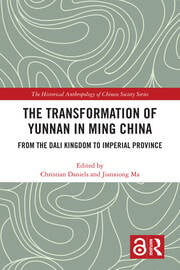
The transformation of Yunnan in Ming China : from the Dali kingdom to imperial province / edited by Christian Daniels and Jianxiong Ma.
ISBN
9781000762112 electronic book
1000762114 electronic book
9780429330780 electronic book
0429330782 electronic book
9781000762297 electronic book Mobipocket
1000762297 electronic book Mobipocket
9781000762471 electronic book EPUB
1000762475 electronic book EPUB
1000762114 electronic book
9780429330780 electronic book
0429330782 electronic book
9781000762297 electronic book Mobipocket
1000762297 electronic book Mobipocket
9781000762471 electronic book EPUB
1000762475 electronic book EPUB
Dil Kodu
İngilizce
Yayın Bilgisi
Abingdon, Oxon ; New York, NY : Routledge, 2020.
Fiziksel Niteleme
1 online resource.
Dizi
The Historical Anthropology of Chinese Society ; 4
Genel Not
Description based upon print version of record.
Administration under the Mu Native Official
Administration under the Mu Native Official
İçindekiler Notu
Cover; Half Title; Series Page; Title Page; Copyright Page; Table of Contents; List of Figures; List of Maps; List of Tables; Notes on Contributors; Acknowledgements; Introduction: The agency of local elites in the transformation of western Yunnan during the Ming dynasty; Governance prior to the conquest of 1382; Main changes wrought by early/mid-Ming governance; Lowland/upland dichotomy in western Yunnan; Civilising projects; Role of Buddhism in the pre-1382 period; Establishment of new civilian and military institutions; Administrative status of population
Establishment of Guards and Battalions and the Mäng2 Maaw2 polityMing transition and ethnic groups; Notes; Bibliography; Chapter 1: Salt, grain and the change of deities in early Ming western Yunnan; Introduction; The salt-barter system and the military in Yunnan; The Mäng2 Maaw2 campaigns, the grain supply and local magnates; Native officials and local magnates as grain suppliers; Impact on local society; Changed identity of the Sanchong Deity; Conclusion; Notes; Bibliography
Chapter 2: Local communities, village temples and the reconstruction of ethnic groups in western Yunnan, fourteenth to seventeenth centuriesIntroduction; Wet rice cultivation and basin societies; Historical overview of irrigation in the three basins; Institutional changes and the differentiation of social identities; Role of the gentry in the transformation of local society; Lijia system, religious reform and the gentry; Establishment of common property based on village temples; Conclusion; Notes; Bibliography
Chapter 3: The Lancang Guard and the construction of Ming society in northwest YunnanIntroduction; Location of Beisheng and the native officials in northwest Yunnan; Position of Beisheng on the communication route to Sichuan; Native officials in northwest Yunnan during early Ming; Revolt by and unrest among ethnic leaders and the Lancang Guard; Revolts by indigenous leaders in the early Ming; Unrest in the mountain tracts of Iron Chain Gorge; Lancang Guard; Interaction between the Guard and border society; Tribute and tax; Deployment of native official troops
Appointment of a Military Defence Vice-CommissionerLancang Guard and social change in local society; Changing the structure of society; Promoting Confucian education; Irrigation projects; Establishment of market systems; Construction of local ethnic status; Conclusion; Notes; Bibliography; Chapter 4: The Mu Native Official's governance of the Tibetan world and his sponsorship of Tibetan Buddhism; Introduction; Sources; The Mu Native Official's military campaigns in Southern Kham:the case of Muli; Physical location of Muli and its leaders; Military campaigns
Establishment of Guards and Battalions and the Mäng2 Maaw2 polityMing transition and ethnic groups; Notes; Bibliography; Chapter 1: Salt, grain and the change of deities in early Ming western Yunnan; Introduction; The salt-barter system and the military in Yunnan; The Mäng2 Maaw2 campaigns, the grain supply and local magnates; Native officials and local magnates as grain suppliers; Impact on local society; Changed identity of the Sanchong Deity; Conclusion; Notes; Bibliography
Chapter 2: Local communities, village temples and the reconstruction of ethnic groups in western Yunnan, fourteenth to seventeenth centuriesIntroduction; Wet rice cultivation and basin societies; Historical overview of irrigation in the three basins; Institutional changes and the differentiation of social identities; Role of the gentry in the transformation of local society; Lijia system, religious reform and the gentry; Establishment of common property based on village temples; Conclusion; Notes; Bibliography
Chapter 3: The Lancang Guard and the construction of Ming society in northwest YunnanIntroduction; Location of Beisheng and the native officials in northwest Yunnan; Position of Beisheng on the communication route to Sichuan; Native officials in northwest Yunnan during early Ming; Revolt by and unrest among ethnic leaders and the Lancang Guard; Revolts by indigenous leaders in the early Ming; Unrest in the mountain tracts of Iron Chain Gorge; Lancang Guard; Interaction between the Guard and border society; Tribute and tax; Deployment of native official troops
Appointment of a Military Defence Vice-CommissionerLancang Guard and social change in local society; Changing the structure of society; Promoting Confucian education; Irrigation projects; Establishment of market systems; Construction of local ethnic status; Conclusion; Notes; Bibliography; Chapter 4: The Mu Native Official's governance of the Tibetan world and his sponsorship of Tibetan Buddhism; Introduction; Sources; The Mu Native Official's military campaigns in Southern Kham:the case of Muli; Physical location of Muli and its leaders; Military campaigns
Özet, vb.
This book examines how the Ming state transformed the multi-ethnic society of Yunnan into a province. Yunnan had remained outside the ambit of central government when ruled by the Dali kingdom, 937-1253, and its foundation as a province by the Yuan regime in 1276 did not disrupt Dali kingdom style political, social and religious institutions. It was the Ming state in the fourteenth to seventeenth centuries through its institutions for military and civilian control which brought about profound changes and truly transformed local society into a province. In contrast to other studies which have portrayed Yunnan as a non-Han frontier region waiting to be colonised, this book, by focusing on changes in local society, casts off the idea of Yunnan as a border area far from civilisation.
Konu
SOCIAL SCIENCE / Research __ bisacsh
Yunnan Sheng (China) __ History.
Yunnan Sheng (China) __ Civilization __ History.
Yunnan Sheng (China) __ History.
Yunnan Sheng (China) __ Civilization __ History.
Diğer Yazarlar
Veritabanı
Eseri Alıntıla
Referansları kullanmadan önce gözden geçirmeniz ve varsa gerekli düzeltmeleri yapmanız önerilir.
Dijital Kaynak
MARC Görünümü
LEADER 05556cam a2200565Ki 4500
001 800734
003 TR_AnAIT
005 20260123021300
006 m o d
007 cr cnu---unuuu
008 191207s2020 enk o 000 0 eng d
020 |a9781000762112|qelectronic book
020 |a1000762114|qelectronic book
020 |a9780429330780|qelectronic book
020 |a0429330782|qelectronic book
020 |a9781000762297|qelectronic book|qMobipocket
020 |a1000762297|qelectronic book|qMobipocket
020 |a9781000762471|qelectronic book|qEPUB
020 |a1000762475|qelectronic book|qEPUB
035 |a(OCoLC)1129219403
035 |a(OCoLC-P)1129219403
040 |aOCoLC-P|beng|erda|cOCoLC-P
041 |aeng
049 |aTürk Tarih Kurumu Kütüphanesi
050 4|aDS793.Y8|bT73 2020
072 7|aSOC|x024000|2bisacsh
072 7|aSOC|x053000|2bisacsh
072 7|aHB|2bicssc
082 04|a951.35026|223
245 04|aThe transformation of Yunnan in Ming China :|bfrom the Dali kingdom to imperial province /|cedited by Christian Daniels and Jianxiong Ma.
264 1|aAbingdon, Oxon ;|aNew York, NY :|bRoutledge,|c2020.
300 |a1 online resource.
336 |atext|btxt|2rdacontent
337 |acomputer|bc|2rdamedia
338 |aonline resource|bcr|2rdacarrier
490 1 |aThe Historical Anthropology of Chinese Society ;|v4
500 |aDescription based upon print version of record.
500 |aAdministration under the Mu Native Official
505 0 |aCover; Half Title; Series Page; Title Page; Copyright Page; Table of Contents; List of Figures; List of Maps; List of Tables; Notes on Contributors; Acknowledgements; Introduction: The agency of local elites in the transformation of western Yunnan during the Ming dynasty; Governance prior to the conquest of 1382; Main changes wrought by early/mid-Ming governance; Lowland/upland dichotomy in western Yunnan; Civilising projects; Role of Buddhism in the pre-1382 period; Establishment of new civilian and military institutions; Administrative status of population
505 8 |aEstablishment of Guards and Battalions and the Mäng2 Maaw2 polityMing transition and ethnic groups; Notes; Bibliography; Chapter 1: Salt, grain and the change of deities in early Ming western Yunnan; Introduction; The salt-barter system and the military in Yunnan; The Mäng2 Maaw2 campaigns, the grain supply and local magnates; Native officials and local magnates as grain suppliers; Impact on local society; Changed identity of the Sanchong Deity; Conclusion; Notes; Bibliography
505 8 |aChapter 2: Local communities, village temples and the reconstruction of ethnic groups in western Yunnan, fourteenth to seventeenth centuriesIntroduction; Wet rice cultivation and basin societies; Historical overview of irrigation in the three basins; Institutional changes and the differentiation of social identities; Role of the gentry in the transformation of local society; Lijia system, religious reform and the gentry; Establishment of common property based on village temples; Conclusion; Notes; Bibliography
505 8 |aChapter 3: The Lancang Guard and the construction of Ming society in northwest YunnanIntroduction; Location of Beisheng and the native officials in northwest Yunnan; Position of Beisheng on the communication route to Sichuan; Native officials in northwest Yunnan during early Ming; Revolt by and unrest among ethnic leaders and the Lancang Guard; Revolts by indigenous leaders in the early Ming; Unrest in the mountain tracts of Iron Chain Gorge; Lancang Guard; Interaction between the Guard and border society; Tribute and tax; Deployment of native official troops
505 8 |aAppointment of a Military Defence Vice-CommissionerLancang Guard and social change in local society; Changing the structure of society; Promoting Confucian education; Irrigation projects; Establishment of market systems; Construction of local ethnic status; Conclusion; Notes; Bibliography; Chapter 4: The Mu Native Official's governance of the Tibetan world and his sponsorship of Tibetan Buddhism; Introduction; Sources; The Mu Native Official's military campaigns in Southern Kham:the case of Muli; Physical location of Muli and its leaders; Military campaigns
520 |aThis book examines how the Ming state transformed the multi-ethnic society of Yunnan into a province. Yunnan had remained outside the ambit of central government when ruled by the Dali kingdom, 937-1253, and its foundation as a province by the Yuan regime in 1276 did not disrupt Dali kingdom style political, social and religious institutions. It was the Ming state in the fourteenth to seventeenth centuries through its institutions for military and civilian control which brought about profound changes and truly transformed local society into a province. In contrast to other studies which have portrayed Yunnan as a non-Han frontier region waiting to be colonised, this book, by focusing on changes in local society, casts off the idea of Yunnan as a border area far from civilisation.
588 |aOCLC-licensed vendor bibliographic record.
650 7|aSOCIAL SCIENCE / Research|2bisacsh
651 0|aYunnan Sheng (China)|xHistory.
651 0|aYunnan Sheng (China)|xCivilization|xHistory.
700 1 |aDaniels, Christian,|d1952-|eeditor.
700 1 |aMa, Jianxiong,|eeditor.
856 40|3Taylor & Francis|uhttps://www.taylorfrancis.com/books/9780429330780
856 42|3OCLC metadata license agreement|uhttp://www.oclc.org/content/dam/oclc/forms/terms/vbrl-201703.pdf
901 |aTaylor & Francis
001 800734
003 TR_AnAIT
005 20260123021300
006 m o d
007 cr cnu---unuuu
008 191207s2020 enk o 000 0 eng d
020 |a9781000762112|qelectronic book
020 |a1000762114|qelectronic book
020 |a9780429330780|qelectronic book
020 |a0429330782|qelectronic book
020 |a9781000762297|qelectronic book|qMobipocket
020 |a1000762297|qelectronic book|qMobipocket
020 |a9781000762471|qelectronic book|qEPUB
020 |a1000762475|qelectronic book|qEPUB
035 |a(OCoLC)1129219403
035 |a(OCoLC-P)1129219403
040 |aOCoLC-P|beng|erda|cOCoLC-P
041 |aeng
049 |aTürk Tarih Kurumu Kütüphanesi
050 4|aDS793.Y8|bT73 2020
072 7|aSOC|x024000|2bisacsh
072 7|aSOC|x053000|2bisacsh
072 7|aHB|2bicssc
082 04|a951.35026|223
245 04|aThe transformation of Yunnan in Ming China :|bfrom the Dali kingdom to imperial province /|cedited by Christian Daniels and Jianxiong Ma.
264 1|aAbingdon, Oxon ;|aNew York, NY :|bRoutledge,|c2020.
300 |a1 online resource.
336 |atext|btxt|2rdacontent
337 |acomputer|bc|2rdamedia
338 |aonline resource|bcr|2rdacarrier
490 1 |aThe Historical Anthropology of Chinese Society ;|v4
500 |aDescription based upon print version of record.
500 |aAdministration under the Mu Native Official
505 0 |aCover; Half Title; Series Page; Title Page; Copyright Page; Table of Contents; List of Figures; List of Maps; List of Tables; Notes on Contributors; Acknowledgements; Introduction: The agency of local elites in the transformation of western Yunnan during the Ming dynasty; Governance prior to the conquest of 1382; Main changes wrought by early/mid-Ming governance; Lowland/upland dichotomy in western Yunnan; Civilising projects; Role of Buddhism in the pre-1382 period; Establishment of new civilian and military institutions; Administrative status of population
505 8 |aEstablishment of Guards and Battalions and the Mäng2 Maaw2 polityMing transition and ethnic groups; Notes; Bibliography; Chapter 1: Salt, grain and the change of deities in early Ming western Yunnan; Introduction; The salt-barter system and the military in Yunnan; The Mäng2 Maaw2 campaigns, the grain supply and local magnates; Native officials and local magnates as grain suppliers; Impact on local society; Changed identity of the Sanchong Deity; Conclusion; Notes; Bibliography
505 8 |aChapter 2: Local communities, village temples and the reconstruction of ethnic groups in western Yunnan, fourteenth to seventeenth centuriesIntroduction; Wet rice cultivation and basin societies; Historical overview of irrigation in the three basins; Institutional changes and the differentiation of social identities; Role of the gentry in the transformation of local society; Lijia system, religious reform and the gentry; Establishment of common property based on village temples; Conclusion; Notes; Bibliography
505 8 |aChapter 3: The Lancang Guard and the construction of Ming society in northwest YunnanIntroduction; Location of Beisheng and the native officials in northwest Yunnan; Position of Beisheng on the communication route to Sichuan; Native officials in northwest Yunnan during early Ming; Revolt by and unrest among ethnic leaders and the Lancang Guard; Revolts by indigenous leaders in the early Ming; Unrest in the mountain tracts of Iron Chain Gorge; Lancang Guard; Interaction between the Guard and border society; Tribute and tax; Deployment of native official troops
505 8 |aAppointment of a Military Defence Vice-CommissionerLancang Guard and social change in local society; Changing the structure of society; Promoting Confucian education; Irrigation projects; Establishment of market systems; Construction of local ethnic status; Conclusion; Notes; Bibliography; Chapter 4: The Mu Native Official's governance of the Tibetan world and his sponsorship of Tibetan Buddhism; Introduction; Sources; The Mu Native Official's military campaigns in Southern Kham:the case of Muli; Physical location of Muli and its leaders; Military campaigns
520 |aThis book examines how the Ming state transformed the multi-ethnic society of Yunnan into a province. Yunnan had remained outside the ambit of central government when ruled by the Dali kingdom, 937-1253, and its foundation as a province by the Yuan regime in 1276 did not disrupt Dali kingdom style political, social and religious institutions. It was the Ming state in the fourteenth to seventeenth centuries through its institutions for military and civilian control which brought about profound changes and truly transformed local society into a province. In contrast to other studies which have portrayed Yunnan as a non-Han frontier region waiting to be colonised, this book, by focusing on changes in local society, casts off the idea of Yunnan as a border area far from civilisation.
588 |aOCLC-licensed vendor bibliographic record.
650 7|aSOCIAL SCIENCE / Research|2bisacsh
651 0|aYunnan Sheng (China)|xHistory.
651 0|aYunnan Sheng (China)|xCivilization|xHistory.
700 1 |aDaniels, Christian,|d1952-|eeditor.
700 1 |aMa, Jianxiong,|eeditor.
856 40|3Taylor & Francis|uhttps://www.taylorfrancis.com/books/9780429330780
856 42|3OCLC metadata license agreement|uhttp://www.oclc.org/content/dam/oclc/forms/terms/vbrl-201703.pdf
901 |aTaylor & Francis
Materyaller
Depodan talep edilen materyal sadece kütüphane içerisinde kullanılmaktadır.
Materyal dışarıya ödünç verilmemektedir.
Materyal dışarıya ödünç verilmemektedir.
