LEADER 03432cam a2200481M 4500
001 800870
003 TR_AnAIT
005 20260123021517
006 m o d
007 cr |n|||||||||
008 220911s2022 xx o 0|| 0 eng d
020 |a9781000770919|q(electronic bk.)
020 |a1000770915|q(electronic bk.)
020 |a9781003098546|q(electronic bk.)
020 |a1003098541|q(electronic bk.)
020 |a9781000770902|q(electronic bk. : PDF)
020 |a1000770907|q(electronic bk. : PDF)
020 |z0367565935
020 |z9780367565930
024 7 |a10.4324/9781003098546|2doi
035 |a(OCoLC)1344155369
035 |a(OCoLC-P)1344155369
040 |aOCoLC-P|beng|cOCoLC-P
041 |aeng
049 |aTürk Tarih Kurumu Kütüphanesi
050 4|aHN18.3
072 7|aBUS|x023000|2bisacsh
072 7|aBUS|x069030|2bisacsh
072 7|aPHI|x005000|2bisacsh
072 7|aJKV|2bicssc
082 04|a361.1|223/eng/20220705
100 1 |aRaymen, Thomas,|eauthor.
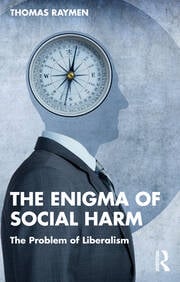
245 10|aENIGMA OF SOCIAL HARM|h[electronic resource] :|bthe problem of liberalism.
260 |a[S.l.] :|bROUTLEDGE,|c2022.
300 |a1 online resource
520 |aDrawing on a novel blend of moral philosophy, social science, psychoanalytic theory and continental philosophy, this book offers up a diagnosis of contemporary liberal capitalist society and the increasingly febrile culture we occupy when it comes to matters of harm. On what basis can we say that something is harmful? How are we supposedto judge between competing opinions on the harmfulness of a particular behaviour, practice, or industry? Can we avoid drifting off into relativism when it comes to judgements about harm? In an age of deep cultural and political discord about what is and is not harmful, providing answers to such questions is more important than ever. Appraising the current state of the concept of social harm in academic scholarship and every-day life, Thomas Raymen finds a concept in an underdeveloped state of disorder, trapped in interminable deadlocks and shrill disagreements about what should and should not be considered harmful. To explain the genesis of this conceptual crisis and identify what we need to do to resolve it, The Enigma of Social Harm travels from Graeco-Roman antiquity to the present day, exploring trends and developments in moral and political philosophy, religion, law, political economy, and culture. Along the way, we see how such trends and developments have not only made it more difficult to establish a shared basis for evaluating harm, but that the tools which might enable us to do so are now outright prohibited by the political-economic, cultural, and ethical ideology of liberalism that dominates contemporary society. Written in a clear and accessible style, it is essential reading for all those interested in matters of social harm, justice, politics, and ethics.
588 |aOCLC-licensed vendor bibliographic record.
650 7|aBUSINESS & ECONOMICS / Economic History|2bisacsh
650 7|aBUSINESS & ECONOMICS / Economics / Theory|2bisacsh
650 7|aPHILOSOPHY / Ethics & Moral Philosophy|2bisacsh
650 0|aSocial problems.
650 0|aSocial justice.
650 0|aLiberalism|xSocial aspects.
856 40|3Taylor & Francis|uhttps://www.taylorfrancis.com/books/9781003098546
856 42|3OCLC metadata license agreement|uhttp://www.oclc.org/content/dam/oclc/forms/terms/vbrl-201703.pdf
901 |aTaylor & Francis