LEADER 03860cam a2200553Ii 4500
001 800904
003 TR_AnAIT
005 20260123021548
006 m o d
007 cr cnu---unuuu
008 210108s2012 ii a ob 001 0 eng d
020 |a9781003157274|q(electronic bk.)
020 |a1003157270|q(electronic bk.)
020 |a9781000366228|q(electronic bk. : PDF)
020 |a1000366227|q(electronic bk. : PDF)
020 |a9781000365788|q(electronic bk. : EPUB)
020 |a1000365786|q(electronic bk. : EPUB)
020 |a9781000366006|q(electronic bk. : Mobipocket)
020 |a1000366006|q(electronic bk. : Mobipocket)
020 |z9780415500814
020 |z0415500818
035 |a(OCoLC)1229166236|z(OCoLC)1223263730
035 |a(OCoLC-P)1229166236
040 |aOCoLC-P|beng|erda|epn|cOCoLC-P
041 |aeng
049 |aTürk Tarih Kurumu Kütüphanesi
050 4|aBL1378|b.S48 2012eb
072 7|aSOC|x032000|2bisacsh
072 7|aSOC|x002000|2bisacsh
072 7|aSOC|x010000|2bisacsh
072 7|aJFSJ|2bicssc
082 04|a294.4447|223
100 1 |aSethi, Manisha,|eauthor.
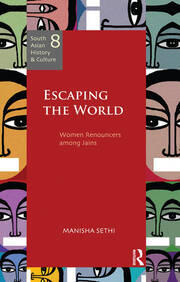
245 10|aEscaping the world :|bwomen renouncers among Jains /|cManisha Sethi.
264 1|aNew Delhi :|bRoutledge,|c2012.
300 |a1 online resource (xxvi, 240 pages) :|billustrations.
336 |atext|btxt|2rdacontent
337 |acomputer|bc|2rdamedia
338 |aonline resource|bcr|2rdacarrier
490 1 |aSouth Asian history and culture ;|v8
505 0 |aIntroduction -- Theorising renunciation: possibilities and limitations -- Nuns and temptresses: representing women in Jainism -- The making of a Sadhvi: claims and counterclaims -- Ethics of care: individual and the institutional -- Idealised lives biographies of two iconic nuns -- Some concluding thoughts.
520 |a"The book attends to a historical question -- how to account for the high numbers of renouncers (sadhvis) mentioned in medieval and ancient texts -- which has been acknowledged and raised, but left unaddressed within Jain studies. It does so through ethnographic data gathered through extensive fieldwork among the sadhvis in Delhi and Jaipur. The volume foregrounds the primacy of 'choice' and 'agency' -- upheld by the nuns themselves, who associate asceticism with autonomy, freedom, joy, spiritual well-being, self-worth and peace, and grihastha (household) with loss of independence, fettered existence, degradation, burdensome familial obligations and social responsibilities. It also examines whether it may be apt to term Jain nuns as practitioners of an 'indigenous mode of feminism'. The book challenges the existing sociological theories of renunciation and tests the feminist concepts of agency and autonomy by investigating the culturally coded roles ascribed to women in Jainism, which are variegated, and examines how a fractured discourse and reality is resolved in the subjectivities and identities of female ascetics. The very legitimacy of the institution of female asceticism, and the way in which the society (samaj) upholds and sustains it, renders female asceticism into a socially approved alternative institution -- albeit one that allows Jain nuns to create spaces of relative and autonomy and even prestige for themselves."--Publisher's website.
588 |aOCLC-licensed vendor bibliographic record.
650 0|aJaina women saints.
650 0|aMonastic and religious life (Jainism)
650 0|aMonastic and religious life of women.
650 7|aSOCIAL SCIENCE / Gender Studies|2bisacsh
650 7|aSOCIAL SCIENCE / Anthropology / General|2bisacsh
650 7|aSOCIAL SCIENCE / Feminism & Feminist Theory|2bisacsh
856 40|3Taylor & Francis|uhttps://www.taylorfrancis.com/books/9781003157274
856 42|3OCLC metadata license agreement|uhttp://www.oclc.org/content/dam/oclc/forms/terms/vbrl-201703.pdf
901 |aTaylor & Francis