LEADER 03533cam a2200553Ki 4500
001 800964
003 TR_AnAIT
005 20260123021647
006 m o d
007 cr cnu---unuuu
008 211108s2022 enka ob 001 0 eng d
020 |a9781000477528|qelectronic book
020 |a1000477525|qelectronic book
020 |a9781000477573|qelectronic book
020 |a1000477576|qelectronic book
020 |a9781003229421|qelectronic book
020 |a1003229425|qelectronic book
020 |z1032015284
020 |z9781032015286
024 7 |a10.4324/9781003229421|2doi
035 |a(OCoLC)1284289654
035 |a(OCoLC-P)1284289654
040 |aOCoLC-P|beng|erda|cOCoLC-P
041 |aeng
049 |aTürk Tarih Kurumu Kütüphanesi
050 4|aN7301|b.A78 2022
072 7|aHIS|x017000|2bisacsh
072 7|aHIS|x000000|2bisacsh
072 7|aSOC|x000000|2bisacsh
072 7|a1F|2bicssc
082 04|a709.54|223
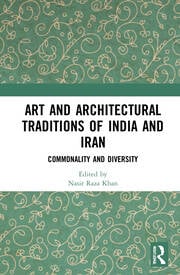
245 00|aArt and architectural traditions of India and Iran :|bcommonality and diversity /|cedited by Nasir Raza Khan.
264 1|aAbingdon, Oxon ;|aNew York, NY :|bRoutledge,|c2022.
300 |a1 online resource
336 |atext|btxt|2rdacontent
337 |acomputer|bc|2rdamedia
338 |aonline resource|bcr|2rdacarrier
520 |aThis book presents a comprehensive overview of the historical and cultural linkages between India and Iran in terms of art and architectural traditions and their commonality and diversity. It addresses themes such as early connections between Iran, India and Central Asia; study of the Qutb Complex in Delhi; the great immigration of Turks from Asia to Anatolia; the collaboration of Indian and Persian painters; design, ornamentation techniques and regional dynamics; women and public spaces in Shahjahanabad and Isfahan; the noble-architects of emperor Shah Jahan's reign; development of Kashmir's Islamic religious architecture in the medieval period; role of Nur Jahan and her Persian roots in the evolution of the Mughal Garden; synthesis of Indo-Iranian architecture; and confluence of Indo-Persian food culture to showcase the richness of art, architecture, and sociocultural and political exchanges between the two countries. Bringing together a wide array of perspectives, it delves into the roots of connection between India and Iran over centuries to understand its influence and impact on the artistic and cultural genealogy and the shared past of two of the oldest civilizations and regional powers of the world. With its archival sources, this book will be useful to scholars and researchers of medieval history, Indian history, international relations, Central Asian history, Islamic studies, Iranian history, art and architecture, heritage studies, cultural studies, regional studies, and South Asian studies as well as those interested in the study of sociocultural and religious exchanges.
588 |aOCLC-licensed vendor bibliographic record.
650 0|aArt, Indic.
650 0|aArt, Iranian.
650 0|aArt, Comparative.
650 0|aArchitecture|zIndia.
650 0|aArchitecture|zIran.
650 0|aComparative architecture.
650 7|aHISTORY / Asia / India & South Asia|2bisacsh
650 7|aHISTORY / General|2bisacsh
650 7|aSOCIAL SCIENCE / General|2bisacsh
700 1 |aKhan, Nasir Raza,|eeditor.
856 40|3Taylor & Francis|uhttps://www.taylorfrancis.com/books/9781003229421
856 42|3OCLC metadata license agreement|uhttp://www.oclc.org/content/dam/oclc/forms/terms/vbrl-201703.pdf
901 |aTaylor & Francis